Guides · Quick answers
How to get electricity during a power outage
When the grid is down, electricity comes from two places: energy you stored before the outage, or fuel you burn during it. Here are the options from smallest to largest, and what each one can realistically run.
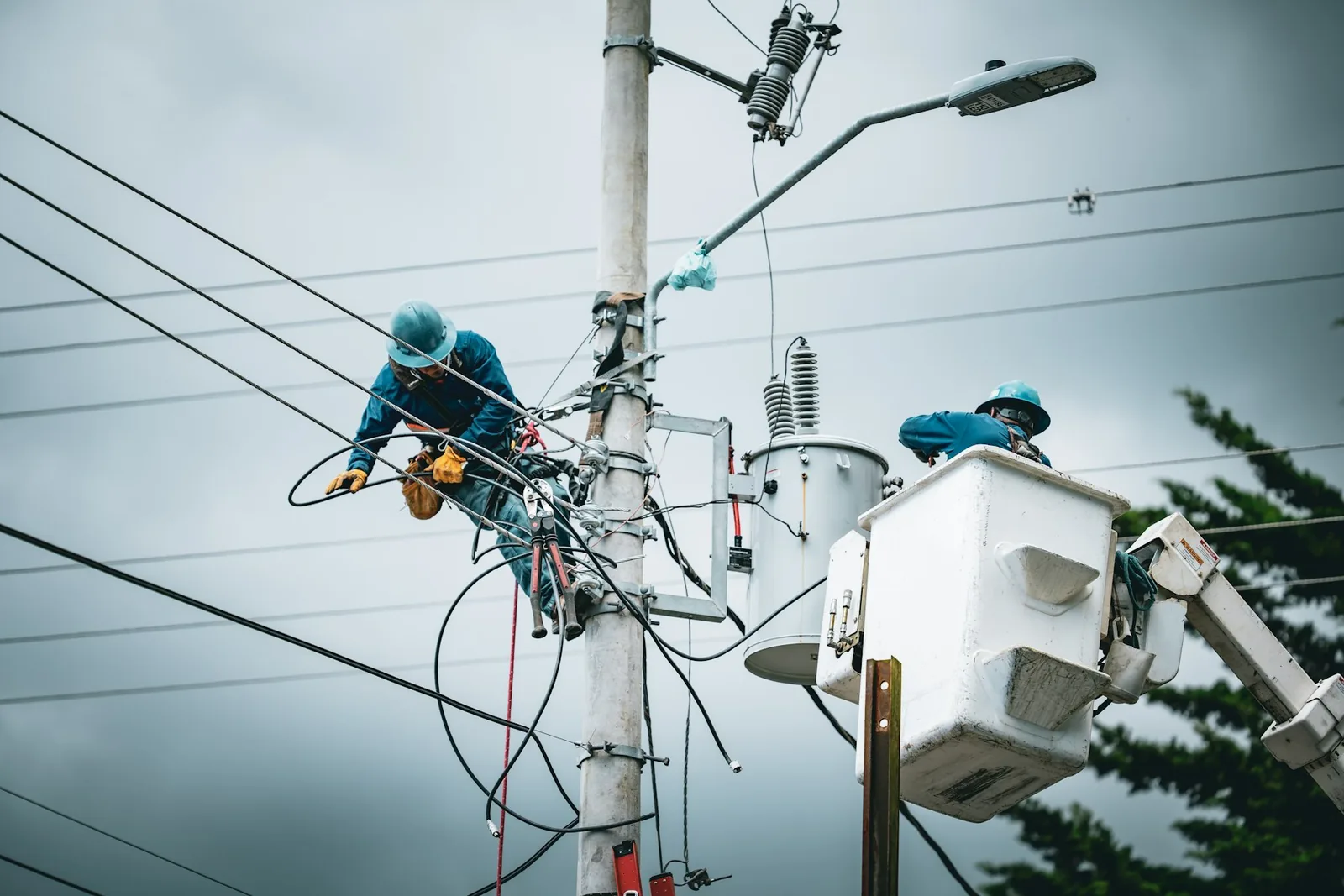
Photo: Mario Spencer / Unsplash
By PowerLockdown EditorialUpdated November 1, 20268 min readHow we research
In this guide
DisclosureAs an Amazon Associate we earn from qualifying purchases. We may earn a commission when you buy through links on this site, at no extra cost to you. Learn more.
The short answer
You get electricity during a power outage from stored energy or from a fuel-burning generator. Power banks charge phones. A car charges devices if it runs outdoors. A portable power station runs a fridge or CPAP indoors. Solar panels recharge batteries. A portable generator outdoors, or a standby unit, runs household circuits.
Rooftop solar alone does not keep the lights on. The Department of Energy says grid-tied solar systems are designed to switch off when grid power cuts out, for safety. To produce power during an outage they need a properly configured inverter and a storage system.
What each power source for a power outage can run
| Option | Rough output | What it can run | Indoors? |
|---|---|---|---|
| Power bank | USB, up to 140 W on the Anker 737 | Phones, tablets, some laptops, USB lights | Yes |
| Car (engine running) | USB ports or a plug-in inverter | Phones and laptops; small loads with an inverter | Never in an attached garage |
| Small power station (about 300 Wh) | 300 to 600 W continuous | Router, lights, phones, a CPAP for part of a night | Yes |
| Mid power station (about 1 to 2 kWh) | 1,500 to 2,400 W continuous | A fridge for most of a day, a CPAP for several nights | Yes |
| Solar panels + power station | Recharge only; depends on sun | Extends any battery for days | Station yes, panels outside |
| Portable generator | 1,800 to 10,500 running watts (our picks) | Fridge, sump pump, furnace fan; well pump on 240 V | Never. Outdoors, 20+ ft away |
| Standby generator | Generac 22 kW: 22,000 W on propane | Most or all of the house | Installed outside |
1. Power banks
The smallest option and the one every household should have. A charged power bank keeps a phone working for calls, alerts and outage maps. Larger banks such as the 24,000 mAh Anker 737 can also charge a laptop. Charge them before a forecast storm and rotate them so they are full when you need them. Our phone charging guide and radios and power banks kit go further.
2. Your car
A car is a generator most people already own. Its USB ports or 12 V socket can charge phones and laptops, and a plug-in inverter can run small loads such as a lamp or a laptop. A socket inverter is limited by the socket's rating, so check your owner's manual. Running the 12 V socket with the engine off can drain the starter battery.
3. Portable power stations
A portable power station is a large lithium battery with AC outlets, USB ports and an inverter. It produces no exhaust, so it can run indoors. A 300 Wh unit keeps a router, lights and phones going through an evening. A 1,000 Wh unit runs a typical refrigerator for roughly 13 to 22 hours, based on a fridge using 1.0 to 1.6 kWh a day. A 2,000 Wh unit covers a full day or a fridge plus a freezer for part of one. See our power station for refrigerator guide for the math and CPAP battery backup picks for medical use.
4. Solar panels
Portable solar panels recharge a power station during the day, which turns hours of battery into days. Jackery lists about 7.5 hours of full sun to recharge its Explorer 1000 v2 from one 200 W SolarSaga panel. Clouds, short winter days and shade stretch that out. Rooftop solar works in an outage only if it was installed with battery storage and an inverter configured to run without the grid, per the DOE.
5. Portable generators
A portable generator is the most power for the money and can run for days if you have fuel. A 3,500 W unit handles a fridge, lights and electronics. A 7,500 to 9,500 W dual-fuel unit adds a sump pump, furnace fan and, with a 240 V outlet, a well pump. Champion Power Equipment's chart lists a 1/2 HP sump pump at 800 to 1,050 running watts and up to 2,150 starting watts, so size for the start.
Our best generator for power outage guide covers sizing, fuel planning and seven picks.
6. Standby generators and whole-home batteries
A standby generator is installed outside on a pad, wired to an automatic transfer switch and fed by natural gas or a large propane tank. Generac's 22 kW spec sheet lists a 5-second default delay before start and about 5 seconds of warm-up. It is the most hands-off way to have power when the power goes out, and the most expensive. Whole-home battery systems do a similar job silently but hold a fixed amount of energy. Compare the two in whole house generator vs portable generator.
Best equipment for a home power outage
Research-based picks based on manufacturer specs and published data checked November 1, 2026. We do not test products. Check the current price on Amazon.

No. 1Power bank
Anker 737 Power Bank (PowerCore 24K)
Best for: High-capacity USB-C bank that can charge a laptop
- 24,000 mAh
- 140W max output
- 2× USB-C + 1× USB-A
- Smart digital display
- 630 g (22.22 oz)
Tradeoffs
- No solar input; recharge from wall or USB-C
- Heavy for a pocket

No. 2Power bank
Goal Zero Venture 35 Power Bank
Best for: Rugged, waterproof bank you can recharge from a solar panel
- 9,600 mAh / 35.52 Wh
- IP67 waterproof (1 m for 30 min, port door closed)
- USB-C PD 18W in/out plus USB-A out (15W)
- Solar recharge with Goal Zero Nomad 10 (about 6-12 hrs); USB-C about 3 hrs
- 50-lumen flashlight; 10.12 oz; operating range 32-113°F
Tradeoffs
- Small capacity for a whole household; Goal Zero says to recharge it every 3-6 months in storage
- 18W is too slow for most laptops; solar panel sold separately

No. 3Power station
Anker SOLIX C1000 Portable Power Station
Best for: Running a fridge, lights, phones and a CPAP through a one- or two-day outage
- 1,056 Wh capacity (up to 2,112 Wh with the matching expansion battery)
- 1,800 W continuous / 2,400 W surge AC output
- LiFePO4 battery chemistry
- 6 AC outlets
- 28.44 lb
Tradeoff
- At about 28 lb it is a carry-to-the-car unit, not a grab-and-go bag item.
- 01Battery plus solarJackery Solar Generator 1000 v2 + 200W
Recharging a fridge or CPAP battery each day of a long outage
- Capacity
- 1,070 Wh
- Cont./surge
- 1,500 / 3,000 W
- Chem./fuel
- LiFePO4 + 200 W solar
- Weight
- 23.8 lb (station)
- 02Generator for essentialsGenerac GP7500E Dual Fuel
Fridge, sump pump, furnace fan and lights for days
- Capacity
- Fuel, 7.9 gal tank
- Cont./surge
- 7,500 / 9,400 W gas6,800 / 8,500 W LP
- Chem./fuel
- Gasoline + Propane
- Weight
- 204 lb
No. 1Battery plus solar
Jackery Solar Generator 1000 v2 + 200W
Best for: Recharging a fridge or CPAP battery each day of a long outage
The Explorer 1000 v2 (1,070 Wh, 1,500 W continuous, 3,000 W surge) paired with a 200 W SolarSaga panel. Jackery lists about 7.5 hours of full sun for a recharge.
Strengths
- Silent and indoor-safe station
- Solar recharge included
- 23.8 lb station
Tradeoffs
- One 200 W panel is slow in winter
- Jackery's FAQ does not recommend the station for medical or life-support devices
- Note: Jackery lists about 7.5 hours to solar-charge with this panel in full sun.
| Station | Jackery Explorer 1000 v2 |
| Panels included | 1 × SolarSaga 200W bifacial panel |
| Capacity | 1,070 Wh |
| AC output | 1,500 W continuous / 3,000 W surge |
| Battery | LiFePO4 |
| Station max solar input | 400 W |
No. 2Generator for essentials
Generac GP7500E Dual Fuel
Best for: Fridge, sump pump, furnace fan and lights for days
7,500 running watts on gasoline, 6,800 on propane, an L14-30R outlet for a transfer switch, electric start and COsense shutdown.
Strengths
- Runs 240 V circuits through a transfer switch
- Dual fuel
- COsense
Tradeoffs
- 204 lb
- Outdoors only, and needs fuel storage
- Note: Outlet list (two 5-20R GFCI duplex, one L14-30R) from Generac's GP7500E spec sheet; the product page does not list outlets or a noise rating.
- Note: 420cc OHV engine with EFI, PowerRUSH, hour meter, 3-year limited warranty per Generac.
| Fuel | Gasoline + Propane |
| Gasoline | 7,500 W running / 9,400 W starting |
| Propane | 6,800 W running / 8,500 W starting |
| Type | Conventional (open frame) |
| Runtime | Up to 10 h on gasoline / 5 h on a 20 lb propane tank at 50% load |
| CO safety | COsense shutdown |
| Transfer-switch outlet | L14-30R (120/240 V) |
| Weight | 204 lb |
| Start | Electric + recoil |
Put it together
- 01List what must run: phones, fridge, medical devices, sump pump, heat. Note each one's watts.
- 02Cover phones and lights with power banks and battery lanterns. See our lanterns and flashlights kit.
- 03Cover the fridge or CPAP with a power station sized for a day or two.
- 04Add a way to recharge: solar, or a generator run outdoors.
- 05Install battery CO alarms before you run any engine. See CO alarm picks.
Frequently asked questions
- How can I power my house without electricity from the grid?
- Only a generator or a large battery system can power house circuits, and both need a transfer switch or interlock installed by a licensed electrician. Without that, run appliances on extension cords from a portable generator outdoors, or plug them into a portable power station indoors.
- Does solar work during a power outage?
- Not on its own. The Department of Energy says grid-tied solar systems switch off when grid power cuts out, for safety. They need a properly configured inverter and battery storage to supply power during an outage. Portable panels can still recharge a power station.
- Can I use my car for electricity during a power outage?
- Yes, for small loads. Charge phones from USB or run a small inverter from the 12 V socket with the engine running. Keep the car outside, never in an attached garage, even with the door open (CDC).
- What is the safest power source for a power outage?
- Battery-based options: power banks and portable power stations produce no exhaust and can run indoors. Generators produce carbon monoxide and must run outdoors more than 20 feet from windows, doors and vents.
- What should I buy first for power outages?
- Power banks and battery lights first, then a power station sized for your fridge or medical device, then solar or a generator to recharge it. Our [what to buy before a power outage](/guides/what-to-buy-before-a-power-outage) list goes further.
Sources
- U.S. Department of Energy, Solar Energy Technologies Office, Solar and Resilience Basics, accessed November 1, 2026.
- CDC, About Carbon Monoxide Poisoning, reviewed October 2026.
- U.S. Consumer Product Safety Commission, Keep Warm and Safe This Winter: Tips for Using Generators, Furnaces and Space Heaters, January 23, 2026.
- U.S. Consumer Product Safety Commission, Safety Alert: Portable Generator Hazards (Publication 5123), October 2021.
- Champion Power Equipment, Generator Wattage Chart, accessed November 1, 2026.
- Generac Power Systems, 20/22/24 kW Guardian Air-Cooled Standby Generator Spec Sheet (Rev. F), September 28, 2022.
- Ready.gov (FEMA), Power Outages, updated June 4, 2026.
Related guides
Gear picks
Best generator for power outage backup at home
A portable generator is the most common way households run a fridge, sump pump and furnace fan through a multi-day outage. Pick the size from your loads, then plan the fuel and the safety.
Updated November 1, 2026 · 9 min read
Gear picks
Best power station for refrigerator backup
A fridge is the appliance most households want to save first. Size the station for the compressor's startup surge and a day of cycling, and it is one of the easier loads to back up.
Updated November 1, 2026 · 9 min read
Quick answers
Whole house generator vs portable generator
A standby generator is part of the house. A portable is a machine you wheel out, start and refuel. The right one depends on how often your power fails and how long it stays off.
Updated November 1, 2026 · 8 min read
Quick answers
How to charge your phone during a power outage
Your phone is your alert system, flashlight and family check-in. Keeping it alive is mostly about using less power, then having two ways to put power back in.
Updated November 1, 2026 · 8 min read
Quick answers
What to do when the power goes out
A timed checklist for the first 15 minutes, the first hour and the first day of an outage, with the safety rules that prevent the injuries outages actually cause.
Updated November 1, 2026 · 7 min read
Gear picks
Best CPAP battery backup for power outages
A CPAP uses little power, so a modest battery can cover a night or more. The two things that change the math are the heated humidifier and whether you connect by DC or AC.
Updated November 1, 2026 · 9 min read