Bulletin no. 1 · Long outages
When the grid goes down, will your home hold?
Ten questions turn your water, food, heat, power and medicine into days. Fill in the readiness card, find your weakest system, and plan from a 72-hour storm outage to 90 days or more.
South Carolina customers averaged 53 hours without power in 2024, the longest of any state. Source: EIA, December 1, 2025
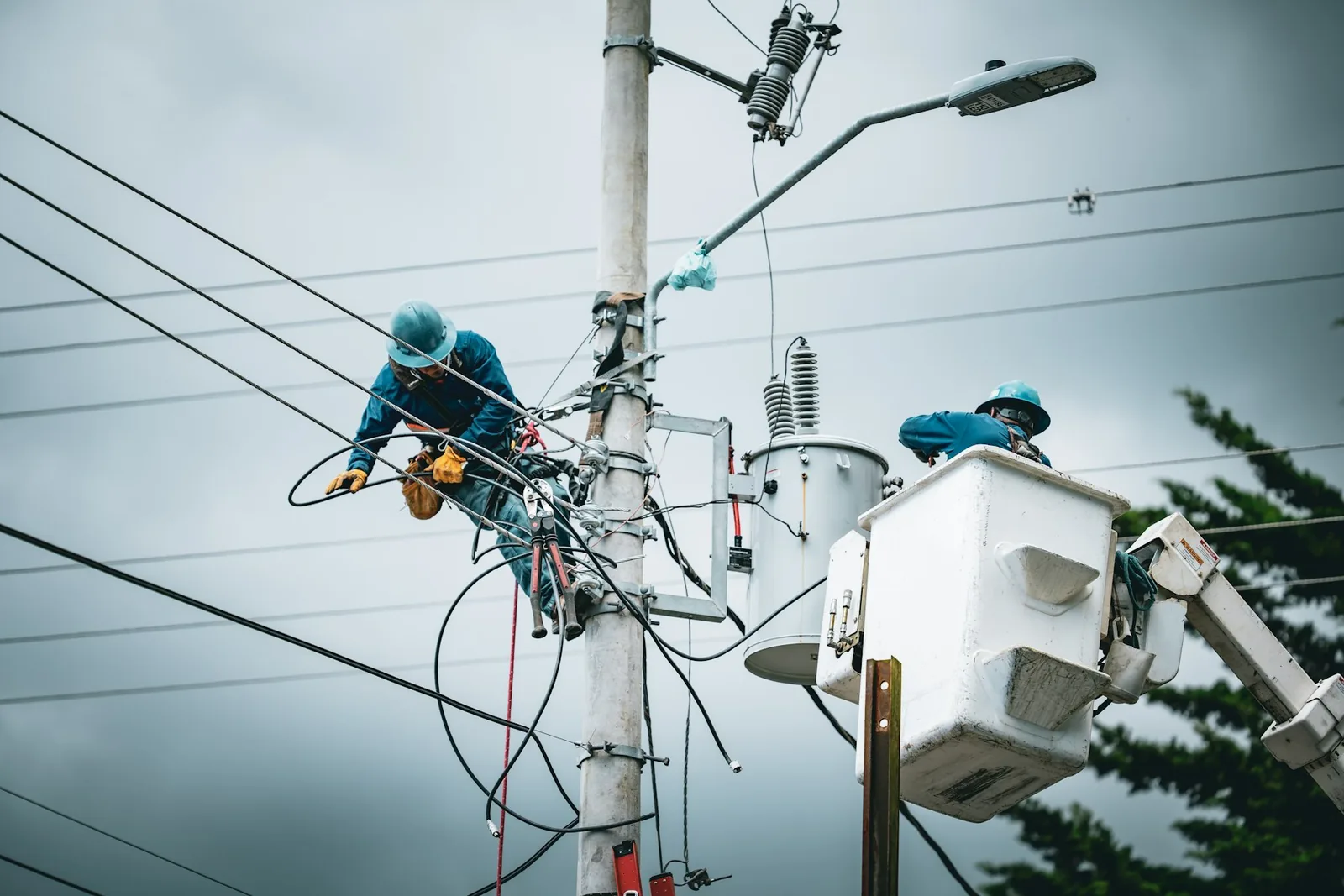
2024 average · EIA
11 hours
without power per US customer, the most in a decade. Major events, mainly hurricanes, caused 80% of it.
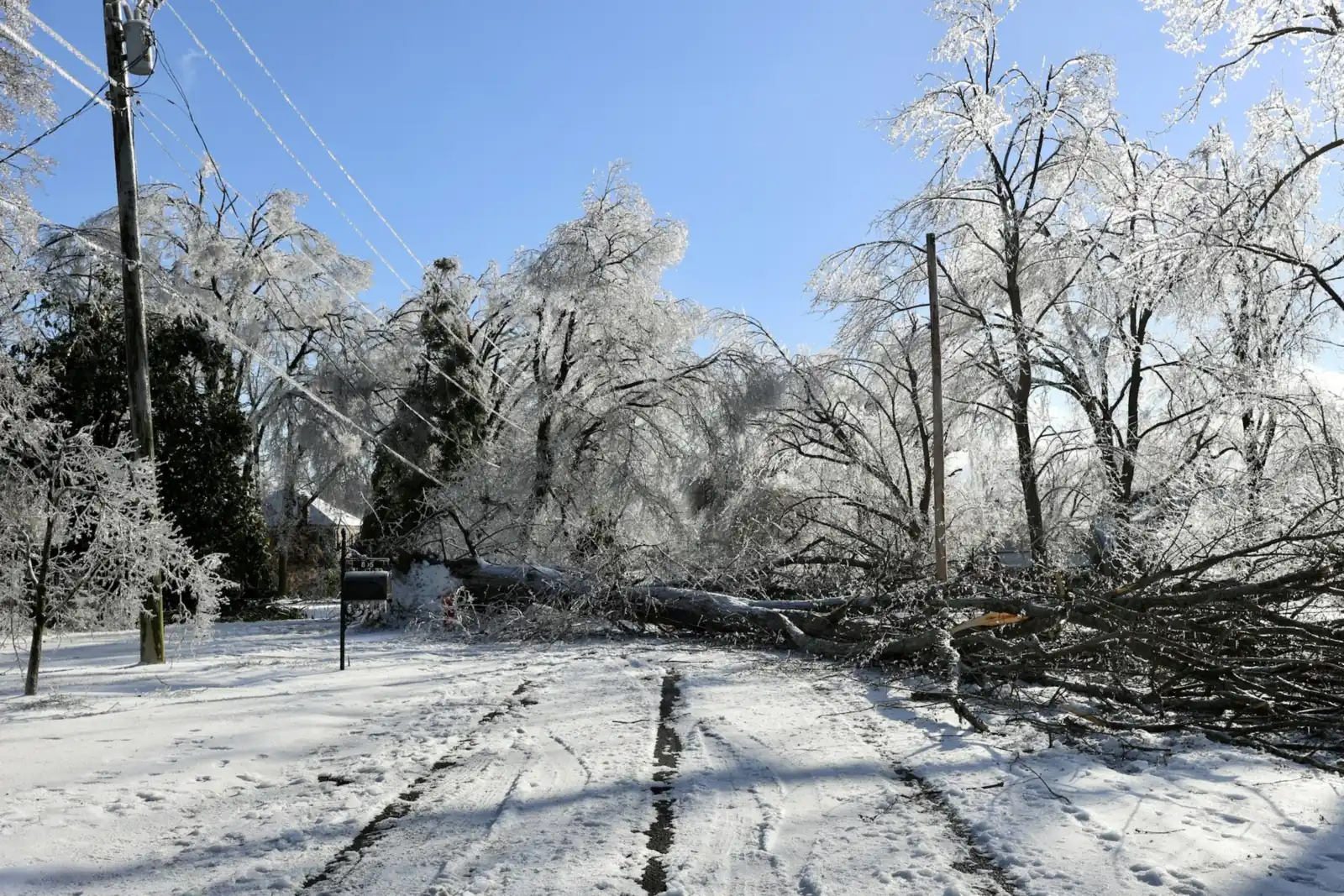
Photo: Mario Spencer / Unsplash
Plans for four outage lengths
72
Hours
A storm takes down local lines. The average US customer was out about 11 hours in 2024 (EIA).
72-hour checklist →14
Days
A hurricane or ice storm damages the grid across a region, and crews rebuild it pole by pole.
Build the Blackout Kit →30
Days
A regional grid failure. Fuel, water treatment and cell sites run on backup power, then run short.
The 30-day plan →90+
Days
A severe geomagnetic storm or an attack damages transformers, which take a long time to replace.
The 90-day plan →
Readiness card
Form PL-1 · 3 minutesWorked example · from the score method
Household of 4 · cold winters
- People in the household4
- Water stored (1 gal / person / day)30 gal · 7 d
- Food that needs no fridge14 d
- Heat without the grid (cold winters)Wood stove · 30 d
Your home holds for
Weakest system: water
7 days
30 gallons ÷ (1 gallon × 4 people) = 7.5 days of water, the weakest critical system. First action: store about 10 more gallons to reach 10 days. How the score works.
What fails first
Sourced timelineIn a long outage, systems give out in a rough order. Timing varies by place and by how much backup a utility or carrier has. Each line names its source.
- Hour 0
Plug-in medical devices
Oxygen concentrators, CPAPs and other devices that run on wall power stop unless they have a battery or backup supply. FDA advises planning for this before an outage.
U.S. Food and Drug Administration, Tips About Medical Devices and Natural Disasters, accessed October 31, 2026
- Hour 4
Refrigerated food
An unopened refrigerator keeps food cold for about 4 hours. FDA says to throw out perishable food that has been above 40°F for 4 hours or more.
U.S. Food and Drug Administration, Food and Water Safety During Power Outages and Floods, current as of March 5, 2024
- Hour 24 to 48
The freezer
A full freezer holds a safe temperature for about 48 hours, a half-full one for about 24, with the door kept shut.
U.S. Food and Drug Administration, Food and Water Safety During Power Outages and Floods, current as of March 5, 2024
- Hour 72
Cell sites on backup power
Cell sites keep running on batteries or generators until those run out. California requires carriers to keep at least 72 hours of backup power at sites in its high fire-threat districts.
California Public Utilities Commission, CPUC Requires Wireless Companies to Better Serve Customers in Emergencies (press release, R.18-03-011), July 16, 2020
- Days 2 to 3
Water pressure, treatment and sewage
Without power, pumps at a water utility can halt the production of treated water, and sewage can overflow. Backup power is not required under the Safe Drinking Water or Clean Water Acts. EPA's planning guide covers outages of 2 to 3 days and of several weeks.
U.S. Environmental Protection Agency, Power Resilience: An Achievable Goal (EPA 810-F-24-018), June 2024
- Day 4
Fuel
Four days after Hurricane Sandy made landfall, EIA estimated that 67% of gas stations in the New York metro area had no gasoline for sale.
U.S. Department of Energy, Hurricane Sandy Situation Report #15, citing EIA's emergency survey, November 4, 2012
- Day 28
Insulin without a fridge
Insulin vials and cartridges may be left unrefrigerated at 59 to 86°F for up to 28 days and still work, per FDA. Some products differ, so check the label.
U.S. Food and Drug Administration, Insulin Storage and Switching Between Products in an Emergency, current as of September 28, 2026
- Day 90+
Replacement transformers
In an extreme (G5) geomagnetic storm, NOAA says transformers may experience damage. Orders for new distribution transformers were taking about two years to fill in 2024, Congress's research service reports.
Congressional Research Service, Electricity Distribution Transformers: Supply, Tariffs, and Policy Options (R48933), April 23, 2026
Plans and guides
Research-based · sources on every page Grid-down
Is the power grid shutting down? What the 90-day rumor gets wrong
The viral posts mix up three real things: a Pentagon plan for military bases, a British preparedness campaign and a scheduled FEMA alert test. None of them is a plan to turn off your power.
6 min read
 Grid-down
The 30-day grid-down plan
What stops working in a month-long regional outage, how much to store for your household, and what to do each week until the power returns.
8 min read
- Grid-down
The 90-day grid-down plan
How a household gets through three months without grid power, built on what federal planners, utilities and public health agencies have published.
7 min read
 Grid-down
Water when the taps stop
City water runs on electricity; this is how much to store, where to find more, and how to make it safe to drink when the treatment plant goes dark.
8 min read
 Grid-down
Heating without power for weeks, without poisoning the household
Most furnaces stop when the grid does, so a long winter outage needs one warm room, a safe heat source, enough stored fuel and a carbon monoxide alarm within earshot of every bed.
10 min read
- Grid-down
Long-term food storage for weeks without the grid
Calorie math, real shelf-life figures from extension services, and a rotation system that keeps a month or more of food edible.
9 min read
Gear by stage
Research-based picks · no testing · no pricesPicks chosen from manufacturer specs and published data. We do not test products. Prices change, so each link goes to Amazon for the current price.
DisclosureAs an Amazon Associate we earn from qualifying purchases. We may earn a commission when you buy through links on this site, at no extra cost to you. Learn more.
Starter
72 hoursLight, alerts, water and a CO alarm. The kit every home should have.
- Check price on Amazon

Emergency radio
Midland ER310 Emergency Crank Weather Radio
- Check price on Amazon
Lantern
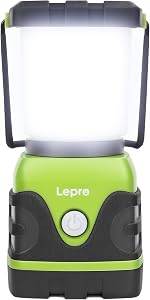
Lepro 1500lm Battery Powered LED Camping Lantern
- Check price on Amazon

CO alarm
First Alert CO710 Carbon Monoxide Alarm with 10-Year Battery
- Check price on Amazon

Water storage
Reliance Jumbo-Tainer 2.0, 7 Gallon (08630-03)
Serious
2 weeksPower for the fridge and phones, water treatment, food and indoor-safe heat.
- Check price on Amazon

Power station
Anker SOLIX C1000 Portable Power Station
- Check price on Amazon

Water treatment
Sawyer Squeeze Water Filter System (SP129)
- Check price on Amazon
Emergency food
Mountain House Classic Assortment Bucket
- Check price on Amazon

Indoor-safe heater
Mr. Heater Portable Buddy MH9BX
Long-haul
30 to 90+ daysDeep food stores, high-volume water filtering, more heat and a radio that never needs the grid.
- Check price on Amazon
Emergency food
ReadyWise 120 Serving Emergency Food Supply
- Check price on Amazon

Water filter
MSR AutoFlow XL Gravity Filter 10 L
- Check price on Amazon
Indoor-safe heater
Mr. Heater Big Buddy (MH18B)
- Check price on Amazon
Emergency radio
Kaito KA600 Voyager Pro Emergency Radio
Conditions now
Live · NOAA SWPC · NWSSpace weather from NOAA's Space Weather Prediction Center and active weather alerts from the National Weather Service, loaded straight from the agencies in your browser.
What the G scale means for the power grid
G1 MinorKp 5
"Weak power grid fluctuations can occur."NOAA, average frequency: 1700 per cycle (900 days per cycle)
Common. No effect on household power.
G2 ModerateKp 6
"High-latitude power systems may experience voltage alarms, long-duration storms may cause transformer damage."NOAA, average frequency: 600 per cycle (360 days per cycle)
Grid operators in the far north watch voltage. Households are not affected.
G3 StrongKp 7
"Voltage corrections may be required, false alarms triggered on some protection devices."NOAA, average frequency: 200 per cycle (130 days per cycle)
Operators adjust the grid. A good day to check your kit, not to worry.
G4 SevereKp 8, including a 9-
"Possible widespread voltage control problems and some protective systems will mistakenly trip out key assets from the grid."NOAA, average frequency: 100 per cycle (60 days per cycle)
Equipment can trip offline. Local outages are possible. Charge phones and power banks.
G5 ExtremeKp 9
"Widespread voltage control problems and protective system problems can occur, some grid systems may experience complete collapse or blackouts. Transformers may experience damage."NOAA, average frequency: 4 per cycle (4 days per cycle)
Rare. Blackouts are possible and damaged transformers take a long time to replace. This is the case a 30-day plan is for.
Source: NOAA Space Weather Prediction Center, NOAA Space Weather Scales, checked October 31, 2026. A cycle is the roughly 11-year solar cycle. Readiness for a G5 is a 90-day plan.
Grid risk outlook · NERC
Where NERC sees shortfalls
Elevated: supply could fall short in extreme weather. High: shortfalls possible even at a normal peak. Neither is a prediction that an outage will happen.
Full outlook and reasonsThis winter · elevated
- Connecticut, Massachusetts, Maine, New Hampshire, Rhode Island, VermontElevated
- North and South CarolinaElevated
- Central Southeast (Tennessee Valley region)Elevated
- Most of TexasElevated
- Utah, southern Idaho and part of western WyomingElevated
- Pacific NorthwestElevated
NERC 2025–2026 Winter Reliability Assessment, November 2025
Next 10 years · high risk
- MISOHigh risk from 2028High
- PJMElevated 2026–28, high from 2029High
- Texas RE-ERCOTElevated 2026–28, high from 2029High
- WECC-BasinElevated 2026–28, high from 2029High
- WECC-NorthwestHigh from 2029High
NERC 2025 Long-Term Reliability Assessment, January 2026
The Grid Report
An occasional email when NERC publishes a new reliability assessment, before hurricane and winter seasons, and when we add new plans and guides. No spam; unsubscribe anytime. See our privacy policy.
Sister site · Backup power
BackupPowerAI
How many watt-hours does your outage need? Add up your fridge, medical devices, heat and lights, and see the power station, solar kit or generator that covers them, with every step of the math.