Guides · Quick answers
Whole house generator vs portable generator
A standby generator is part of the house. A portable is a machine you wheel out, start and refuel. The right one depends on how often your power fails and how long it stays off.
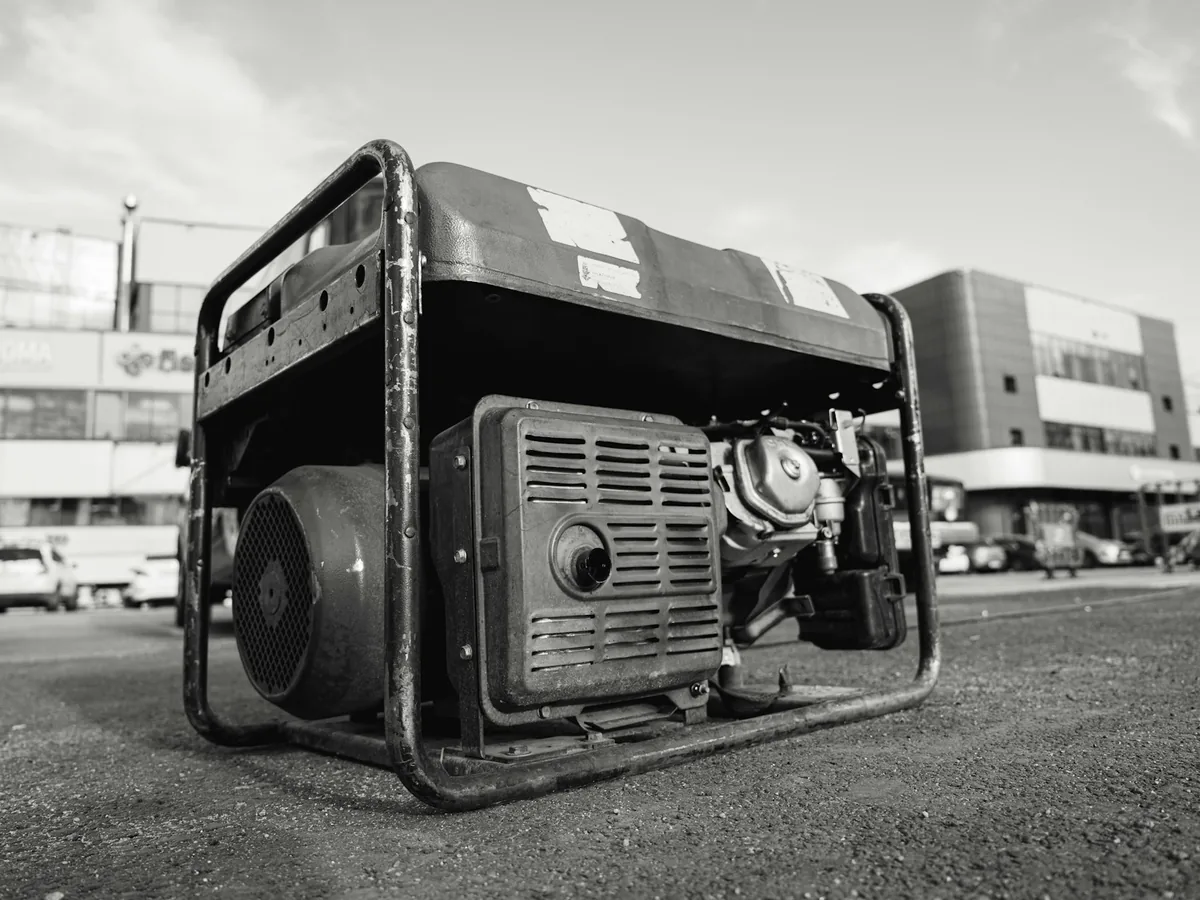
Photo: Dima Solomin / Unsplash
By PowerLockdown EditorialUpdated November 1, 20268 min readHow we research
In this guide
DisclosureAs an Amazon Associate we earn from qualifying purchases. We may earn a commission when you buy through links on this site, at no extra cost to you. Learn more.
The short answer
A whole house (standby) generator is permanently installed, runs on natural gas or propane and starts by itself seconds after the power fails. A portable generator costs far less but runs on gasoline or propane, must be set up outdoors by hand and needs refueling. Standby suits long or frequent outages. Portable suits occasional ones.
Side by side
| Whole house (standby) | Portable | |
|---|---|---|
| Output | Generac's 22 kW Guardian: 22,000 W on propane, 19,500 W on natural gas | Our picks: 1,800 to 10,500 running watts on gasoline |
| What it powers | Most or all of the house, often including central AC | Chosen essentials: fridge, sump pump, furnace fan, lights, some 240 V loads |
| Fuel | Natural gas line or a large propane tank | Gasoline, propane cylinders, or both (dual fuel) |
| Start-up | Automatic, through an automatic transfer switch | Manual: wheel out, start, plug in or switch over |
| Install | Concrete or composite pad, gas line, transfer switch; dealer and licensed electrician, permits | None to run on cords; an inlet and interlock or transfer switch for house circuits, installed by a licensed electrician |
| Noise | Generac 22 kW: 67 dB(A) at 23 ft at normal load | Our picks: 48 to 74 dBA as listed by makers |
| Weight | Generac 22 kW: about 445 to 466 lb, set in place | 47 to 246 lb on wheels or by hand |
| Maintenance | Self-exercises on a schedule; scheduled service per the manual | Owner runs and services it; fuel must be stored and rotated |
| Cost | Generally several thousand to well over ten thousand dollars installed | Hundreds to a few thousand dollars, plus any electrician work |
How a whole home generator works
A standby generator sits on a pad outside the house and is wired to an automatic transfer switch at the electrical panel. When utility power drops, the controller waits, starts the engine, warms it up and moves the house onto generator power. Generac's spec sheet lists a factory utility interrupt delay of 5 seconds and an engine warm-up of about 5 seconds. When the grid returns, the switch moves the house back and the engine cools down for about a minute before shutting off.
It also runs itself between outages. Generac's 22 kW model has a programmable exercise cycle that runs the engine for 5 minutes on a weekly, every-other-week or monthly schedule, in a quieter low-speed mode rated 57 dB(A) at 23 feet. The unit is UL 2200 listed and carries a 5-year limited warranty, per the spec sheet. It needs a 12 V starting battery, which is not included.
Fuel use on a standby
Standby units burn a lot of gas. Generac lists the 22 kW model at 2.53 gallons of propane an hour at half load and 3.90 at full load. At half load around the clock, that is about 60 gallons of propane a day. On natural gas it uses 228 cubic feet an hour at half load. That is why propane standby installs need a large tank, and why natural gas is the default where a gas line exists.
How a portable generator covers a house
A portable generator powers what you connect to it. With heavy-duty outdoor extension cords, that means a fridge, a freezer and a few lamps. To run hardwired loads such as a furnace fan, well pump or sump pump on its own circuit, you need a power inlet plus a manual transfer switch or breaker interlock, installed by a licensed electrician. Larger portables with an L14-30R or 14-50R outlet can feed 240 V circuits through that hookup.
The best portable generator for whole home use is really the best one for your essential circuits. Even a 10,500 W portable cannot run every load in a typical house at once, so you choose circuits and stagger big loads. Our generator buying guide walks through the sizing math.
Is a whole house generator worth it
It depends on your outage history and your loads. The EIA reports that U.S. electricity customers averaged 11 hours of interruptions in 2024, with major events accounting for nearly nine of those hours. Averages hide a lot: some households lose power for days after a hurricane or ice storm, while others barely notice a year. Standby makes the strongest case when one or more of these apply:
- You lose power several times a year, or for days at a time.
- Someone in the house relies on powered medical equipment, or the home needs heat or AC to be safe.
- You travel and need the sump pump or freezer covered when nobody is home.
- You cannot safely move, start and refuel a 200 lb portable in a storm.
A portable makes more sense if outages are short and rare, you rent, or you want backup for the essentials without a major install. Some households split the difference with a large battery system such as the Anker SOLIX F3800 Plus, which provides 120/240 V output through an electrician-installed transfer switch and runs silently indoors.
Permits, placement and noise
- Permits. A standby install usually involves electrical and gas work, which typically needs permits and inspection. Check with your local building department and any HOA before you buy.
- Placement. Standby units must follow the manufacturer's clearance rules from windows, doors, vents and the house. Portables run outdoors only, more than 20 feet from windows, doors and vents (CDC).
- Noise. Generac's 22 kW lists 67 dB(A) at 23 feet at normal load. Open-frame portables in our picks list 74 dBA; the Honda EU2200i inverter lists 48 to 57 dBA.
Safety for both
Store portable generator fuel outside living areas in labeled, non-glass safety containers, and let the engine cool before refueling (CPSC). Our CO alarm picks keep working without grid power.
Best portable generators for whole-home essentials
These research-based picks are based on manufacturer specs checked November 1, 2026. We do not test products. Each has a 120/240 V outlet for an electrician-installed transfer switch or interlock, and an automatic CO shutoff. Check the current price on Amazon.
- 01Best for essentialsGenerac GP7500E Dual Fuel
Fridge, sump pump, furnace fan and lights through an interlock
- Capacity
- Fuel, 7.9 gal tank
- Cont./surge
- 7,500 / 9,400 W gas6,800 / 8,500 W LP
- Chem./fuel
- Gasoline + Propane
- Weight
- 204 lb
- 02Best larger portableWestinghouse WGen9500DFc

Adding a well pump or window AC to the essentials
- Capacity
- Fuel, 6.6 gal tank
- Cont./surge
- 9,500 / 12,500 W gas8,500 / 11,200 W LP
- Chem./fuel
- Gasoline + Propane
- Weight
- 212.1 lb
- 03Closest to whole-homeDuroMax XP13000HX

The biggest load list a portable can carry
- Capacity
- Fuel, 8.3 gal tank
- Cont./surge
- 10,500 / 13,000 W gas10,000 / 12,500 W LP
- Chem./fuel
- Gasoline + Propane
- Weight
- 246 lb
- 04Battery alternativeAnker SOLIX F3800 Plus
Silent, indoor-safe 240 V backup for shorter outages
- Capacity
- 3,840 Wh
- Cont./surge
- 6,000 / n/a W
- Chem./fuel
- LiFePO4 (LFP)
- Weight
- 136.7 lb
No. 1Best for essentials
Generac GP7500E Dual Fuel
Best for: Fridge, sump pump, furnace fan and lights through an interlock
7,500 running watts on gasoline and 6,800 on propane, an L14-30R outlet for the transfer switch, COsense shutdown and electric start.
Strengths
- L14-30R 120/240 V
- Dual fuel
- Electric start
Tradeoffs
- 204 lb
- No noise rating on Generac's page
- Note: Outlet list (two 5-20R GFCI duplex, one L14-30R) from Generac's GP7500E spec sheet; the product page does not list outlets or a noise rating.
- Note: 420cc OHV engine with EFI, PowerRUSH, hour meter, 3-year limited warranty per Generac.
| Fuel | Gasoline + Propane |
| Gasoline | 7,500 W running / 9,400 W starting |
| Propane | 6,800 W running / 8,500 W starting |
| Type | Conventional (open frame) |
| Runtime | Up to 10 h on gasoline / 5 h on a 20 lb propane tank at 50% load |
| CO safety | COsense shutdown |
| Transfer-switch outlet | L14-30R (120/240 V) |
| Weight | 204 lb |
| Start | Electric + recoil |
No. 2Best larger portable
Westinghouse WGen9500DFc
Best for: Adding a well pump or window AC to the essentials
9,500 running watts on gasoline with both L14-30R and 14-50R outlets and a CO sensor shutdown.
Strengths
- Two 240 V outlet options
- 12,500 starting watts
- Electric start
Tradeoffs
- 212 lb
- 74 dBA
- Not CARB compliant per Westinghouse
- Note: Westinghouse lists it as not CARB compliant (not for sale in California).
| Fuel | Gasoline + Propane |
| Gasoline | 9,500 W running / 12,500 W starting |
| Propane | 8,500 W running / 11,200 W starting |
| Type | Conventional (open frame) |
| Runtime | Up to 12 h at 25% load on 6.6 gal gasoline / about 7 h on propane at 50% load (tank size not stated) |
| CO safety | CO sensor with automatic shutdown |
| Transfer-switch outlet | L14-30R or 14-50R (120/240 V) |
| Noise | 74 dBA |
| Weight | 212.1 lb |
| Start | Electric + recoil |
No. 3Closest to whole-home
DuroMax XP13000HX
Best for: The biggest load list a portable can carry
10,500 running watts on gasoline and 10,000 on propane, with L14-30R and 14-50R outlets and CO sensor shutdown. DuroMax lists 17 hours at 25% load on 8.3 gallons.
Strengths
- Most output on this list
- Long runtime at light load
- Four GFCI 5-20R outlets
Tradeoffs
- 246 lb
- Not CARB certified per DuroMax
- Note: DuroMax lists it as EPA certified but not CARB certified (not 50-state compliant).
- Note: Product weight 246 lb (240 lb dry) per DuroMax.
| Fuel | Gasoline + Propane |
| Gasoline | 10,500 W running / 13,000 W starting |
| Propane | 10,000 W running / 12,500 W starting |
| Type | Conventional (open frame) |
| Runtime | 17 h at 25% load / 8.5 h at 50% load on gasoline; 13 h / 6.5 h on propane (DuroMax suggests a 40 lb tank minimum) |
| CO safety | CO Alert sensor with automatic shutdown |
| Transfer-switch outlet | L14-30R or 14-50R (120/240 V) |
| Noise | 74 dB |
| Weight | 246 lb |
| Start | Electric + recoil |
No. 4Battery alternative
Anker SOLIX F3800 Plus
Best for: Silent, indoor-safe 240 V backup for shorter outages
3,840 Wh and 6,000 W continuous with 120/240 V output, expandable to 26.88 kWh. Home-circuit use goes through an electrician-installed transfer switch or panel.
Strengths
- No fumes or fuel
- 120/240 V
- Expandable
Tradeoffs
- 136.7 lb
- Stored energy runs out without solar or a generator to recharge
- Note: 120/240 V output with TT-30R and L14-30R outlets. Whole-home use goes through an electrician-installed transfer switch or panel.
| Capacity | 3,840 Wh |
| AC output | 6,000 W continuous (surge not stated) |
| Battery | LiFePO4 (LFP) |
| Weight | 136.7 lb |
| Max solar input | 3,200 W |
| Rated cycles | 3,000+ cycles |
| AC outlets | 8 |
| Expansion | Up to 26.88 kWh per unit with expansion batteries |
More detail: Generac GP7500E review and Westinghouse WGen9500DFc review.
Frequently asked questions
- Is a whole house generator worth it?
- It is worth it when outages are frequent or long, when someone depends on powered medical equipment, or when the house must stay heated, cooled or pumped while you are away. For short, rare outages, a portable with an electrician-installed interlock usually covers the essentials for far less.
- Can a portable generator power a whole house?
- Rarely all of it at once. A large portable such as a 10,500 W unit can run many essential circuits through a transfer switch, but central AC, an electric range and an electric water heater together usually exceed it. You choose circuits and stagger big loads.
- How quickly does a standby generator turn on?
- Within seconds. Generac's 22 kW spec sheet lists a 5-second default utility interrupt delay and about 5 seconds of engine warm-up before the transfer switch moves the house onto generator power.
- Does a whole home generator need a permit?
- Usually. Installing one involves electrical and fuel connections, which typically require permits and inspection. Ask your local building department and use a licensed electrician and a qualified installer.
- Where should a portable generator go during an outage?
- Outdoors only, more than 20 feet from windows, doors and vents, with the exhaust pointed away from the house (CDC, CPSC). Never in a garage, even with the door open.
Sources
- Generac Power Systems, 20/22/24 kW Guardian Air-Cooled Standby Generator Spec Sheet (Part No. A0000937814 Rev. F), September 28, 2022.
- U.S. Energy Information Administration (Today in Energy), Hurricanes in 2024 led to the most hours without power in the United States in 10 years, December 1, 2025.
- CDC, About Carbon Monoxide Poisoning, reviewed October 2026.
- U.S. Consumer Product Safety Commission, Keep Warm and Safe This Winter: Tips for Using Generators, Furnaces and Space Heaters, January 23, 2026.
- U.S. Consumer Product Safety Commission, Safety Alert: Portable Generator Hazards (Publication 5123), October 2021.
- FEMA, Fact Sheet: Be Safe When Using a Portable Generator, released October 19, 2017; updated April 25, 2023.
Related guides
Gear picks
Best generator for power outage backup at home
A portable generator is the most common way households run a fridge, sump pump and furnace fan through a multi-day outage. Pick the size from your loads, then plan the fuel and the safety.
Updated November 1, 2026 · 9 min read
Quick answers
How to get electricity during a power outage
When the grid is down, electricity comes from two places: energy you stored before the outage, or fuel you burn during it. Here are the options from smallest to largest, and what each one can realistically run.
Updated November 1, 2026 · 8 min read
Gear picks
Best power station for refrigerator backup
A fridge is the appliance most households want to save first. Size the station for the compressor's startup surge and a day of cycling, and it is one of the easier loads to back up.
Updated November 1, 2026 · 9 min read
Outage basics
How long power outages last: what federal data shows
What federal data says about outage length in the US, why a few big storms dominate the numbers, and how to decide how many days to prepare for.
Updated October 27, 2026 · 7 min read
Gear picks
Best carbon monoxide alarms for power outages
Generators, fuel-burning heaters and improvised cooking make outages a high-risk time for carbon monoxide. These alarms keep working without grid power.
Updated October 27, 2026 · 8 min read