Guides · Gear picks
Best generator for power outage backup at home
A portable generator is the most common way households run a fridge, sump pump and furnace fan through a multi-day outage. Pick the size from your loads, then plan the fuel and the safety.
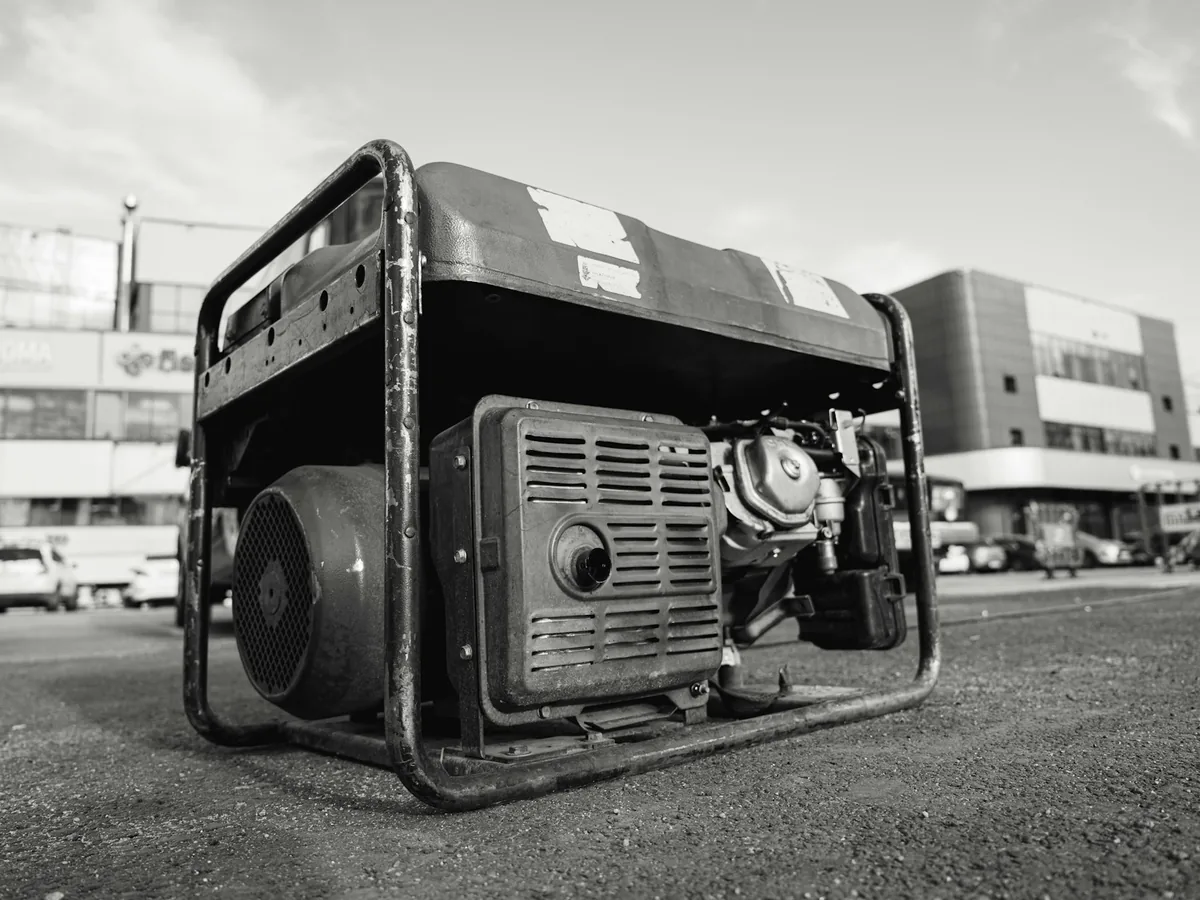
Photo: Dima Solomin / Unsplash
By PowerLockdown EditorialUpdated November 1, 20269 min readHow we research
In this guide
DisclosureAs an Amazon Associate we earn from qualifying purchases. We may earn a commission when you buy through links on this site, at no extra cost to you. Learn more.
The short answer
For most homes, the best generator for a power outage is a dual-fuel portable rated around 7,500 to 9,500 running watts with a 120/240 V L14-30 outlet for a transfer switch. It runs the fridge, sump pump, furnace fan and lights. If you only need a fridge and electronics, a quieter 3,500 W inverter is enough.
At a glance
| Model | Type | Running W (gas) | Best for |
|---|---|---|---|
| Generac GP7500E Dual Fuel | Open frame, dual fuel | 7,500 | Most homes with a transfer switch |
| Champion 4500W Inverter (201321) | Inverter, dual fuel | 3,650 | Quiet power for a fridge and electronics |
| Westinghouse WGen9500DFc | Open frame, dual fuel | 9,500 | Bigger homes, well pumps |
| Champion 3500W (201296) | Open frame, dual fuel | 3,500 | Basic fridge-and-lights backup |
| Champion 9500W (201508) | Open frame, dual fuel | 9,500 | Large loads, 50 A outlet |
| DuroMax XP13000HX | Open frame, dual fuel | 10,500 | Most power on this list |
| Honda EU2200i | Inverter, gasoline | 1,800 | Quietest, lightest backup |
The picks
- 01Best overallGenerac GP7500E Dual Fuel
A whole-home transfer switch setup that runs essentials on 240 V
- Capacity
- Fuel, 7.9 gal tank
- Cont./surge
- 7,500 / 9,400 W gas6,800 / 8,500 W LP
- Chem./fuel
- Gasoline + Propane
- Weight
- 204 lb
- 02Best inverterChampion 4500W Dual Fuel Inverter (201321)
Quieter backup for a fridge, electronics and a few lights
- Capacity
- Fuel, 4.02 gal tank
- Cont./surge
- 3,650 / 4,500 W gas3,285 / 4,500 W LP
- Chem./fuel
- Gasoline + Propane
- Weight
- 92.6 lb
- 03Best for bigger homesWestinghouse WGen9500DFc

Homes with a 240 V well pump or more circuits to back up
- Capacity
- Fuel, 6.6 gal tank
- Cont./surge
- 9,500 / 12,500 W gas8,500 / 11,200 W LP
- Chem./fuel
- Gasoline + Propane
- Weight
- 212.1 lb
- 04Best budgetChampion 3500W Dual Fuel (201296)
Keeping a fridge, lights and phones going on a modest budget
- Capacity
- Fuel, 4.7 gal tank
- Cont./surge
- 3,500 / 4,375 W gas3,150 / 3,950 W LP
- Chem./fuel
- Gasoline + Propane
- Weight
- 104.7 lb
- 05Big dual fuelChampion 9500W Dual Fuel (201508)
Large essential-load lists with a 50 A inlet
- Capacity
- Fuel, 7.7 gal tank
- Cont./surge
- 9,500 / 12,000 W gas8,550 / 10,800 W LP
- Chem./fuel
- Gasoline + Propane
- Weight
- 216 lb
- 06Most powerDuroMax XP13000HX

Running a central AC or several large motors with an electrician-installed 50 A inlet
- Capacity
- Fuel, 8.3 gal tank
- Cont./surge
- 10,500 / 13,000 W gas10,000 / 12,500 W LP
- Chem./fuel
- Gasoline + Propane
- Weight
- 246 lb
- 07QuietestHonda EU2200i

Apartment-adjacent or close-neighbor situations with small loads
- Capacity
- Fuel, 0.95 gal tank
- Cont./surge
- 1,800 / 2,200 W gas
- Chem./fuel
- Gasoline
- Weight
- 47.4 lb
No. 1Best overall
Generac GP7500E Dual Fuel
Best for: A whole-home transfer switch setup that runs essentials on 240 V
7,500 running watts on gasoline (6,800 on propane) covers a fridge, a sump pump, a furnace fan and lights with room left over. The L14-30R outlet feeds a transfer switch or interlock, and COsense shuts the engine down if CO builds up. Electric start helps in cold weather.
Strengths
- 120/240 V L14-30R outlet
- COsense shutdown
- Electric start
Tradeoffs
- 204 lb
- Generac does not list a noise rating on the product page
- Note: Outlet list (two 5-20R GFCI duplex, one L14-30R) from Generac's GP7500E spec sheet; the product page does not list outlets or a noise rating.
- Note: 420cc OHV engine with EFI, PowerRUSH, hour meter, 3-year limited warranty per Generac.
| Fuel | Gasoline + Propane |
| Gasoline | 7,500 W running / 9,400 W starting |
| Propane | 6,800 W running / 8,500 W starting |
| Type | Conventional (open frame) |
| Runtime | Up to 10 h on gasoline / 5 h on a 20 lb propane tank at 50% load |
| CO safety | COsense shutdown |
| Transfer-switch outlet | L14-30R (120/240 V) |
| Weight | 204 lb |
| Start | Electric + recoil |
No. 2Best inverter
Champion 4500W Dual Fuel Inverter (201321)
Best for: Quieter backup for a fridge, electronics and a few lights
An open-frame inverter with clean power for electronics, 3,650 running watts on gas and up to 22 hours at 25% load per Champion. It runs on gasoline or propane, has electric start and parallel ports, and includes CO Shield.
Strengths
- Inverter power for electronics
- 64 dBA
- Long runtime at light load
Tradeoffs
- 120 V only, no 240 V outlet
- No transfer switch outlet listed
| Fuel | Gasoline + Propane |
| Gasoline | 3,650 W running / 4,500 W starting |
| Propane | 3,285 W running / 4,500 W starting |
| Type | Inverter (clean power) |
| Runtime | Up to 22 h on gasoline / 21 h on a 20 lb propane tank at 25% load |
| CO safety | CO Shield automatic shutoff |
| Transfer-switch outlet | None (120 V outlets only) |
| Noise | 64 dBA |
| Weight | 92.6 lb |
| Start | Electric + recoil |
No. 3Best for bigger homes
Westinghouse WGen9500DFc
Best for: Homes with a 240 V well pump or more circuits to back up
9,500 running and 12,500 starting watts on gasoline, with both an L14-30R and a 50 A 14-50R outlet. Westinghouse lists a CO sensor with automatic shutdown and electric start.
Strengths
- Two 240 V outlet options
- 12,500 starting watts
- CO sensor shutdown
Tradeoffs
- 212 lb
- 74 dBA
- Westinghouse lists it as not CARB compliant
- Note: Westinghouse lists it as not CARB compliant (not for sale in California).
| Fuel | Gasoline + Propane |
| Gasoline | 9,500 W running / 12,500 W starting |
| Propane | 8,500 W running / 11,200 W starting |
| Type | Conventional (open frame) |
| Runtime | Up to 12 h at 25% load on 6.6 gal gasoline / about 7 h on propane at 50% load (tank size not stated) |
| CO safety | CO sensor with automatic shutdown |
| Transfer-switch outlet | L14-30R or 14-50R (120/240 V) |
| Noise | 74 dBA |
| Weight | 212.1 lb |
| Start | Electric + recoil |
No. 4Best budget
Champion 3500W Dual Fuel (201296)
Best for: Keeping a fridge, lights and phones going on a modest budget
3,500 running watts on gasoline handles a fridge plus small loads, and the 4.7 gallon tank gives up to 14 hours at 50% load per Champion. CO Shield is standard.
Strengths
- Up to 14 h at 50% load
- Dual fuel
- CO Shield
Tradeoffs
- Recoil start only
- L5-30R is 120 V only, so no 240 V circuits
| Fuel | Gasoline + Propane |
| Gasoline | 3,500 W running / 4,375 W starting |
| Propane | 3,150 W running / 3,950 W starting |
| Type | Conventional (open frame) |
| Runtime | Up to 14 h on gasoline / 10.5 h on a 20 lb propane tank at 50% load |
| CO safety | CO Shield automatic shutoff |
| Transfer-switch outlet | L5-30R (120 V only) |
| Noise | 68 dBA at 23 ft |
| Weight | 104.7 lb |
| Start | Recoil |
No. 5Big dual fuel
Champion 9500W Dual Fuel (201508)
Best for: Large essential-load lists with a 50 A inlet
9,500 running watts with L14-30R and 14-50R outlets, electric start and CO Shield. A 7.7 gallon tank gives about 8 hours at 50% load.
Strengths
- 14-50R 50 A outlet
- Electric start
- CO Shield
Tradeoffs
- 216 lb
- About 4.5 h on a 20 lb propane tank at 50% load
- Note: 500cc engine, electric and recoil start, Cold Start Technology, Intelligauge, 6.5 ft propane hose with regulator included, EPA certified, 3-year limited warranty per Champion.
| Fuel | Gasoline + Propane |
| Gasoline | 9,500 W running / 12,000 W starting |
| Propane | 8,550 W running / 10,800 W starting |
| Type | Conventional (open frame) |
| Runtime | Up to 8 h on gasoline at 50% load (7.7 gal); about 4.5 h on a 20 lb propane tank at 50% load |
| CO safety | CO Shield automatic shutoff |
| Transfer-switch outlet | L14-30R or 14-50R (120/240 V) |
| Noise | 74 dBA at 23 ft |
| Weight | 216 lb |
| Start | Electric + recoil |
No. 6Most power
DuroMax XP13000HX
Best for: Running a central AC or several large motors with an electrician-installed 50 A inlet
10,500 running and 13,000 peak watts on gasoline, 10,000 running on propane, with four GFCI 5-20R outlets plus L5-30R, L14-30R and 14-50R. DuroMax lists CO sensor shutdown and electric start.
Strengths
- Highest output here
- Four 120 V GFCI outlets plus three locking/50 A outlets
- 17 h at 25% load on 8.3 gal
Tradeoffs
- 246 lb
- DuroMax lists it as not CARB certified
- DuroMax suggests at least a 40 lb propane tank
- Note: DuroMax lists it as EPA certified but not CARB certified (not 50-state compliant).
- Note: Product weight 246 lb (240 lb dry) per DuroMax.
| Fuel | Gasoline + Propane |
| Gasoline | 10,500 W running / 13,000 W starting |
| Propane | 10,000 W running / 12,500 W starting |
| Type | Conventional (open frame) |
| Runtime | 17 h at 25% load / 8.5 h at 50% load on gasoline; 13 h / 6.5 h on propane (DuroMax suggests a 40 lb tank minimum) |
| CO safety | CO Alert sensor with automatic shutdown |
| Transfer-switch outlet | L14-30R or 14-50R (120/240 V) |
| Noise | 74 dB |
| Weight | 246 lb |
| Start | Electric + recoil |
No. 7Quietest
Honda EU2200i
Best for: Apartment-adjacent or close-neighbor situations with small loads
Honda lists 48 to 57 dBA and 47.4 lb. 1,800 running watts will start most fridges and run a CPAP, phones and lights. Honda's CO-MINDER shuts it down if CO builds up.
Strengths
- Quietest and lightest
- CO-MINDER
- Inverter power
Tradeoffs
- Gasoline only, 0.95 gal tank
- Too small for a sump pump plus fridge
- Honda lists it as not for sale in California
- Note: Gasoline only. Honda lists this model as not for sale in California.
| Fuel | Gasoline |
| Gasoline | 1,800 W running / 2,200 W starting |
| Type | Inverter (clean power) |
| Runtime | 3.2 h at rated load / 8.1 h at 25% load on 0.95 gal |
| CO safety | CO-MINDER automatic shutdown |
| Transfer-switch outlet | None (120 V outlets only) |
| Noise | 48–57 dBA |
| Weight | 47.4 lb |
| Start | Recoil |
Full write-ups for the top three: Generac GP7500E review, Champion 201321 review and Westinghouse WGen9500DFc review.
How big a generator for home backup power
Add the running watts of everything you want on at once. Then add the single largest startup jump, because motors draw extra for a moment when they start. Champion Power Equipment's wattage chart gives these typical figures:
| Appliance | Running watts | Starting watts |
|---|---|---|
| Refrigerator | 150 to 400 | 800 to 1,200 |
| Sump pump, 1/2 HP | 800 to 1,050 | 1,300 to 2,150 |
| Furnace fan, 1/2 HP | 300 to 800 | 800 to 1,600 |
| Well pump, 1 HP | 1,000 to 2,000 | 2,000 to 4,000 |
| Window AC, 10,000 BTU | 900 to 1,200 | 1,800 to 2,400 |
| Microwave | 600 to 1,200 | None listed |
| LED bulb | 8 to 15 each | None listed |
Example. Fridge 400 W + sump pump 1,050 W + furnace fan 800 W + ten LED bulbs 150 W + TV and chargers 300 W = 2,700 running watts. The sump pump's startup jump is about 1,100 W (2,150 minus 1,050), so plan for about 3,800 W at the moment it kicks on. A 3,500 W generator is too tight. A 7,500 W unit has comfortable headroom and lets you add a microwave or a window AC.
Inverter, open frame or dual fuel
- Inverter generators produce cleaner power for electronics and throttle down at light loads, which saves fuel and noise. Both inverter picks here are 120 V only, at 3,650 and 1,800 running watts.
- Open-frame generators deliver more watts for the money and usually include a 120/240 V outlet for a transfer switch. They are louder and heavier.
- Dual fuel lets you run on gasoline or propane. Propane output is lower on every model here, for example 6,800 W versus 7,500 W on the Generac.
Fuel planning
Fuel is what limits a generator in a long outage. Using Generac's own figure of up to 10 hours on 7.9 gallons at 50% load, the GP7500E burns roughly 0.8 gallons an hour at that load, or about 19 gallons a day if it runs nonstop. On propane, Generac lists about 5 hours per 20 lb tank at 50% load, so a full day takes about five tanks. Running the generator in shifts, a few hours at a time to cool the fridge and pump the sump, cuts that sharply.
- Store fuel outside living areas in properly labeled, non-glass safety containers, and never near a fuel-burning appliance such as a gas water heater in a garage (CPSC).
- Never store generator fuel in the house (FEMA).
- Turn the generator off and let it cool before refueling. Gasoline spilled on hot engine parts can ignite (CPSC).
Generator safety: carbon monoxide
A CO shutoff sensor, which every pick here has, is a backup and not a substitute for placement. Point the exhaust away from the house. Our CO alarm picks all keep working without grid power, and BackupPowerAI's generator CO safety guide covers placement in more detail.
Connecting to the house: transfer switch or interlock
Never plug a generator into a wall outlet to power the house. CPSC calls this backfeeding: it is an electrocution risk to utility workers and neighbors on the same transformer, and it bypasses household circuit protection. The safe options are a transfer switch or a breaker interlock with a power inlet, installed by a licensed electrician under local code and permit. FEMA says to use a qualified electrician or ask your utility. Without one, run heavy-duty outdoor-rated extension cords rated above the total wattage of what you plug in.
To feed 240 V circuits such as a well pump, you need a generator with an L14-30R or 14-50R outlet. The Champion 201296 and both inverters are 120 V only. BackupPowerAI's transfer switch and interlock basics explains the options.
Frequently asked questions
- What size generator do I need to run my house during a power outage?
- For essentials (fridge, sump pump, furnace fan, lights and electronics), plan on about 4,000 to 7,500 running watts. Add a well pump, window AC or electric range and you move to 9,500 watts or more. Central air conditioning and electric heat are where a [standby generator](/guides/whole-house-generator-vs-portable-generator) starts to make sense.
- What is the best inverter generator for home backup?
- Among our picks, the Champion 201321 offers the most inverter output at 3,650 running watts on gasoline, with dual fuel and electric start. The Honda EU2200i is quieter and lighter but tops out at 1,800 running watts.
- Can I run a generator in my garage with the door open?
- No. The CDC, CPSC and FEMA all say never run a generator in a garage, even with the door open. Run it outdoors more than 20 feet from windows, doors and vents.
- Do I need a transfer switch for a portable generator?
- You need a transfer switch or an interlock with an inlet if you want to power household circuits. A licensed electrician should install it. Otherwise, plug appliances into the generator with outdoor-rated extension cords.
- Is a portable generator or a whole house generator better for outages?
- A portable is cheaper and flexible but needs manual setup and fuel. A standby unit starts by itself and runs on natural gas or propane. See [whole house generator vs portable generator](/guides/whole-house-generator-vs-portable-generator).
- Did you test these generators?
- No. These are research-based picks based on manufacturer specs and published data. We do not test products.
Sources
- CDC, About Carbon Monoxide Poisoning, reviewed October 2026.
- U.S. Consumer Product Safety Commission, Keep Warm and Safe This Winter: Tips for Using Generators, Furnaces and Space Heaters, January 23, 2026.
- U.S. Consumer Product Safety Commission, Safety Alert: Portable Generator Hazards (Publication 5123), October 2021.
- FEMA, Fact Sheet: Be Safe When Using a Portable Generator, released October 19, 2017; updated April 25, 2023.
- Ready.gov (FEMA), Power Outages, updated June 4, 2026.
- Champion Power Equipment, Generator Wattage Chart, accessed November 1, 2026.
Related guides
Quick answers
Whole house generator vs portable generator
A standby generator is part of the house. A portable is a machine you wheel out, start and refuel. The right one depends on how often your power fails and how long it stays off.
Updated November 1, 2026 · 8 min read
Gear picks
Best power station for refrigerator backup
A fridge is the appliance most households want to save first. Size the station for the compressor's startup surge and a day of cycling, and it is one of the easier loads to back up.
Updated November 1, 2026 · 9 min read
Quick answers
How to get electricity during a power outage
When the grid is down, electricity comes from two places: energy you stored before the outage, or fuel you burn during it. Here are the options from smallest to largest, and what each one can realistically run.
Updated November 1, 2026 · 8 min read
Gear picks
Best carbon monoxide alarms for power outages
Generators, fuel-burning heaters and improvised cooking make outages a high-risk time for carbon monoxide. These alarms keep working without grid power.
Updated October 27, 2026 · 8 min read
Gear picks
Best battery backup for a sump pump
Storms that flood basements are the same storms that knock out power. A battery backup sump pump keeps water moving when the primary pump goes quiet.
Updated November 1, 2026 · 9 min read
Seasonal prep
Hurricane power outage prep
Hurricanes are the biggest single driver of long US power outages. This plan covers a week or more without electricity.
Updated October 27, 2026 · 8 min read