Blackout Kit · Light
Best Emergency Lanterns and Flashlights for Power Outages
Room lanterns, a headlamp per person and one strong flashlight, plus how to plan batteries for a multi-day outage.
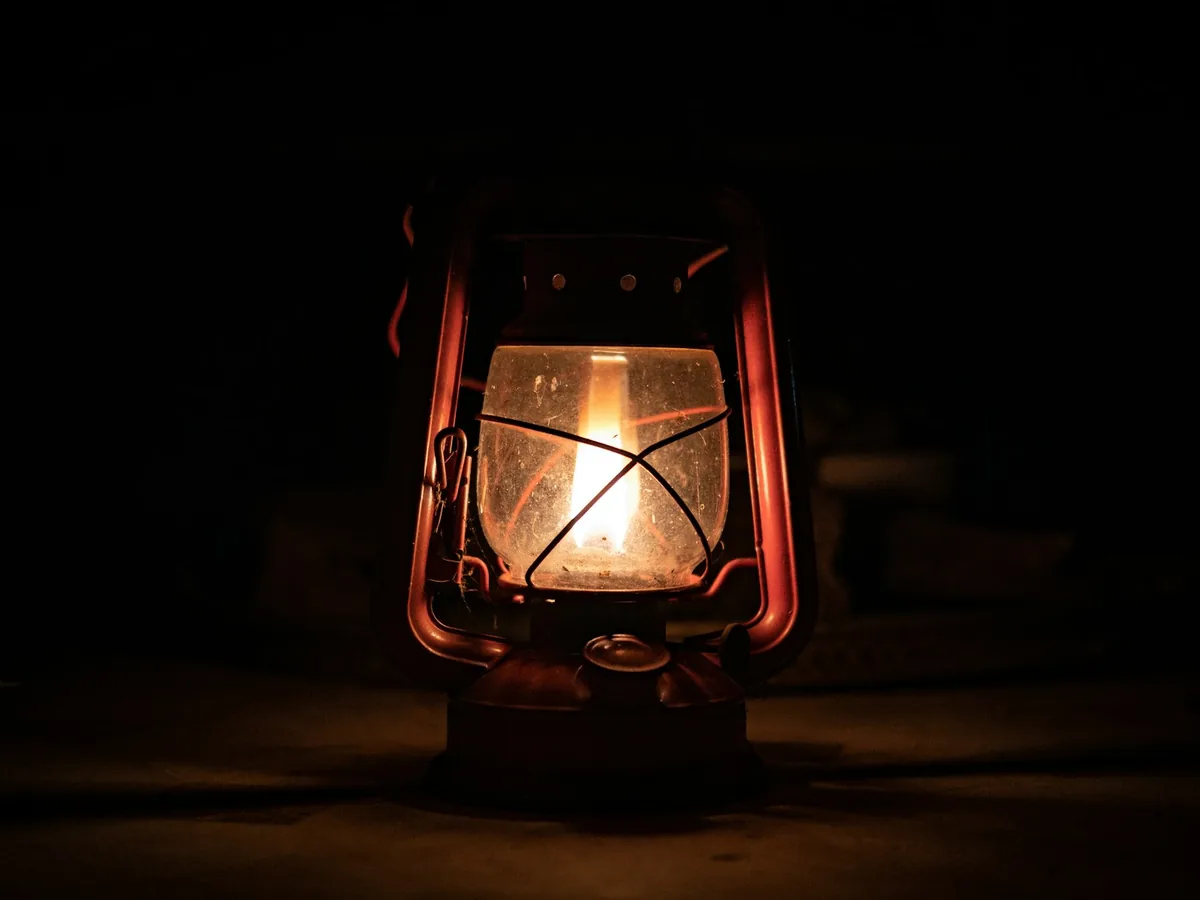
Photo: Joshua Bartell / Unsplash
By PowerLockdown EditorialUpdated October 27, 20263 min readHow we research
In this guide
DisclosureAs an Amazon Associate we earn from qualifying purchases. We may earn a commission when you buy through links on this site, at no extra cost to you. Learn more.
Light is the first thing you notice is missing when the grid goes down, and it is the easiest gap to close. Ready.gov's basic kit list includes a flashlight and extra batteries for exactly that reason. The mistake most households make is relying on a single flashlight and phone screens, which drains the one device you most need for news and calls.
This guide is research-based: the picks below are chosen from manufacturer specs and published data; we do not test products. We explain how to size a lighting kit, how to think about batteries versus rechargeables, and the tradeoffs of each pick so you can choose for your own home.
Plan lighting by zone, not by gadget
A practical outage lighting plan covers three jobs. Area light lets a family share one room in the evening, which is what lanterns do best because they spread light in 360 degrees instead of a narrow beam. Task light keeps your hands free for cooking, caring for kids or reading a breaker panel; that is a headlamp's job. Reach light, a strong handheld flashlight, is for checking the yard, the street or a fuse box in the garage.
A reasonable starting point is one lantern for the main living area, one headlamp per person, and one powerful flashlight per household. Add a second lantern if bedrooms or a bathroom are far from the main room.
Batteries vs. rechargeable: run both
Rechargeable lights are cheaper to run and pair well with a power bank or portable power station, but they can only be recharged if you still have a source of power. Disposable-battery lights (AA, AAA or D) work as long as your stockpile lasts and are easy to store. For a multi-day outage the most resilient setup mixes both: rechargeables for daily use and at least one alkaline-powered lantern as a fallback.
Standardize where you can. If your lantern, headlamps and radio all run on AA, one box of batteries covers everything. Store batteries in their original packaging in a cool, dry spot, and check expiry dates when you change your smoke-alarm batteries.
Simple runtime math
Manufacturers publish runtimes for each brightness mode. Estimate your need with: hours of darkness you will actually use light × number of days × number of lights. For example, 5 hours a night for 3 nights with one lantern is 15 lantern-hours. A lantern rated 30 hours on high by its maker would need roughly one set of batteries; a model rated 2.5 hours on high would need recharging every night or running on a lower mode.
Low modes stretch runtime dramatically. Most lanterns list a low setting that lasts several times longer than high, and low is usually plenty for a living room once your eyes adjust. Our kit builder on the Blackout Kit hub runs this calculation for your household size.
Safety: a light for every person
Research-based picks
Five lights that cover area, task and reach lighting. Specs are as stated on each manufacturer's page (linked) and were checked on October 27, 2026.
No. 1Lantern
Goal Zero Lighthouse 600 Lantern & USB Power Hub
Best for: Rechargeable whole-room lantern with a hand-crank backup
- 600 lumens, warm white (3,500K)
- 5,200 mAh / 18.98 Wh Li-ion battery
- Recharge by USB (about 6 hrs), Goal Zero Nomad 10 solar panel (about 6 hrs) or built-in hand crank
- 1 minute of cranking = about 10 minutes of light on low
- USB-A output (5V, 1.5A) to top up a phone
- Runtime: one side on low up to 320 hrs; both sides on high 2.5 hrs
- 1.1 lb (498 g)
Tradeoffs
- Only about 2.5 hours at full brightness on both sides
- Crank gives little light per minute; solar recharge needs a separately sold panel
No. 2Lantern
Energizer WeatheReady Emergency Lantern (360° LED)
Best for: Disposable-battery lantern that runs on D or AA
- Runs on 3 D or 3 AA batteries
- 500 lumens high / 100 lumens low / night-light mode
- Runtime with 3 D batteries: 30 hrs high, 90 hrs low, 500 hrs night light
- USB port to charge a device
- IPX4 water resistance; 1 m drop rated
- Luminous (photoluminescent) switch
Tradeoffs
- You need to stock D or AA batteries
- 30 hours on high means a battery change every few nights of heavy use

No. 3Headlamp
Black Diamond Spot 400 Headlamp
Best for: Hands-free light on AAA batteries or a rechargeable pack
- 400 lumens high / 200 medium / 6 low
- Runs on 3× AAA (included) or Black Diamond BD 1500 Li-ion pack
- Burn time on high: 2.5 hrs (AAA) / 4 hrs (BD 1500); low: 200 / 225 hrs
- IPX8 waterproof (1.1 m for 30 min)
- 86 g with AAA batteries
- Red night-vision mode, lock mode and battery meter
Tradeoffs
- Short runtime on high; use medium or low for long nights
- The rechargeable BD 1500 pack is sold separately
No. 4Flashlight
Fenix PD36R PRO Rechargeable Flashlight
Best for: Powerful handheld light for the yard, garage or breaker panel
- 2,800 lumens max (Turbo)
- 380 m (1,247 ft) beam distance
- Up to 42 hrs runtime on its lowest mode
- 5,000 mAh 21700 Li-ion battery, USB-C charging (about 3 hrs)
- Waterproof to 2 m, dustproof, impact resistant
- 169 g (5.96 oz) with battery
Tradeoffs
- Turbo is limited at lower battery levels and steps down when hot
- Uses a 21700 cell, not AA; a spare cell is worth having for long outages
No. 5Lantern
Energizer Hybrid Solar Lantern
Best for: Solar-rechargeable backup lantern that also takes AA batteries
- Recharges by solar or USB; also runs on 3 AA batteries
- 500 lumens high (rechargeable battery only) / 60 lumens low
- Runtime: 2.5 hrs high / 8 hrs low
- IPX4; 1 m drop rated; shatterproof lens
- Collapsible design with hanging hook
Tradeoffs
- Short runtime per charge (8 hours on low)
- Full 500 lumens only on the rechargeable battery
Lighting kit checklist
- One lantern for the main room, plus one for a far bedroom or bathroom if needed
- One headlamp per person, kept by each bed
- One strong flashlight by the door or breaker panel
- Batteries for every disposable-battery light, in one labelled bin
- A charging plan for rechargeables: power bank, portable power station or solar panel
- Chemical light sticks or night-light mode for hallways and kids' rooms
Where backup power fits
If you expect multi-day outages, a portable power station can recharge lanterns, headlamps and phones every day. Sizing one depends on what else you want to run, so we built a separate backup power calculator for that.
Frequently asked questions
- How many lumens do I need for a room during an outage?
- A lantern in the 300–600 lumen range lights a living room for a family; most of the time a low mode is enough and lasts far longer. Save high modes for tasks.
- Are rechargeable or battery lanterns better for emergencies?
- Both have a role. Rechargeables are cheaper to run if you have a way to recharge; alkaline-powered lanterns keep working when every battery bank is empty. A mix is the most resilient choice.
- Can I use candles instead?
- Ready.gov's power-outage guidance says to have flashlights for every household member. Battery-powered lights avoid the open-flame fire risk of candles, especially around kids and pets.
- How long do stored batteries last?
- Check the expiry date printed on the package. Rotate your stock once a year and replace anything past its date.
Sources
Related guides
Comms
Emergency Communication: Weather Radios and Power Banks
A NOAA weather alert radio that needs no outlet, and power banks sized to keep phones running for days.
Updated October 27, 2026 · 3 min read
Heat
Best Indoor-Safe Heaters for Power Outages (and How to Use Them Safely)
Indoor-rated propane heaters with ODS and tip-over shutoff, and the carbon monoxide rules that keep a cold night from turning dangerous.
Updated October 27, 2026 · 4 min read
Food safety
How to Keep Food Safe During a Power Outage
The 4-hour fridge and 48-hour freezer rules, when to refreeze, what to throw out, and the cheap tools that take the guesswork out.
Updated October 27, 2026 · 4 min read