Guides · Grid-down
The 30-day grid-down plan
What stops working in a month-long regional outage, how much to store for your household, and what to do each week until the power returns.
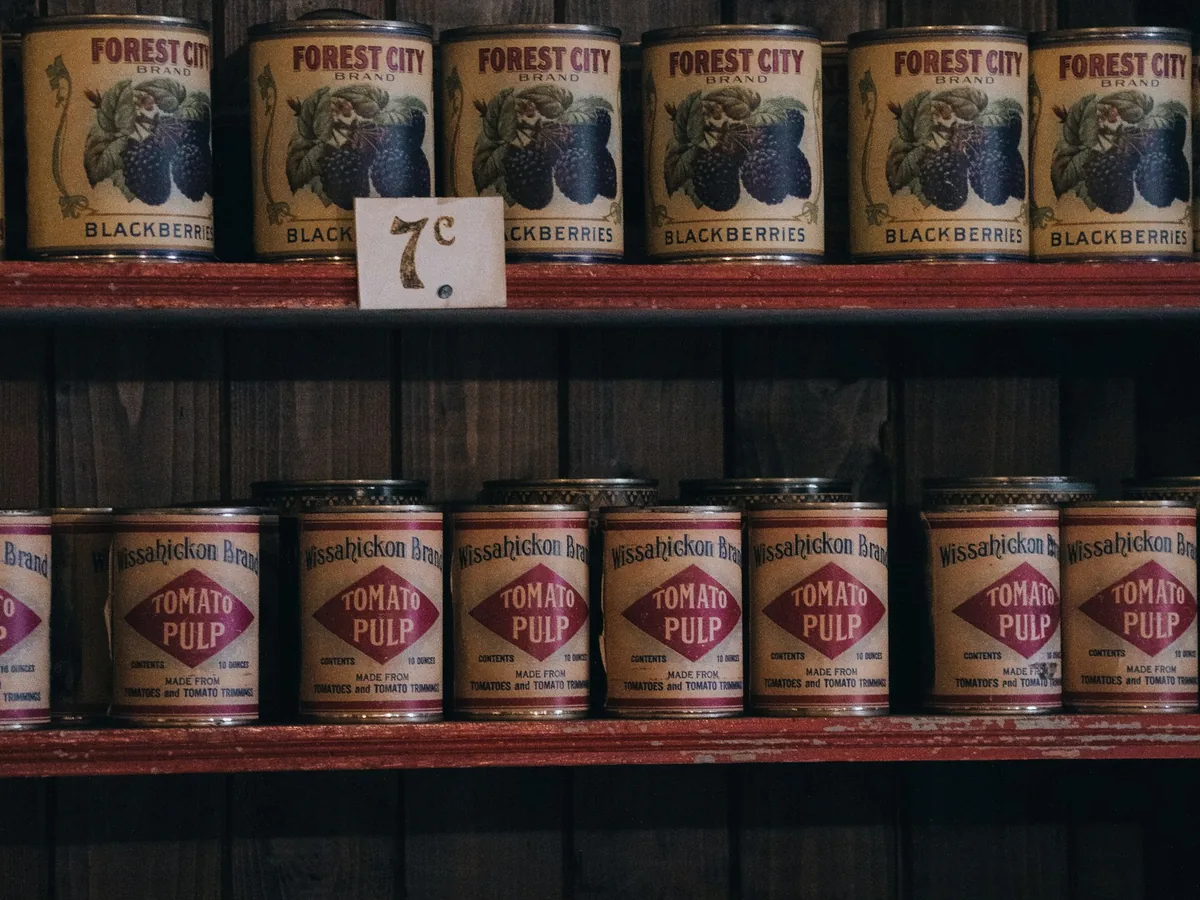
Photo: Fabian Kleiser / Unsplash
By PowerLockdown EditorialUpdated November 1, 20268 min readHow we research
In this guide
DisclosureAs an Amazon Associate we earn from qualifying purchases. We may earn a commission when you buy through links on this site, at no extra cost to you. Learn more.
At a glance
- Water is the first hard limit. Store 1 gallon per person per day (CDC). For 30 days, a household of four needs 120 gallons.
- Food in the fridge is gone in a day or two. A closed refrigerator holds about 4 hours, a full freezer about 48 (CDC).
- Town water can falter. EPA lists pressure loss, boil-water advisories and reduced treatment as results of a utility power loss.
- Phones go quiet. On October 1, 2024, 48.7% of cell sites in Hurricane Helene's North Carolina disaster area were out (FCC).
- Cash and fuel get hard to reach. Ready.gov warns outages can close ATMs, banks, gas stations and grocery stores.
- Medicine needs a plan. FDA says insulin vials and cartridges can stay unrefrigerated at 59–86°F for up to 28 days.
- Carbon monoxide kills in outages. Generators run outdoors only, at least 20 feet from the house, with CO alarms inside.
The scenario
This plan covers a regional grid failure that lasts about a month: a major hurricane, an ice storm that drops transmission lines, a severe solar storm or a deliberate attack on substations. Most outages are far shorter. Our guide on how long power outages last has the federal data. But a household that can run 30 days without the grid can ride out almost any outage it is likely to face.
FEMA's 2017 Power Outage Incident Annex is the federal government's plan for exactly this. It says the energy sector provides the power and fuels "upon which all other CI sectors depend," and that an outage leaving thousands of people without power for weeks or months "could leave the population in need of life saving and life-sustaining efforts." Help will come, but it will be stretched. Plan to carry your own household.
What fails, and when
| When | What fails | Source |
|---|---|---|
| Hour 0 | Lights, heat pumps, electric heat, the blower and igniter on most gas furnaces, private well pumps | Household equipment; CDC on wells |
| About 4 hours | Refrigerated food becomes unsafe if the door stays closed that long | CDC, Nov 2025 |
| About 24 hours | Refrigerated medicine should be discarded unless the label says otherwise | Ready.gov, Jun 2026 |
| 24 to 48 hours | Half-full freezer (24 h) then full freezer (48 h) lose safe temperature | CDC, Nov 2025 |
| Hours to days | Cell sites drop off as batteries and generators run out; 21.7% of Helene-area sites were down on Oct 1, 2024 | FCC DIRS |
| Hours to days | ATMs, banks, gas stations and grocery stores close or limit service | Ready.gov; EIA |
| Days | Water pressure loss, boil-water advisories, reduced treatment, sewage backups | EPA, 2019 |
| Days to weeks | Hospitals strain to keep temporary emergency power; supply chains disrupted | FEMA annex, 2017 |
| Up to 28 days | Unrefrigerated insulin vials and cartridges reach FDA's room-temperature limit | FDA, Sept 2026 |
EPA's June 2024 power resilience fact sheet adds a point most households miss: federal drinking water law does not require utilities to keep backup power. Some do. Some do not. Call yours and ask how many days its pumps and treatment plant can run on generators. Our guide to water when the taps stop covers what to do with the answer.
How much to store for 30 days
Water
CDC says store at least 1 gallon per person per day, for 3 days at minimum and 2 weeks if possible, with more for pregnant women, sick people, pets and hot weather. Oregon's state program asks for 14 days. For a month, the math is simple and the volumes are large.
| Household | 30-day water | Approx. weight | 55-gal tanks |
|---|---|---|---|
| 1 person | 30 gal | 250 lb | 1 (partly full) |
| 2 people | 60 gal | 500 lb | 2 (one partly full) |
| 4 people | 120 gal | 1,000 lb | 3 (one partly full) |
| 6 people | 180 gal | 1,500 lb | 4 (one partly full) |
Store it in food-grade containers in a cool, dark place, and replace self-filled tap water every 6 months (CDC). A large barrel holds the bulk; smaller jugs move water to the kitchen. Add a filter and a disinfection method so you can treat water from other sources once storage runs low.

No. 1Water storage
WaterPrepared Blue 55 Gallon Water Storage Tank
Best for: Storing a month or more of household water in one footprint
- 55 gallons; 22 × 28 × 30 in
- HDPE, BPA free, FDA/NSF approved, UV-resistant blend (manufacturer)
- Built-in spigots that fit a standard garden hose, plus utility valves
- Large fill cap; stackable
Tradeoffs
- About 460 lb when full (55 gal × ~8.3 lb, our arithmetic), so fill it where it will stay
- No pump or water treatment included in this listing

No. 2Water storage
Reliance Jumbo-Tainer 2.0, 7 Gallon (08630-03)
Best for: Rigid, refillable storage you can rotate
- 7 gal / 26 L
- 15.3 × 8.5 × 18.0 in; 2.9 lb empty
- Food safe: LFGB certified and FDA compliant
- PFAS- and BPA-free
- Leak-proof hideaway spigot; dual handles
Tradeoffs
- Reliance does not list it as stackable
- About 58 lb when full (7 gal × ~8.3 lb plus container)

No. 3Water treatment
Platypus GravityWorks Water Filter System, 4.0 L
Best for: Filtering household volumes without pumping or squeezing
- 0.2-micron hollow-fiber filter; filters up to 1.75 liters per minute (manufacturer)
- Removes 99.9999% of bacteria and 99.9% of protozoa (manufacturer)
- Filter life up to 1,500 L
- 4.0 L dirty reservoir plus 4.0 L clean reservoir; 11.5 oz
Tradeoffs
- Manufacturer spec table lists it as not effective against viruses: boil or disinfect when viruses are a concern
- Hollow fibers can be damaged if the filter freezes while wet
Food
FDA's calorie guide puts adult women at 1,600 to 2,400 calories a day and adult men at 2,000 to 3,000, depending on age and activity. A grid-down month is physical work: hauling water, splitting wood, cleaning without hot water. Plan at the middle or top of the range, not the bottom.
| Daily intake | 30-day total | Who |
|---|---|---|
| 1,600 cal | 48,000 cal | Low end for less active adult women (FDA) |
| 2,000 cal | 60,000 cal | FDA's general reference for nutrition labels |
| 2,400 cal | 72,000 cal | Active adult women, upper range (FDA) |
| 3,000 cal | 90,000 cal | Active adult men, upper range (FDA) |
Build it in two layers. The first is the canned and dry food you already eat, rotated so the oldest goes first. The second is a sealed, long-shelf-life bulk layer for the back half of the month. Legacy Food Storage lists its 120-serving bucket at about 23.7 days of 2,000 calories, so one adult needs between one and two for a month. Freeze-dried meals need water, which comes out of the totals above. Our long-term food storage guide covers shelf life and rotation, and the emergency food kit chapter compares kits.
No. 1Emergency food
Legacy Food Storage 120 Serving Breakfast, Lunch and Dinner Bucket (CB0120)
Best for: A deep bulk layer: about 23 person-days at 2,000 calories
- 120 servings in 30 Mylar pouches: 40 breakfast, 80 entree
- Average 395 calories per serving; manufacturer lists 23.7 "2,000 calorie days"
- Shelf life of up to 25 years (manufacturer)
- 31 lb, one bucket
Tradeoffs
- Meals need water and a heat source; the pancake mix also needs oil
- The page's stated calorie total does not match its per-serving figure, so plan on the 2,000-calorie-days number
No. 2Emergency food
ReadyWise 120 Serving Emergency Food Supply
Best for: Most calories in one grab-and-go bucket
- 24,540 calories total
- Manufacturer: 13 days of food at 1,800 calories per day
- About 120 cups of water required
- Metallyte pouches, 6 servings per pouch
- Up to 25-year shelf life (manufacturer)
- 20 lb
- Contains milk, soy and wheat; 11.75 × 9.75 × 14.75 in
Tradeoffs
- 120 cups = 7.5 gallons of water from your stored supply
- 6-serving pouches can lead to waste in small households
Before the outage: the prep checklist
- 01Water. Store the 30-day volume from the table, plus a filter and unscented bleach for treatment. See water storage and filters.
- 02Food. Stock two layers to your calorie target. Keep a manual can opener and a way to cook outdoors.
- 03Heat. Pick a warm room and a safe backup heat source. Read heating without power before you buy anything that burns fuel.
- 04CO alarms. Battery or battery-backup alarms on every level and outside sleeping areas (CPSC). Our CO alarm guide lists options.
- 05Medicine. Ask your prescriber about a 30-day reserve. Know your medicines' storage limits. If anyone uses powered medical equipment, plan power for it now.
- 06Power. Size a battery or generator to the loads that matter, using the backup power calculator.
- 07Light and comms. Lanterns, a NOAA weather radio and a two-way radio plan. See ham and GMRS radio.
- 08Sanitation. A two-bucket toilet kit, bags and cover material. See sanitation without power.
- 09Cash and fuel. Keep cash at home, since ATMs and card readers need power. Keep vehicle tanks above half.
- 10Paper. Print the blackout checklist, contact numbers and medication lists.
Week by week
Week 1: lock down the house
- Day 1: fill every spare container and the bathtub from the tap while pressure lasts. Note the time the power went out.
- Keep the fridge and freezer closed. Eat refrigerated food first, then freezer food, then shelf-stable food (CDC timings above).
- Move refrigerated medicine into the coldest cooler you have and check labels for room-temperature limits.
- Set up the warm room or cool room. Close off unused rooms.
- Switch phones to low-power mode and charge only from batteries or a running vehicle outdoors.
- Listen for boil-water notices on a NOAA or AM/FM radio. Assume tap water needs treatment until told otherwise.
Week 2: settle into routines
- Ration effort, not water. Ready.gov says never ration drinking water unless authorities tell you to. Ration everything else that uses water instead.
- Start the two-bucket toilet if sewer service is uncertain. Do not flush into a system that may back up.
- Rotate battery charging on a schedule. Keep a written log of fuel and battery levels.
- Check on neighbors, especially older adults and anyone on oxygen or dialysis.
- Agree on a radio check-in time with family and neighbors.
Week 3: resupply and treat water
- Stored water will be running low for larger households. Start filtering and disinfecting from the best available source.
- Watch for official distribution points for water, food and fuel announced over radio.
- Move from the bulk food layer into a set meal rotation to stretch cooking fuel.
- Recheck medication counts against the 28-day insulin limit and any other label limits. Contact a pharmacist or clinic early.
Week 4: hold and recover
- Restoration often comes back in waves. Keep running the plan until your circuit is live and water advisories are lifted.
- When power returns, check the fridge and freezer: CDC says throw out food that reached 40°F or higher.
- Restock water and food first, then write down what ran out early and fix it for next time.
- If the outage looks set to run past a month, move to the 90-day plan.

No. 1Emergency radio
Midland ER310 Emergency Crank Weather Radio
Best for: A household weather radio with several ways to stay powered
- Power: solar, hand crank, 3,500 mAh rechargeable Li-ion, or 6 AA batteries
- NOAA weather band; alerts sound when issued on your local channel
- LED flashlight with SOS beacon
- USB output to top up a phone
Tradeoffs
- Midland notes the design dates to the early 2000s and may not charge newer phones (iPhone X and later) reliably. Weather alerts are not SAME county-coded.
- Midland's FAQ notes solar tops up a charged battery rather than reviving a dead one
- Micro-USB charging rather than USB-C
No. 2Lantern
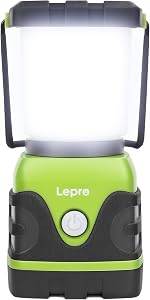
Lepro 1500lm Battery Powered LED Camping Lantern
Best for: Bright, flame-free room light that runs on stored batteries
- 1,500 lumens, dimmable (manufacturer rating)
- Runs on 3 D alkaline batteries (not included); not rechargeable
- Up to 12 hrs at 1,500 lm (manufacturer figure)
- IPX4 water resistance; daylight, warm, full and flashing red modes
Tradeoff
- Not rechargeable, so stock spare D cells; lumen and runtime figures are self-reported.

No. 3CO alarm
First Alert CO710 Carbon Monoxide Alarm with 10-Year Battery
Best for: A no-install alarm you can set on a nightstand or carry room to room
- Sealed 10-year lithium battery (no battery changes)
- Listed to UL 2034
- Backlit display: CO level, peak level and temperature
- 85 dB alarm; tabletop design
Tradeoff
- Tabletop only, and when the sealed battery ends the whole unit is replaced.
For the sizing math in detail, read what size power station you need and the power station vs. generator comparison on BackupPowerAI.
What we don't know
No public source gives a reliable hour-by-hour failure schedule for a specific town. How long your water utility, cell towers and gas stations hold up depends on backup equipment that varies by operator and is often not published. EPA says backup power is not required by federal drinking water law, and the FCC's 2022 disaster rules for mobile carriers do not set a backup power duration. Treat the timing table above as a guide to the order of failures, not a schedule. The fix is local: ask your water utility and county emergency office what their backup covers.
Frequently asked questions
- How much water does a family of four need for 30 days?
- At CDC's 1 gallon per person per day, 120 gallons, which weighs about 1,000 lb. Add more for hot weather, illness, pregnancy and pets, and keep a filter and disinfectant so you can treat other water once storage runs low.
- How many calories should I store per person for a month?
- FDA's ranges are 1,600 to 2,400 calories a day for adult women and 2,000 to 3,000 for adult men. At 2,000 calories, that is 60,000 calories per adult for 30 days. Plan higher for physical work.
- Will tap water keep running in a long outage?
- It depends on your utility's backup power. EPA lists pressure loss, boil-water advisories, reduced treatment and sewage backups as consequences of utility power loss, and says federal law does not require backup power. Store water and follow local advisories.
- How long can insulin go without a refrigerator?
- FDA says manufacturer vials and cartridges, opened or unopened, may be left unrefrigerated between 59°F and 86°F for up to 28 days. Keep it out of heat and sun, and contact a pharmacist early if the outage will run longer.
- Is a 30-day grid outage likely?
- Most outages last hours or days. Month-long regional outages are rare, but FEMA plans for outages lasting weeks or months, and a household ready for 30 days is covered for nearly every shorter event.
Sources
- FEMA, Power Outage Incident Annex to the Response and Recovery Federal Interagency Operational Plans: Managing the Cascading Impacts from a Long-Term Power Outage, June 2017.
- U.S. EPA, Incident Action Checklist: Power Outages, 2019.
- U.S. EPA, Power Resilience: An Achievable Goal (EPA 810-F-24-018), June 2024.
- FCC (DIRS data), Communications Status Report for Areas Impacted by Hurricane Helene, October 1, 2024.
- FCC, Federal Register, Resilient Networks; Disruptions to Communications (Mandatory Disaster Response Initiative), final rule, September 30, 2022.
- Ready.gov (FEMA), Power Outages, updated June 4, 2026.
- Ready.gov (FEMA), Build a Kit, updated July 1, 2026.
- Ready.gov (FEMA), Water, accessed October 27, 2026.
- U.S. Energy Information Administration (Today in Energy), Weather and other events can cause disruptions to gasoline infrastructure and supply, February 1, 2013.
- CDC, Keep Food Safe After a Disaster or Emergency, November 24, 2025.
- CDC, How to Create an Emergency Water Supply, June 27, 2025.
- U.S. Food and Drug Administration, Information Regarding Insulin Storage and Switching Between Products in an Emergency, current as of September 28, 2026.
- U.S. Food and Drug Administration, Do You Know How Many Calories You Need?, undated handout adapted from the 2015–2020 Dietary Guidelines.
- Oregon Department of Emergency Management, Be 2 Weeks Ready, accessed October 31, 2026.
- Texas Department of State Health Services, February 2021 Winter Storm-Related Deaths: Texas, December 31, 2021.
- U.S. Consumer Product Safety Commission, Carbon Monoxide Information Center, accessed October 27, 2026.
Related guides
Grid-down
The 90-day grid-down plan
How a household gets through three months without grid power, built on what federal planners, utilities and public health agencies have published.
Updated November 1, 2026 · 7 min read
Grid-down
Water when the taps stop
City water runs on electricity; this is how much to store, where to find more, and how to make it safe to drink when the treatment plant goes dark.
Updated November 1, 2026 · 8 min read
Grid-down
Long-term food storage for weeks without the grid
Calorie math, real shelf-life figures from extension services, and a rotation system that keeps a month or more of food edible.
Updated November 1, 2026 · 9 min read
Grid-down
Heating without power for weeks, without poisoning the household
Most furnaces stop when the grid does, so a long winter outage needs one warm room, a safe heat source, enough stored fuel and a carbon monoxide alarm within earshot of every bed.
Updated November 1, 2026 · 10 min read