Guides · Grid-down
Solar storms can damage the grid's biggest transformers
NOAA's own scale says an extreme geomagnetic storm can collapse some grid systems; here is the history, the safeguards and the household plan.
By PowerLockdown EditorialUpdated November 1, 20269 min readHow we research
In this guide
- 01At a glance
- 02How a solar storm reaches your outlets
- 03NOAA's G-scale, translated for the grid
- 04The storms that set the record
- 05What the grid has done since 1989
- 06The transformer problem
- 07The solar cycle right now
- 08How much warning you get
- 09Household plan for a G4 or G5 watch
- 10What we don't know
- QFrequently asked questions
DisclosureAs an Amazon Associate we earn from qualifying purchases. We may earn a commission when you buy through links on this site, at no extra cost to you. Learn more.
At a glance
- The worst case is real but rare. NOAA's space weather scale says a G5 (extreme) storm can bring "complete collapse or blackouts" to some grid systems and that "transformers may experience damage." NOAA puts G5 storms at about 4 per 11-year solar cycle.
- It has happened. On March 13, 1989, a geomagnetic storm took Québec's grid down in under a minute and left the province dark for more than nine hours (Hydro-Québec). The same storm ruined a 500 kV transformer at New Jersey's Salem nuclear plant (EMP Commission, 2008).
- The May 2024 G5 storm passed without major damage. NERC's January 2026 review found the bulk power system "remained stable and connected" and served all load, even though it recorded the highest induced currents in its database.
- Replacement is the long pole. DOE (2014) found large transformer lead times of 5 to 16 months in normal times and up to five years in extreme cases. Wood Mackenzie projected a 30% U.S. power transformer supply deficit for 2025.
- You get warning. The fastest coronal mass ejections take as little as 15 to 18 hours to reach Earth, and the DSCOVR satellite gives 15 to 60 minutes of final notice (NOAA SWPC). Use that time.
How a solar storm reaches your outlets
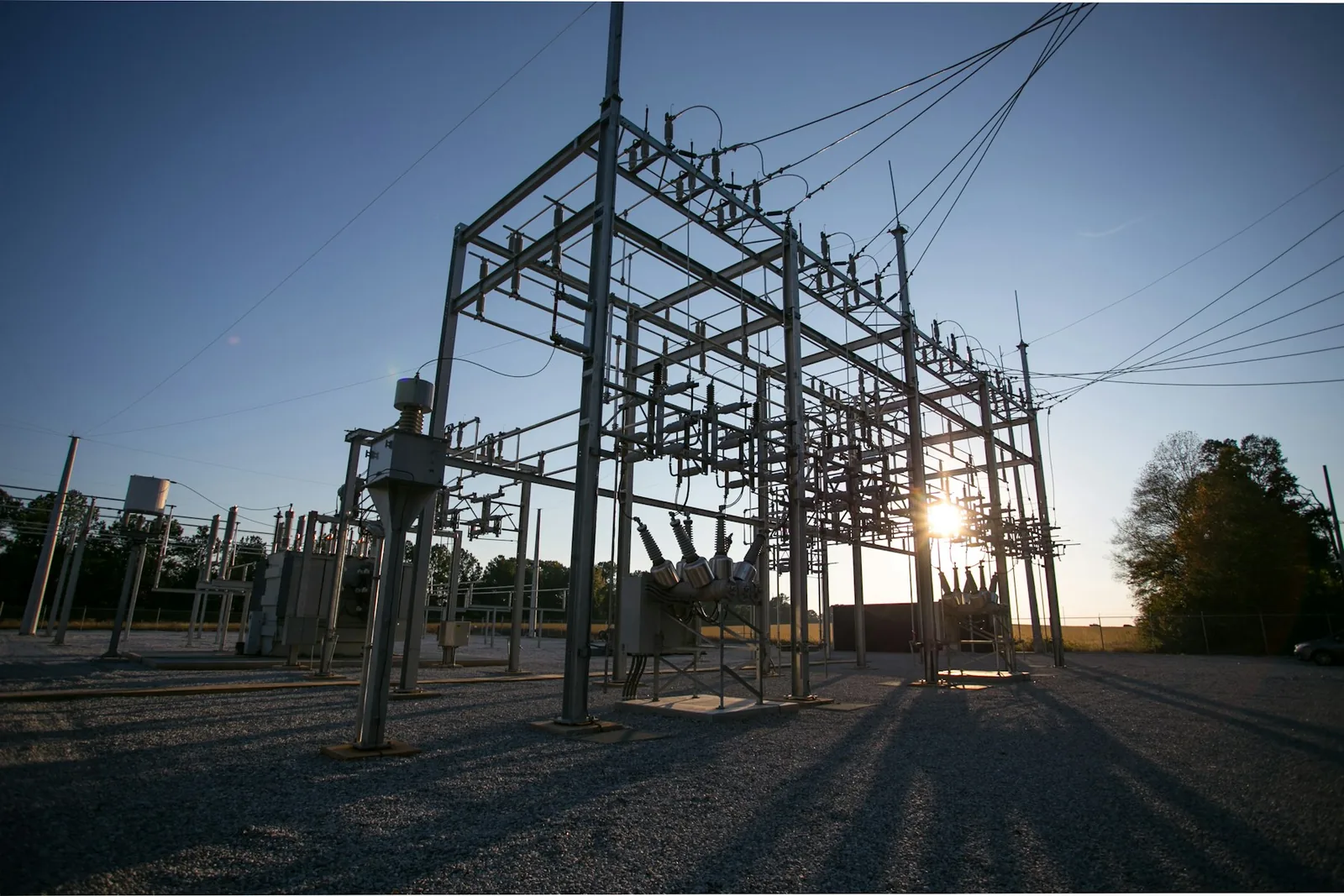
A coronal mass ejection (CME) is a burst of magnetized plasma from the Sun. When one hits Earth's magnetic field, the field shakes, and that shaking induces electric fields in the ground. Long high-voltage transmission lines connect points many miles apart, so they pick up those ground voltages and carry what engineers call geomagnetically induced currents (GICs) into the transformers at each end. The current is close to direct current, which transformers are not built for. NOAA SWPC describes the results on its electric power transmission page: voltage problems, protective relays tripping, and transformer heating that can cause damage.
This is a grid-scale problem. The induced currents ride on long transmission lines, not the short wiring inside a house. Grid operators, not households, carry the GIC risk. Your exposure is the outage that follows if the grid trips or loses equipment, and how long that outage lasts.
NOAA's G-scale, translated for the grid
| Level | NOAA's description of power-system effects | Per cycle (storm days) |
|---|---|---|
| G1 Minor | Weak power grid fluctuations can occur. | 1,700 (900 days) |
| G2 Moderate | High-latitude power systems may experience voltage alarms; long-duration storms may cause transformer damage. | 600 (360 days) |
| G3 Strong | Voltage corrections may be required; false alarms triggered on some protection devices. | 200 (130 days) |
| G4 Severe | Possible widespread voltage control problems; some protective systems will mistakenly trip out key assets from the grid. | 100 (60 days) |
| G5 Extreme | Widespread voltage control problems and protective system problems; some grid systems may experience complete collapse or blackouts; transformers may experience damage. | 4 (4 days) |
Check the current level any time on NOAA's Space Weather Scales page. A G4 or G5 watch is your cue to run the checklist below.
The storms that set the record
1859: the Carrington Event
The largest geomagnetic storm on record arrived in September 1859, before electric grids existed. NOAA NESDIS (September 2025) says surges in telegraph systems meant operators could not send messages and magnetometer needles were pinned off-scale. USGS research (Love, 2014) confirms the rapid magnetic variation interfered with telegraph operation across North America. The telegraph was the only long-wire network of its day, and it failed. Today's equivalent is the high-voltage transmission system.
1989: Québec goes dark in under a minute
At 2:44 a.m. on March 13, 1989, the storm triggered protection systems on Hydro-Québec's grid and the blackout followed "in less than a minute." The province was dark for more than nine hours (Hydro-Québec). The Government of Canada puts the number affected at six million residents. Hydro-Québec responded by recalibrating protection and raising trip levels, adding a real-time storm alert system and installing series compensation on its lines.
The same storm reached the United States. The EMP Commission's 2008 infrastructure report records that a 1,200 MVA, 500 kV transformer at the Salem nuclear plant in New Jersey was "damaged beyond repair" by stray magnetic flux. A replacement happened to be available; the Commission notes that otherwise the plant "would have been down for a year." Two 400/275 kV autotransformers in southern England were damaged in the same storm.
May 2024: the first G5 since 2003
On May 10, 2024, USGS classified a storm at G5 for the first time since October 31, 2003, the storm that caused blackouts in Sweden and South Africa. NASA called it the strongest geomagnetic storm at Earth in two decades. NERC's staff review (January 2026) is the most useful document for households because it shows what modern safeguards did:
- Conditions swung between G3 and G5 over three days.
- Induced currents were the highest in NERC's database, which goes back to 2013: over 90 amps in five of six regions and a U.S. peak of 175.7 amps in Wisconsin.
- No transformer outages or degradations were reported. Some units logged top-oil over-temperature alarms, and one Northeast nuclear plant cut output because of high current in its step-up transformer.
- A few assets tripped, including harmonic filters on a 345 kV line in western Canada.
- NOAA SWPC alerted grid operators by hotline about six hours before onset.
- The storm was less intense than the March 1989 event.
Five months later, on October 10, 2024, a CME arrived around 11:15 a.m. and NOAA confirmed G4 conditions by 11:57 a.m. The grid operator PJM reported no significant impacts but ran with conservative limits. NOAA had contacted operators ahead of time because the Southeast was still recovering from Hurricanes Helene and Milton (POWER Magazine, October 2024).
What the grid has done since 1989
Federal rules came slowly. FERC Order 779 (May 2013) told NERC to write standards in two stages: operating procedures first, then protection against a defined "benchmark GMD event." Order 797 (June 2014) approved the operating-procedure standard, EOP-010-1. Order 830 (September 2016) approved TPL-007-1, which requires transmission planners to run vulnerability assessments against the benchmark storm and write corrective action plans where the system falls short (FERC Order 830-A, January 2017).
Under TPL-007-4, planners must repeat the benchmark assessment at least once every 60 calendar months and file a corrective action plan if performance requirements are not met (Texas Reliability Entity, May 2025). The standard reduces risk on paper and in the field. It does not guarantee no outage.
The transformer problem
A solar storm that destroys several large power transformers is the scenario that turns a nine-hour blackout into a much longer one. DOE's 2014 study of large power transformers found:
| Fact | Figure | Source |
|---|---|---|
| Lead time, domestic producers (2010) | 5 to 12 months | DOE 2014 |
| Lead time, foreign producers (2010) | 6 to 16 months | DOE 2014 |
| Lead time in high demand or extreme cases | 18 to 24 months; beyond 20 months and up to 5 years in extreme cases | DOE 2014 |
| Typical weight | 100 to 400 tons | DOE 2014 |
| U.S. import dependence, 345 kV and above | Much greater than 85% | DOE 2014 |
| Projected 2025 U.S. supply deficit, power transformers | 30% | Wood Mackenzie 2025 |
| Share of U.S. power transformer supply from imports | About 80% | Wood Mackenzie 2025 |
Put those numbers together and the risk is clear. Utilities keep spares and share them, which is why most transformer failures never reach the news. A storm that damages many units across several regions at once would compete for a supply chain that was already short in 2025.
The solar cycle right now
NASA and NOAA announced on October 15, 2024 that the Sun had entered the maximum phase of Solar Cycle 25. NASA said the maximum period could continue for about a year and that the exact peak month would not be identified for months or years. Large storms can occur on the declining side of a cycle too, so the watch habit below is worth keeping year-round.
How much warning you get
- 01Days ahead: NOAA SWPC watches the Sun for CMEs. The fastest Earth-directed CMEs arrive in 15 to 18 hours; slower ones take several days (SWPC).
- 02Watch issued: SWPC posts a G-level watch. In May 2024, grid operators got hotline notice about six hours before onset (NERC).
- 03Final notice: The DSCOVR satellite, parked between Earth and the Sun, can give 15 to 60 minutes of warning before the storm's magnetic field arrives (SWPC, NOAA NESDIS).
Household plan for a G4 or G5 watch
A storm watch gives you something most outages do not: a heads-up. Treat it like a hurricane forecast. Most of these tasks take an evening.
- 01Charge everything. Phones, power banks, radios, lanterns and any portable power station to 100%.
- 02Fill water. Fill clean containers to at least one gallon per person per day. The water guide covers storage and treatment if pumping stations lose power.
- 03Fill the car. Ready.gov notes that outages can close gas stations.
- 04Get cash. Ready.gov notes that outages can close ATMs and banks.
- 05Refill prescriptions that are due within the next two weeks.
- 06Unplug sensitive electronics you will not need overnight, or put them on surge protection. It is a cheap precaution against surges when power is restored; it does not address the GIC risk, which sits on the transmission system.
- 07Find your radio. A NOAA weather radio works when cell networks are congested. Our radio guide compares models.
- 08Check heat and CO safety if the watch falls in winter. Read heating without power and test your CO alarms.

No. 1Emergency radio
Midland ER310 Emergency Crank Weather Radio
Best for: A household weather radio with several ways to stay powered
- Power: solar, hand crank, 3,500 mAh rechargeable Li-ion, or 6 AA batteries
- NOAA weather band; alerts sound when issued on your local channel
- LED flashlight with SOS beacon
- USB output to top up a phone
Tradeoffs
- Midland notes the design dates to the early 2000s and may not charge newer phones (iPhone X and later) reliably. Weather alerts are not SAME county-coded.
- Midland's FAQ notes solar tops up a charged battery rather than reviving a dead one
- Micro-USB charging rather than USB-C

No. 2Power bank
Anker 737 Power Bank (PowerCore 24K)
Best for: High-capacity USB-C bank that can charge a laptop
- 24,000 mAh
- 140W max output
- 2× USB-C + 1× USB-A
- Smart digital display
- 630 g (22.22 oz)
Tradeoffs
- No solar input; recharge from wall or USB-C
- Heavy for a pocket
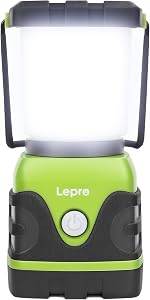
No. 3Lantern
Lepro 1500lm Battery Powered LED Camping Lantern
Best for: Bright, flame-free room light that runs on stored batteries
- 1,500 lumens, dimmable (manufacturer rating)
- Runs on 3 D alkaline batteries (not included); not rechargeable
- Up to 12 hrs at 1,500 lm (manufacturer figure)
- IPX4 water resistance; daylight, warm, full and flashing red modes
Tradeoff
- Not rechargeable, so stock spare D cells; lumen and runtime figures are self-reported.
If a storm takes out major transformers, plan for weeks rather than hours. The 30-day grid-down plan and 90-day plan cover that horizon. For electricity itself, size a battery or generator to your real loads with the backup power calculator on BackupPowerAI.
What we don't know
- How a Carrington-class storm would hit today's grid. No storm of that size has struck a modern interconnected grid. Estimates come from models, not experience.
- How many transformers would fail. May 2024 produced record currents and no transformer outages. Salem in 1989 lost one. The answer for a storm 2.5 times stronger than 1989 is a modeling question.
- Current transformer lead times. DOE's detailed figures date from 2014. Wood Mackenzie's 2025 release reports a supply deficit but gives no week count, and we did not find a primary source for the larger lead-time figures that circulate online.
- When the next big storm comes. SWPC can forecast a CME's arrival after it leaves the Sun, not months ahead.
Next: if you are weighing other long-outage threats, read EMP and the power grid and attacks on the power grid. Then work through the blackout checklist and the Blackout Kit.
Frequently asked questions
- Can a solar storm knock out the power grid?
- Yes. NOAA's scale says a G5 storm can cause complete collapse or blackouts on some grid systems, and in March 1989 a storm blacked out Québec for more than nine hours. The May 2024 G5 storm did not cause major U.S. outages, according to NERC's January 2026 review.
- Will a solar storm damage electronics in my house?
- The damaging induced currents travel on long transmission lines, not household wiring. The household risk is the outage and possible surges when power returns. Unplugging sensitive electronics during a severe storm watch is a cheap precaution.
- How much warning would we get before a severe solar storm?
- Usually hours to days. NOAA SWPC says the fastest CMEs reach Earth in 15 to 18 hours and slower ones take several days, and the DSCOVR satellite gives 15 to 60 minutes of final warning.
- How long could a solar-storm blackout last?
- Québec's 1989 blackout lasted about nine hours because equipment tripped rather than failed. If large transformers are destroyed, DOE's 2014 study shows replacements can take 5 to 16 months in normal times, longer in high demand, so an area without spare units could face a far longer outage than 1989.
- Where can I check the current geomagnetic storm level?
- NOAA's Space Weather Prediction Center publishes current and forecast G, S and R levels on its Space Weather Scales page at spaceweather.gov.
Sources
- NOAA Space Weather Prediction Center, NOAA Space Weather Scales, accessed October 31, 2026.
- NOAA Space Weather Prediction Center, Electric Power Transmission (space weather impacts), accessed October 31, 2026.
- NOAA Space Weather Prediction Center, Coronal Mass Ejections, accessed October 31, 2026.
- NOAA Space Weather Prediction Center, Joint solar maximum announcement, NASA and NOAA, October 16, 2024.
- NASA, NASA, NOAA: Sun Reaches Maximum Phase in 11-Year Solar Cycle, October 15, 2024.
- NOAA NESDIS, What Was the Carrington Event?, September 1, 2025.
- U.S. Geological Survey, Auroral omens of the American Civil War (J. J. Love), 2014.
- Hydro-Québec, In March 1989, Québec experienced a blackout caused by a solar storm, accessed October 31, 2026.
- Government of Canada, Space weather, modified September 12, 2025.
- Commission to Assess the Threat to the United States from EMP Attack, Report of the EMP Commission: Critical National Infrastructures, April 2008.
- U.S. Geological Survey, Space Weather Events of May 10, 2024, May 10, 2024.
- NERC staff report, May 2024 Geomagnetic Disturbance Event Review, January 2026.
- POWER Magazine, Severe solar storm threatens power grid amid Hurricane Helene, Milton recovery, October 10, 2024.
- Federal Energy Regulatory Commission, Order No. 830-A, Reliability Standard for Transmission System Planned Performance for Geomagnetic Disturbance Events, January 19, 2017.
- Texas Reliability Entity newsletter, TPL-007-4 requirements overview, May 2025.
- U.S. Department of Energy, Large Power Transformers and the U.S. Electric Grid, April 2014.
- Wood Mackenzie, Power transformers and distribution transformers will face supply deficits of 30% and 10% in 2025, August 14, 2025.
- Ready.gov (FEMA), Power Outages, updated June 4, 2026.
Related guides
Outage basics
How long power outages last: what federal data shows
What federal data says about outage length in the US, why a few big storms dominate the numbers, and how to decide how many days to prepare for.
Updated October 27, 2026 · 7 min read
Seasonal prep
Winter power outage survival
A practical plan for staying warm and safe when the power goes out in freezing weather, including the safety rules that matter most.
Updated October 27, 2026 · 8 min read
Gear picks
Best emergency radios for power outages
Five research-based picks for hand-crank, solar and battery NOAA weather radios, chosen from manufacturer specs and published data.
Updated October 27, 2026 · 8 min read