Guides · Grid-down
Long-term food storage for weeks without the grid
Calorie math, real shelf-life figures from extension services, and a rotation system that keeps a month or more of food edible.
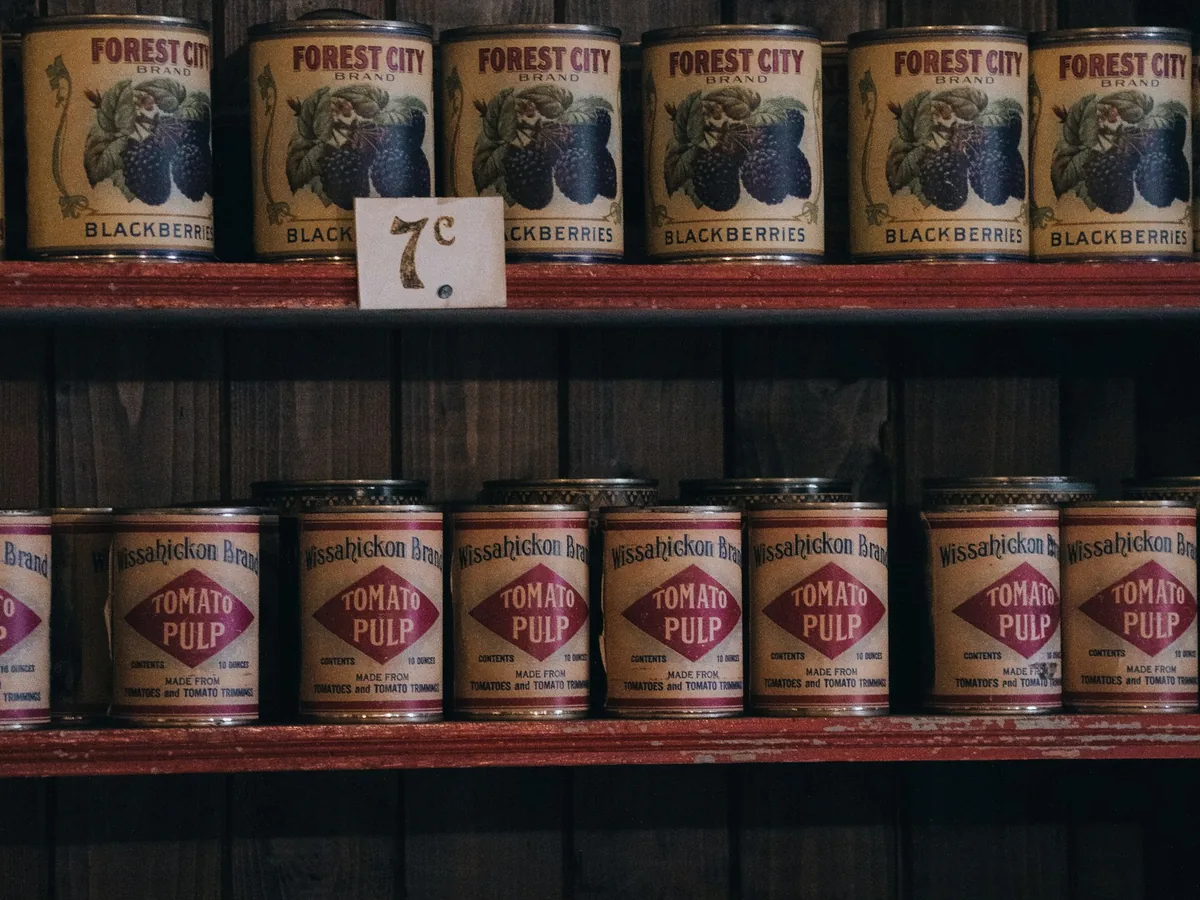
Photo: Fabian Kleiser / Unsplash
By PowerLockdown EditorialUpdated November 1, 20269 min readHow we research
In this guide
DisclosureAs an Amazon Associate we earn from qualifying purchases. We may earn a commission when you buy through links on this site, at no extra cost to you. Learn more.
At a glance
- Plan in calories, not servings. FDA uses 2,000 calories a day as its general reference; adult needs run from about 1,600 to 3,000 depending on sex, age and activity.
- Build in three layers: a rotating pantry of food you already eat, sealed long-life buckets, then bulk staples such as rice, beans and wheat.
- Temperature decides shelf life. Utah State University Extension cites a BYU study where wheat stayed acceptable for 25 years in a cold basement but only 5 in a hot garage or attic.
- Low-acid canned food keeps about 2 to 5 years, high-acid about 12 to 18 months (Clemson Extension). Throw out bulging, leaking or badly dented cans.
- Every dry calorie needs water. Freeze-dried meals need cups of water per pouch, and that water comes out of your stored supply.
- Cook safely. Never use a grill, camp stove or charcoal indoors.
Why the fridge is the first thing you lose
In a long outage the refrigerator stops being storage within hours. CDC says an unopened refrigerator keeps food safe for about 4 hours, a full freezer about 48 hours and a half-full freezer about 24. After that, the only food you can count on is food that never needed cold. Ready.gov also notes that outages can close grocery stores, banks and ATMs. Our guide to keeping food safe during a power outage covers the first 48 hours. This guide covers what comes after.
Federal guidance is short-horizon. Ready.gov asks households to store "at least a several-day supply of non-perishable food." Oregon's Be 2 Weeks Ready program sets the bar at two weeks of food you can prepare without electricity or gas. A regional grid failure or a severe solar storm could run longer than either, which is why our 30-day plan and 90-day plan build on the numbers below.
How many calories your household needs
FDA's calorie table, adapted from the Dietary Guidelines, estimates adult needs at 1,600 to 2,400 calories a day for women and 2,000 to 3,000 for men, depending on age and activity. Hauling water, splitting wood and walking instead of driving push needs toward the top of those ranges. The table below uses FDA's 2,000-calorie reference as a planning floor per adult.
| Household | Calories per day | 14 days | 30 days | 90 days |
|---|---|---|---|---|
| 1 adult | 2,000 | 28,000 | 60,000 | 180,000 |
| 2 adults | 4,000 | 56,000 | 120,000 | 360,000 |
| 2 adults, 2 children (planned at adult rate) | 8,000 | 112,000 | 240,000 | 720,000 |
Check bucket labels against this table. A "120 serving" bucket is not 120 days of food. ReadyWise lists 24,540 calories in its 120-serving bucket, which it describes as 13 days of food at 1,800 calories a day for one person. Legacy Food Storage lists 23.7 "2,000 calorie days" in its 120-serving breakfast, lunch and dinner bucket. A family of four at 8,000 calories a day for 30 days needs 240,000 calories: about ten ReadyWise buckets or five Legacy buckets by the makers' own figures.
How long food keeps
| Food | Shelf life | Conditions | Source |
|---|---|---|---|
| High-acid canned food (juice, tomatoes, pickles) | 12 to 18 months | 50 to 70°F; drops significantly above 75°F | Clemson Extension HGIC 3505 |
| Low-acid canned food (meat, most vegetables, beans) | 2 to 5 years | 50 to 70°F | Clemson Extension HGIC 3505 |
| Commercial cans generally | Quality to code date, usually 2 to 5 years from manufacture | Do not let cans freeze | USU Extension |
| Wheat | Rotate within 5 years; a BYU study found #10-can wheat made acceptable bread after 32 years | 40 to 60°F; moisture under 12%; oxygen-free packaging | USU Extension |
| White rice | Up to 10 years at 70°F with oxygen absorbers; up to 30 years sealed oxygen-free in cooler storage | Use within 1 to 2 years once opened | USU Extension |
| Dry beans | About 1 year in plastic bags; 10+ years in #10 cans or Mylar with oxygen removed | Beans harden with age | USU Extension |
| Home-canned food | Can only what you will use within a year | 50 to 70°F, never above 95°F | NCHFP |
| Freeze-dried buckets | Manufacturers claim 10 to 30 years | See maker; claims are not independently verified | Manufacturer pages |
The single biggest factor you control is temperature. Utah State University Extension puts the best storage range at about 40 to 70°F, notes that vitamins break down faster as temperature rises, and cites the BYU wheat result: 25 years in a cold basement, 5 years in a hot garage or attic. Keep humidity low, keep food out of direct sun and store it off the floor. Dry foods can tolerate freezing; canned food should not freeze.
Build the supply in three layers
Layer 1: the rotating pantry (first 2 weeks)
Start with food you already eat. Ready.gov's list is a good base: ready-to-eat canned meat, fruit and vegetables, protein or fruit bars, dry cereal, peanut butter, dried fruit, canned juice and shelf-stable milk. Canned food "may be eaten out of the can without warming," which matters when fuel is limited. Add a manual can opener and cover any special diets, infant formula and pet food.
- 01Count what you have in calories, not cans. Most labels list calories per serving and servings per container.
- 02Buy two of everything you use weekly until the pantry covers 14 days at the calorie target above.
- 03Rotate first in, first out. USU Extension's rule: "Always use FIFO (First-in, first-out)." New cans go to the back.
- 04Date everything with a marker on the lid when it comes into the house.
- 05Store cans at 50 to 70°F, not in a garage that bakes in summer.
Layer 2: sealed long-life buckets (weeks 3 to 6)
Freeze-dried and dehydrated buckets fill the gap between the pantry and bulk staples. They are dense, stack well and sit untouched for years. The tradeoffs are water and heat: most meals need hot water, and the water comes from your stored supply. ReadyWise lists about 120 cups (7.5 gallons) of water for its 120-serving bucket. Mountain House lists 18 cups for its 12-pouch Classic Assortment bucket. Add that to the water math in Water when the taps stop.
No. 1Emergency food
Legacy Food Storage 120 Serving Breakfast, Lunch and Dinner Bucket (CB0120)
Best for: A deep bulk layer: about 23 person-days at 2,000 calories
- 120 servings in 30 Mylar pouches: 40 breakfast, 80 entree
- Average 395 calories per serving; manufacturer lists 23.7 "2,000 calorie days"
- Shelf life of up to 25 years (manufacturer)
- 31 lb, one bucket
Tradeoffs
- Meals need water and a heat source; the pancake mix also needs oil
- The page's stated calorie total does not match its per-serving figure, so plan on the 2,000-calorie-days number
No. 2Emergency food
ReadyWise 120 Serving Emergency Food Supply
Best for: Most calories in one grab-and-go bucket
- 24,540 calories total
- Manufacturer: 13 days of food at 1,800 calories per day
- About 120 cups of water required
- Metallyte pouches, 6 servings per pouch
- Up to 25-year shelf life (manufacturer)
- 20 lb
- Contains milk, soy and wheat; 11.75 × 9.75 × 14.75 in
Tradeoffs
- 120 cups = 7.5 gallons of water from your stored supply
- 6-serving pouches can lead to waste in small households
No. 3Emergency food
Mountain House Classic Assortment Bucket
Best for: Longest shelf-life claim with familiar meals
- 12 pouches (24 servings)
- 210–300 calories per serving; about 6,140 calories total (our sum from the listed pouch calories)
- Needs 18 cups of water total
- 5.52 lb
- 30-year shelf life and taste guarantee from date of manufacture (manufacturer FAQ)
Tradeoffs
- About 3 person-days at 2,000 calories a day despite "24 servings"
- Best with hot water
No. 4Emergency food
Peak Refuel Entrée Essentials Bucket 2.0
Best for: High-protein meals
- 24 servings (12 meals)
- 9,800 calories; 502 g protein
- 63.72 oz net weight
- 10-minute prep
- 10-year unopened shelf life (manufacturer FAQ)
- 12 pouches: 6 entrées × 2; 6 to 11 oz of water per pouch
Tradeoffs
- Shortest shelf life of the freeze-dried picks
- Needs hot water
- Not certified gluten-free; pastas contain wheat
Layer 3: bulk staples (month 2 and beyond)
Rice, beans and wheat are the cheapest calories per pound of storage, and they keep for decades when packed correctly. They also need the most water and fuel to cook, so they belong to the long tail of a plan, not the first week. USU Extension's packaging guidance:
- Use #10 cans or Mylar-type bags with oxygen absorbers. USU says plain polyethylene bags and 5-gallon buckets on their own "will not maintain an oxygen-free environment." A bucket is the outer shell that keeps rodents off the Mylar.
- Keep wheat dry. Moisture above 12% encourages mold.
- PETE bottles work for small batches if they held commercial food, are marked PET or PETE, and have plastic-sealed screw lids. Fill them with dry, low-oil foods and an oxygen absorber.
- Heavy plastic bags alone are not insect- and rodent-proof (USU).
- Buy a grain mill before you need it if you store whole wheat. Wheat berries are not food until they are cracked or ground.

Emergency food
Datrex 3600 Emergency Food Ration (DX3600F)
Best for: No water, no cooking; fits a car or go-bag
- 3,600 kcal per package (18 bars × 200 kcal)
- 24.8 oz (720 g)
- 5-year shelf life from manufacture
- Ready to eat, non-thirst-provoking (manufacturer)
- Manufacturer states it meets U.S. Coast Guard requirements (ISO 18813:2006)
- Contains wheat and barley; vegan; package 3.5 × 2.5 × 4.5 in
Tradeoffs
- Bars, not meals, so best for part of a plan
- 5-year shelf life; contains wheat
Home canning: only with tested methods
Home canning turns a garden into shelf-stable food, but it is the one storage method that can kill you if done wrong. The National Center for Home Food Preservation explains that low-acid foods (pH above 4.6) can carry Clostridium botulinum spores that are "very hard to destroy at boiling-water temperatures." Low-acid foods need 240 to 250°F, which only a pressure canner at 10 to 15 PSIG reaches. Use process times from the USDA Complete Guide to Home Canning, store jars at 50 to 70°F (never above 95°F), and can only what you will use within a year.
Cooking without the grid
A month of food is only useful if you can heat water and cook it. Plan the fuel with the food: every freeze-dried meal and every pot of beans needs heat. Outdoor options include a propane camp stove, a gas grill or a charcoal grill, all used outside and away from the house. A wood stove that is already installed and inspected can do double duty for heat and cooking; see Heating without power.
Cutting fuel use stretches the supply: soak beans before cooking, choose foods that rehydrate in hot water rather than simmer, and keep a few days of no-cook food (canned goods, bars, peanut butter) for days when cooking is not possible.
A 30-day stocking checklist
- Set a calorie target: adults × 2,000 × days (table above).
- Stock 14 days in the rotating pantry, logged by calories.
- Add sealed buckets for days 15 to 30, and add their water needs to your water plan.
- Size a rice and bean layer to cover any calorie gap past day 30, using the calories per serving on each bag's Nutrition Facts label. Pack it in Mylar with oxygen absorbers inside buckets.
- Store everything in the coolest dry room you have, off the floor.
- Keep two manual can openers, a camp stove, fuel stored outdoors, and matches.
- Cover infant formula, special diets, medications taken with food, and pets.
- Put a rotation date on the calendar every six months.
- Log totals in the Blackout Kit worksheet and the blackout checklist.
What we don't know
Commercial shelf-life claims of 25 or 30 years are the manufacturers' own and are not independently verified on their pages. They also assume good storage; extension research shows heat cuts storage life sharply, so a bucket kept in a hot garage should not be trusted to its label date. Nutrient content of very old food declines even when the food is safe and edible. We also cannot tell you how long store shelves would stay empty in a long regional outage. That depends on how much of the supply chain loses power and for how long, which is why the plan assumes you are on your own for the full period.
For more detail on specific kits, see the best emergency food kits, the full Blackout Kit, and our guide to how long power outages last.
Frequently asked questions
- How much food should I store for a long power outage?
- Ready.gov asks for at least several days and Oregon's program asks for two weeks. For a grid-down plan, multiply the number of adults by 2,000 calories (FDA's general reference) by the number of days you want to cover. A family of four for 30 days needs about 240,000 calories.
- Do emergency food buckets really last 25 years?
- That is the manufacturers' claim, made for sealed product in good storage conditions. Extension research shows heat shortens storage life a great deal, so keep buckets in a cool, dry room and rotate the oldest stock into everyday meals.
- Can I store rice and beans in a 5-gallon bucket?
- A bucket alone does not keep oxygen out, according to Utah State University Extension. Pack the food in Mylar-type bags or #10 cans with oxygen absorbers, then use the bucket as a rodent-proof outer container.
- Is canned food safe after the date on the can?
- Commercial canned food keeps quality to its code date, usually 2 to 5 years from manufacture (USU Extension). Low-acid canned food keeps about 2 to 5 years and high-acid about 12 to 18 months at 50 to 70°F (Clemson Extension). Never eat from a can that is bulging, leaking, rusted or badly dented.
- How do I cook stored food without power?
- Use a propane camp stove or grill outdoors only, or an installed and inspected wood stove. Never cook with a grill, camp stove or charcoal indoors. Keep some no-cook food for days when cooking is not possible.
Sources
- Ready.gov (FEMA), Food, updated March 12, 2026.
- Ready.gov (FEMA), Build a Kit, updated July 1, 2026.
- Ready.gov (FEMA), Power Outages, updated June 4, 2026.
- CDC, Keep Food Safe After a Disaster or Emergency, November 24, 2025.
- U.S. Food and Drug Administration, Do You Know How Many Calories You Need? (adapted from the 2015–2020 Dietary Guidelines), accessed October 31, 2026.
- U.S. Food and Drug Administration, How to Understand and Use the Nutrition Facts Label, current as of March 5, 2024.
- Clemson Cooperative Extension, Home & Garden Information Center, HGIC 3505: Safe Handling of Canned Goods, updated June 12, 2024.
- Utah State University Extension, Storing Canned Goods, accessed October 31, 2026.
- Utah State University Extension, Food Storage Conditions, accessed October 31, 2026.
- Utah State University Extension, Storing Wheat, accessed October 31, 2026.
- Utah State University Extension, Storing White Rice, accessed October 31, 2026.
- Utah State University Extension, Storing Dry Beans, accessed October 31, 2026.
- Utah State University Extension, Packaging Foods, accessed October 31, 2026.
- National Center for Home Food Preservation (University of Georgia), Ensuring Safe Canned Foods, accessed October 31, 2026.
- National Center for Home Food Preservation (University of Georgia), Storing Home Canned Foods, accessed October 31, 2026.
- U.S. Food and Drug Administration, Guide to Inspections of Low Acid Canned Food, August 27, 2014.
- Oregon Department of Emergency Management, Be 2 Weeks Ready, accessed October 31, 2026.
- U.S. Consumer Product Safety Commission, Gas Grill Fact Sheet, 2013.
Related guides
Outage basics
How long power outages last: what federal data shows
What federal data says about outage length in the US, why a few big storms dominate the numbers, and how to decide how many days to prepare for.
Updated October 27, 2026 · 7 min read
Seasonal prep
Winter power outage survival
A practical plan for staying warm and safe when the power goes out in freezing weather, including the safety rules that matter most.
Updated October 27, 2026 · 8 min read
Seasonal prep
Hurricane power outage prep
Hurricanes are the biggest single driver of long US power outages. This plan covers a week or more without electricity.
Updated October 27, 2026 · 8 min read