Guides · Grid-down
Heating without power for weeks, without poisoning the household
Most furnaces stop when the grid does, so a long winter outage needs one warm room, a safe heat source, enough stored fuel and a carbon monoxide alarm within earshot of every bed.
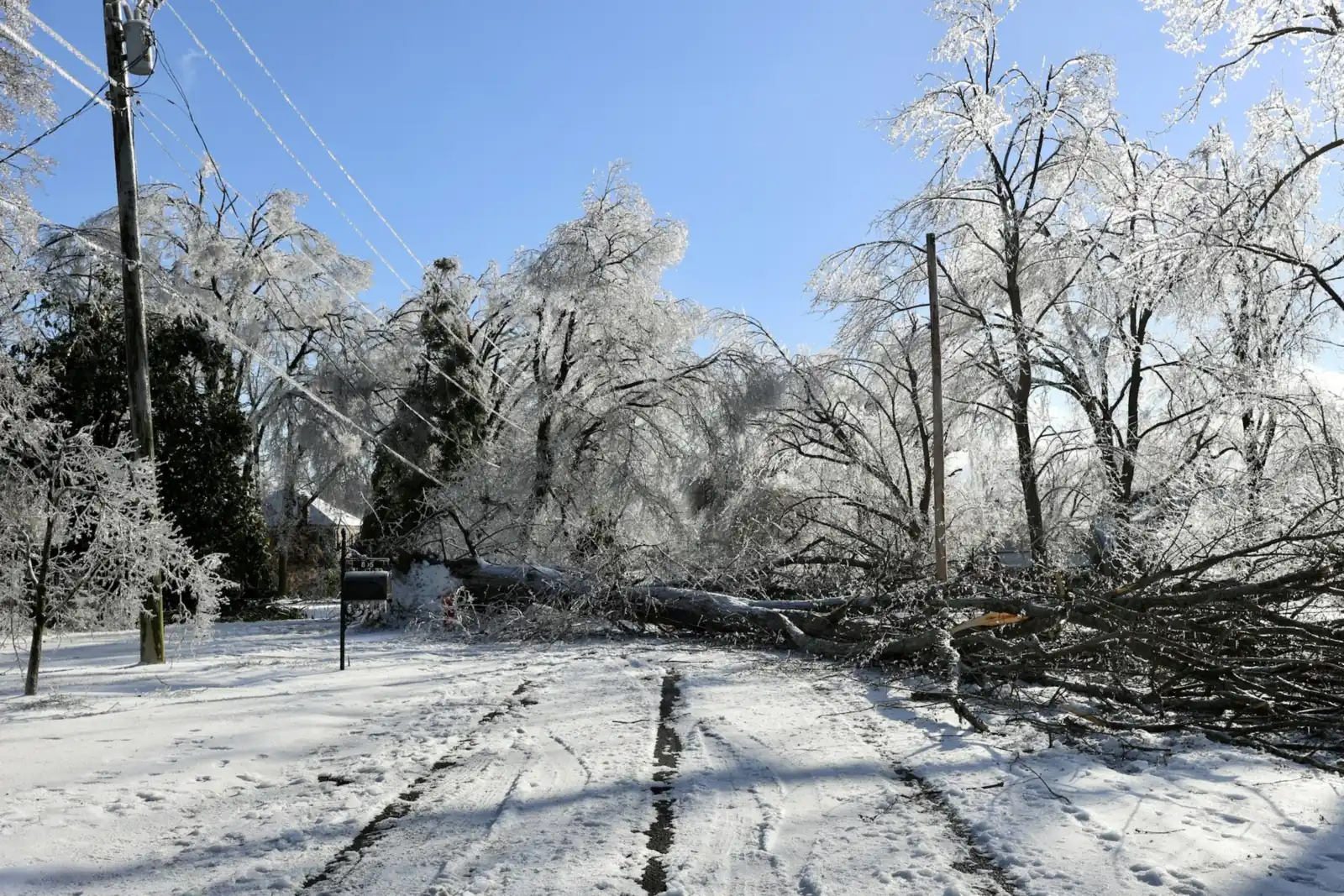
Photo: Scott Greer / Unsplash
By PowerLockdown EditorialUpdated November 1, 202610 min readHow we research
In this guide
- 01At a glance
- 02What the numbers say about winter outages
- 03Build the warm room first
- 04Wood stoves: the long-outage workhorse
- 05Indoor-safe propane heaters
- 06Kerosene heaters
- 07Run the furnace blower on stored electricity
- 08How much fuel to store
- 09Carbon monoxide alarms: the non-negotiable
- 10Hypothermia: signs to watch every day
- 11A week-by-week heat checklist
- 12What we don't know
- QFrequently asked questions
DisclosureAs an Amazon Associate we earn from qualifying purchases. We may earn a commission when you buy through links on this site, at no extra cost to you. Learn more.
At a glance
- Cold was the biggest killer in the last major US winter grid failure. In the February 2021 Texas storm, the state counted 158 hypothermia deaths and 19 carbon monoxide deaths (Texas DSHS).
- Heat one room, not the house. Pick an interior room, seal it and sleep there together.
- Safest fuel-burning options: a certified, inspected wood stove, or a propane heater the maker labels indoor-safe, with an oxygen depletion sensor.
- Never: generators, grills, camp stoves or gas ovens for indoor heat. Never store propane cylinders indoors (CPSC).
- CO alarms with battery power on every level and outside sleeping areas (CPSC, EPA). This is not optional with any fuel-burning heater.
- Store fuel by the week, sized from your heater's manual, not from guesswork.
This guide is for outages measured in weeks: a regional grid failure in January, a damaged transformer that takes months to replace, or a severe solar storm. For a storm that knocks power out for a day or two, start with winter power outage survival.
What the numbers say about winter outages
The Texas Department of State Health Services confirmed 246 deaths tied to the February 2021 winter storm. Of those, 161 (65.4%) came from extreme cold, including 158 from hypothermia. Another 19 (7.7%) were carbon monoxide poisonings from generators, grills, heaters and vehicles run in enclosed spaces, and from ice blocking vents. Ten (4.1%) were fire-related. The storm left homes without heat for days, and the largest killer was the cold itself.
The second danger is the fix people reach for. After an October 2011 storm in Connecticut, investigators counted 133 carbon monoxide poisoning cases including 3 deaths; after an October 2012 storm, 30 more. Generator or charcoal misuse caused 83% and 100% of those incidents, respectively (Styles et al., 2015). CPSC counts about 750 deaths from generator-related carbon monoxide poisoning between 2012 and 2022.
Fire is the third. NFPA estimates an average of 44,210 home heating fires a year in 2016–2020, with 480 civilian deaths. Space heaters accounted for 33% of those fires but 88% of the deaths. CPSC puts portable heaters at about 1,600 fires and 70 deaths a year in 2020–2022.
| Risk | What the data shows | Main defense |
|---|---|---|
| Cold | 158 hypothermia deaths in Texas, February 2021 | One warm room, layers, a reliable heat source |
| Carbon monoxide | 19 deaths in Texas 2021; about 750 generator CO deaths nationally 2012–2022 (CPSC) | Fuel-burning engines outside; battery CO alarms |
| Fire | Space heaters: 33% of home heating fires, 88% of heating fire deaths (NFPA, 2016–2020) | 3-foot clearance, no sleeping with unrated heaters, smoke alarms |
Build the warm room first
Every heat source in this guide works better in a small, sealed space. A room you can hold at a livable temperature on a few thousand BTU is worth more than a large heater fighting a whole drafty house.
- 01Choose the room. Interior, few exterior walls, smallest window area, ideally on the sun-facing side. If you have a wood stove, that room picks itself.
- 02Close it off. Shut doors to the rest of the house. Hang blankets in open doorways and roll towels against the gaps under doors.
- 03Seal the windows. Shrink film or plastic sheeting over the glass, then heavy blankets or quilts over that at night. Open the coverings on sunny days for solar gain.
- 04Insulate the floor. Rugs, foam pads or camping mats under sleeping areas. Cold floors pull heat out of bodies all night.
- 05Sleep together. Sleeping bags under blankets, everyone in the one room, hats on. Body heat adds up.
- 06Keep fresh air in the plan. Any combustion heater needs the ventilation its manual specifies. A sealed room plus a flame is how carbon monoxide builds.
- 07Put a CO alarm in the room at the height the alarm maker specifies, and test it daily.
No. 1Weatherization
Duck Rolled Shrink Film Window Insulation Kit, 5 windows (62" × 210")
Best for: Cutting drafts from single-pane or leaky windows
- One film roll plus tape; installs with scissors and a hair dryer
- Duck claims up to 10% savings on home energy costs when you properly seal and insulate, based on DOE estimates
Tradeoffs
- Manufacturer: not safe for plaster, drywall, wallboard or unfinished wood
- Blocks opening the window until removed
No. 2Weatherization
Frost King V-Seal Weatherstrip (M13WH / M13BH)
Best for: Drafty door and window gaps
- 7/8" × 17' roll
- Built-in hinge compresses to fill gaps around doors and windows
- Quick-bonding adhesive the manufacturer says can be applied in sub-freezing temperatures
Tradeoffs
- One roll covers limited footage
- Material and durability are not specified on the product page
Wood stoves: the long-outage workhorse
A properly installed wood stove needs no electricity and can run as long as you have dry wood. That makes it the strongest single heat source for a multi-week outage, if it is maintained. EPA's Burn Wise guidance is specific:
- Burn dry wood. Wood burns best at a moisture content below 20%. Season split wood for at least six months and check it with a moisture meter (EPA Burn Wise).
- Inspect every year. EPA and fire officials recommend a professional inspection and cleaning of the stove, chimney and vents annually. Do it in autumn, before you might depend on it.
- Certified stoves use less wood. EPA says certified stoves produce less smoke and can use up to one-third less firewood than uncertified ones. Certified catalytic stoves average about 78% efficiency and non-catalytic about 71%.
- Old stoves are dirty. One old, uncertified stove emits about as much fine-particle pollution as eight old diesel school buses, and EPA estimates more than 2 million uncertified stoves are still in use.
- Alarms on every floor. EPA recommends smoke and carbon monoxide detectors on every floor and outside each bedroom in homes that burn wood.
Open fireplaces are a weaker option. They can still take the edge off a room, but much of the heat goes up the chimney. A fireplace insert or a freestanding stove is the upgrade to plan for in a calm season, installed by a professional to code.
Indoor-safe propane heaters
Some portable propane heaters are designed and labeled for indoor use. Look for three things on the maker's page and in the manual: an explicit indoor-safe rating, an oxygen depletion sensor (ODS) that shuts the heater off if oxygen drops, and a tip-over switch. Then follow the ventilation instruction in the manual, usually a window opened a set amount.
- Cylinders stay outside. CPSC: never use or store an LP gas container indoors. Bring in only the cylinder that is connected to the heater, if the manual allows indoor connection, and keep spares in a ventilated outdoor spot.
- Never sleep with it running unless the manual explicitly permits it.
- Keep 3 feet of clearance from bedding, curtains and furniture (CPSC).
- Watch altitude limits. Some ODS heaters list a maximum elevation; check the spec sheet if you live high.

No. 1Indoor-safe heater
Mr. Heater Portable Buddy MH9BX
Best for: Keeping one room warm during a winter outage
- 4,000–9,000 BTU, heats up to 225 sq ft
- Oxygen depletion sensor (ODS) and tip-over auto shutoff
- Runs on a 1 lb propane cylinder
- Marketed by the maker as indoor-safe heat
Tradeoffs
- Still burns propane: crack a window for ventilation, keep a CO alarm in the same room, and expect 1 lb cylinders to empty quickly.
- Only about 3 hours per 1 lb cylinder on high, so long outages need many cylinders or the 20 lb setup
- 20 lb hose and filter are extra purchases
No. 2Indoor-safe heater
Mr. Heater Big Buddy (MH18B)
Best for: Larger rooms up to 450 sq ft
- 4,000 / 9,000 / 18,000 BTU/hr; heats up to 450 sq ft
- Takes two 1 lb cylinders, or a 20 lb tank with optional hose (sold separately)
- Manufacturer: up to 11 hours with dual 1 lb tanks
- ODS, tip-over shut-off; 17.1 lb
- Manufacturer spec table: "Indoor-safe: Yes", Oxygen Depletion Sensor (ODS), tip-over switch, max elevation 7,000 ft
Tradeoffs
- Heaviest and largest of these picks
- Mr. Heater notes the fan has been removed on some MH18B units due to tariff changes; check the listing

No. 3Indoor-safe heater
Mr. Heater Buddy FLEX Heater (MH11BFLEX)
Best for: Mid-size rooms up to 275 sq ft
- Up to 11,000 BTU/hr; heats up to 275 sq ft
- 1 lb cylinder; runtime 2 hrs on max, 3.5 hrs on min
- Low-oxygen safety system, 50° tip-switch and thermal shut-down
- Electronic ignition (battery compartment)
- Manufacturer: indoor-safe "YES (Excluding Canada and Massachusetts)"
Tradeoffs
- Shortest runtime per cylinder of these picks
- Ignition depends on batteries
For a deeper comparison of indoor-rated heaters, see the Blackout Kit chapter on indoor-safe heaters.
Kerosene heaters
CPSC's rule for kerosene heaters is narrow: use only water-clear 1-K grade kerosene, and never gasoline. Never use fuel-burning portable heaters or lanterns while sleeping in tents, campers or vehicles. Treat any kerosene heater like a propane one: follow the manual's ventilation instructions, keep a CO alarm in the room and keep fuel stored outside the living space.
Run the furnace blower on stored electricity
A gas furnace with its own fuel supply still needs electricity for controls, the igniter and the blower. Those loads are far smaller than a resistive space heater, so a generator or a large power station can sometimes keep a gas furnace running. The connection must go through a transfer switch or interlock installed by a licensed electrician; backfeeding through an outlet can kill utility workers. See transfer switch and interlock basics and generator safety on BackupPowerAI.
How much fuel to store
Nobody can give you a universal number of cylinders or cords. Fuel use depends on your heater's rated BTU, the setting you run it on, how many hours a day it runs and how well your room holds heat. Use your own appliance's manual and this worksheet.
| Heat source | Where to find the burn rate | Example from maker specs | Weekly math |
|---|---|---|---|
| Portable propane heater | Manual or spec sheet: hours per cylinder at each setting | Mr. Heater Buddy: about 3 hours per 1 lb cylinder on high | Hours per day × 7 ÷ hours per cylinder |
| Larger propane heater | Same, plus 20 lb tank runtime if supported | Mr. Heater Big Buddy: up to 11 hours on two 1 lb cylinders | Plan a 20 lb tank setup for multi-week use |
| Wood stove | Stove manual; your own logged use in a normal week | Varies with stove, wood and house | Track how much you burn in a cold week, then multiply |
| Kerosene heater | Manual: tank size and hours per tank | Varies by model | Hours per day × 7 ÷ hours per tank |
| Generator for furnace blower | Generator manual runtime at a given load | See the generator's spec sheet | Size with the BackupPowerAI calculator |
The 1 lb cylinders are convenient but go fast. At 8 hours a day on high, a Buddy-class heater would use roughly 2 to 3 cylinders a day by the maker's runtime figure. For anything longer than a few days, plan around a larger tank with the hose and filter the heater's maker specifies, stored and connected per the manual.
Carbon monoxide alarms: the non-negotiable
CPSC estimates more than 200 people in the U.S. die each year from accidental non-fire carbon monoxide poisoning, with more than 100 of those deaths linked to portable generators. Carbon monoxide has no smell, and the early symptoms (headache, dizziness, weakness, nausea, sleepiness, confusion) are easy to blame on cold or fatigue. Put battery-powered or battery-backup alarms on every level and outside sleeping areas, plus one in the warm room. Our CO alarm guide explains sealed-battery and plug-in models.

No. 1CO alarm
First Alert CO710 Carbon Monoxide Alarm with 10-Year Battery
Best for: A no-install alarm you can set on a nightstand or carry room to room
- Sealed 10-year lithium battery (no battery changes)
- Listed to UL 2034
- Backlit display: CO level, peak level and temperature
- 85 dB alarm; tabletop design
Tradeoff
- Tabletop only, and when the sealed battery ends the whole unit is replaced.
No. 2CO alarm
Kidde COBD10 10-Year Battery CO Alarm with Display
Best for: Set-and-forget battery alarm for bedrooms and hallways
- 10-year sealed battery, no battery replacement
- Digital display, backlit at the push of a button
- 85 dB alarm with flashing light; test/hush button
- Tabletop or wall mount; 10-year limited warranty
Tradeoff
- Not interconnected with other alarms; replace the whole unit at end of life.
No. 3CO alarm
Eton American Red Cross Blackout Buddy CO (ARCBBCO30W)
Best for: A CO alarm with a built-in flashlight for outages
- Plugs into a 120 V outlet with replaceable AA battery backup
- Real-time CO ppm display
- Built-in LED flashlight
- ETL certified to UL 2034; 10-year lifetime; 2.9 x 5.2 x 1.5 in
Tradeoff
- Plug-in placement only, and the backup batteries need replacing. Eton does not list alarm dB or flashlight lumens.
Hypothermia: signs to watch every day
CDC lists the adult warning signs as shivering, exhaustion, confusion, fumbling hands, memory loss, slurred speech and drowsiness. In infants, watch for bright red, cold skin and very low energy. A body temperature below 95°F needs medical attention right away. In a long outage, check older relatives and neighbors who live alone every day.
A week-by-week heat checklist
- Before winter: chimney and stove inspected; CO and smoke alarms tested; window film, blankets and floor pads set aside; fuel stored outside; heater manuals printed.
- Day 1: move into the warm room, seal it, start a fuel log, test CO alarms.
- Week 1: check fuel use against your plan; adjust heating hours; dry wet clothing every day; check on neighbors.
- Weeks 2 to 4: rotate fuel from storage, keep cylinders outdoors, re-inspect stovepipes for creosote if burning heavily, keep the household together at night.
- If the plan fails: move to a warming center, a relative's house or a neighbor with a working stove before nightfall, not after.
What we don't know
We cannot tell you how many days your house stays livable without heat or how much fuel your room will burn. Insulation, wind, outdoor temperature and room size dominate the answer, and published runtime figures assume ideal conditions. Treat manufacturer runtimes as the best case and log your real use in the first two days. We also found no federal guidance that sets a specific indoor temperature target for an outage, so we do not give one.
Heat is one system of several. Pair this plan with water when the taps stop, sanitation without power, the 30-day grid-down plan and the 90-day plan. For communications while you wait it out, see ham and GMRS radio for grid-down. Then work through the blackout checklist and the Blackout Kit.
Frequently asked questions
- What is the safest way to heat a home without power for weeks?
- A properly installed, annually inspected wood stove burning dry wood is the most durable option because it needs no electricity. A propane heater labeled for indoor use, with an oxygen depletion sensor and the manual's ventilation, is the usual alternative. Either way, keep battery-powered CO alarms on every level and in the warm room.
- Can I store propane cylinders in the garage or basement?
- No. CPSC says never to use or store an LP gas container indoors. Keep spare cylinders outdoors in a ventilated spot away from doors, windows and ignition sources.
- Is a kerosene heater safe indoors during an outage?
- Only if it is used exactly as its manual describes, with the ventilation it specifies and a CO alarm in the room. CPSC says to use only water-clear 1-K grade kerosene and never gasoline, and never to use fuel-burning heaters while sleeping in tents, campers or vehicles.
- How much wood do I need for a month without power?
- It depends on your stove, your wood and your house, so there is no honest single number. Log how much you burn during a normal cold week this winter and multiply. Dry wood below 20% moisture goes further; EPA says certified stoves can use up to one-third less wood than uncertified ones.
- Can a portable power station heat a room?
- Not for long. A resistive space heater draws far more than most power stations can sustain for hours. Stored electricity is better spent on a furnace blower (connected by a licensed electrician), electric blankets, lights and medical devices. Size it with the BackupPowerAI calculator.
Sources
- Texas Department of State Health Services, February 2021 Winter Storm-Related Deaths – Texas, December 31, 2021.
- Styles et al., Archives of Environmental & Occupational Health (CDC Stacks), Two Storm-Related Carbon Monoxide Poisoning Outbreaks: Connecticut, October 2011 and October 2012, 2015.
- National Fire Protection Association (R. Campbell), Home Heating Fires: Supporting Tables, December 2022.
- U.S. Consumer Product Safety Commission, Keep Warm and Safe This Winter: Tips for Using Generators, Furnaces and Space Heaters, January 23, 2026.
- U.S. Consumer Product Safety Commission, Carbon Monoxide Information Center, accessed October 27, 2026.
- U.S. Consumer Product Safety Commission, Portable Heaters & Camping Equipment, accessed October 31, 2026.
- U.S. Consumer Product Safety Commission, Gas Grill Fact Sheet, 2013.
- U.S. EPA, Burn Wise, Best Wood-Burning Practices, last updated October 13, 2026.
- U.S. EPA, Burn Wise, Frequent Questions about Wood-Burning Appliances, updated March 5, 2026.
- U.S. EPA, Burn Wise, Burn Wise Facts & Figures + Health and Safety Tips, updated October 13, 2026.
- CDC, Preventing Hypothermia and Frostbite (Winter Weather), August 25, 2026.
- Ready.gov (FEMA), Winter Weather, updated March 10, 2026.
Related guides
Seasonal prep
Winter power outage survival
A practical plan for staying warm and safe when the power goes out in freezing weather, including the safety rules that matter most.
Updated October 27, 2026 · 8 min read
Gear picks
Best carbon monoxide alarms for power outages
Generators, fuel-burning heaters and improvised cooking make outages a high-risk time for carbon monoxide. These alarms keep working without grid power.
Updated October 27, 2026 · 8 min read
Grid-down
The 30-day grid-down plan
What stops working in a month-long regional outage, how much to store for your household, and what to do each week until the power returns.
Updated November 1, 2026 · 8 min read
Grid-down
Water when the taps stop
City water runs on electricity; this is how much to store, where to find more, and how to make it safe to drink when the treatment plant goes dark.
Updated November 1, 2026 · 8 min read