Guides · Outage basics
How long power outages last: what federal data shows
What federal data says about outage length in the US, why a few big storms dominate the numbers, and how to decide how many days to prepare for.
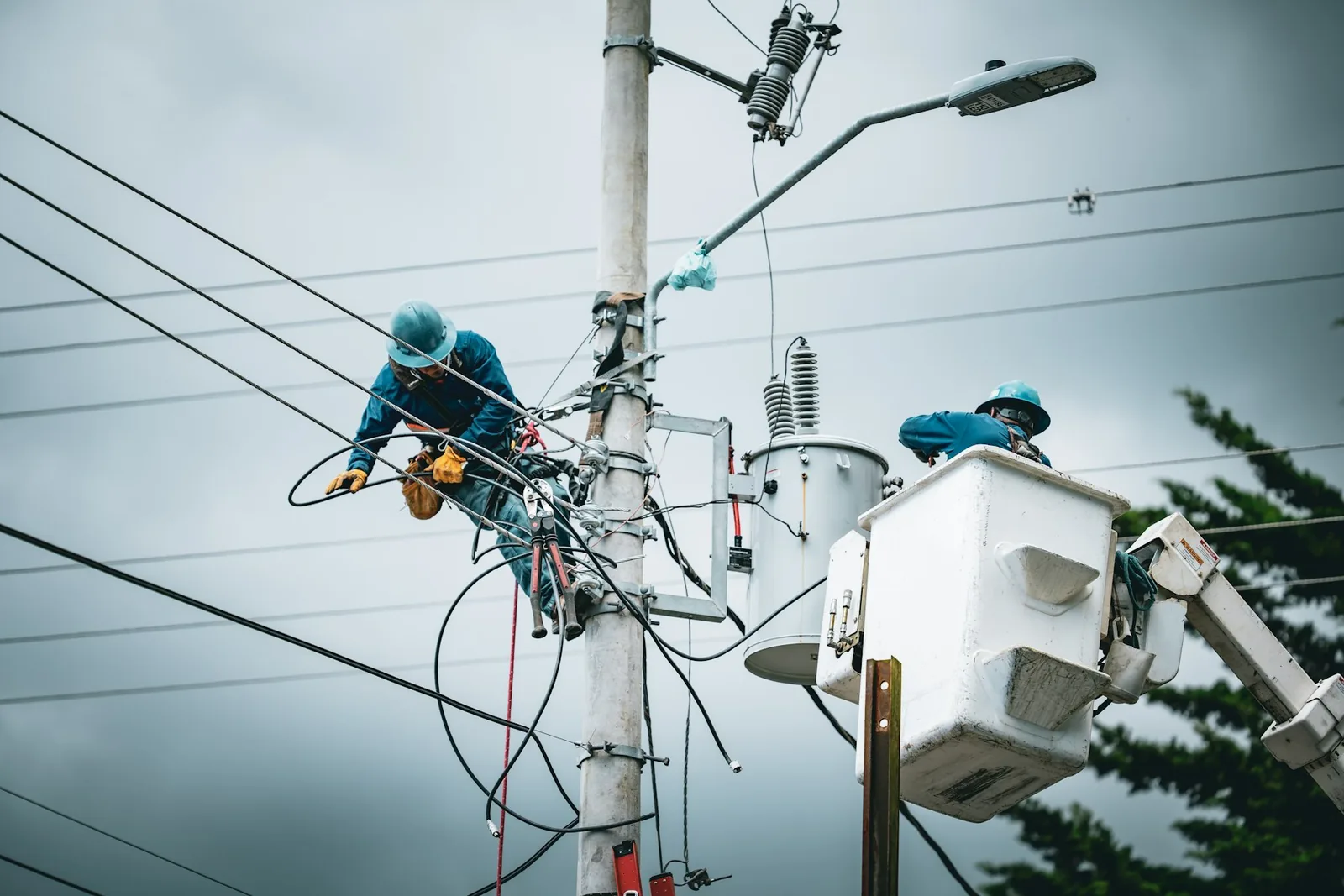
Photo: Mario Spencer / Unsplash
By PowerLockdown EditorialUpdated October 27, 20267 min readHow we research
In this guide
The short answer
Most outages are short. A typical American home loses power a little more than once a year, and on an ordinary year the total time in the dark adds up to a couple of hours. The average hides the outages that cause real harm: the multi-day events caused by hurricanes, ice storms and grid emergencies. Those are the ones worth preparing for, and they are the ones that have been getting longer.
According to the U.S. Energy Information Administration (EIA), electricity customers in the United States experienced an average of 11 hours of power interruptions in 2024, the most in a decade. Of that, nearly nine hours came from major events such as hurricanes. Without major events, the average was about two hours per year.
How the EIA measures outages
Utilities report two standard reliability numbers to the EIA. SAIDI (System Average Interruption Duration Index) is the total minutes or hours of interruption an average customer experiences in a year. SAIFI (System Average Interruption Frequency Index) is how many times the average customer loses power. Utilities report both with and without "major event days", which are statistically unusual days, usually caused by severe weather.
That split matters. The "without major events" number tells you how reliable your local grid is on a normal day: tree branches on lines, equipment failures, car-versus-pole accidents. The "with major events" number tells you about disaster exposure, which is what drives multi-day outages.
| Measure | 2024 figure |
|---|---|
| Total hours without power, all events | About 11 hours |
| Hours from major events | Nearly 9 hours |
| Major events, 2014–2023 typical | Nearly 4 hours per year |
| Hours excluding major events | About 2 hours |
| Number of interruptions (US average) | 1.5 |
| Share of hours caused by major events | 80% |
Why 2024 was so long
The EIA attributes the spike mainly to hurricanes Beryl, Helene and Milton. South Carolina customers averaged nearly 53 hours without power in 2024, the longest of any state, largely because of Helene. The U.S. Department of Energy reported that outages from Helene peaked at about 4.6 million customers across the affected region on September 27, 2024.
This is the pattern to plan around. A single storm can turn an area with a two-hour reliability record into one where people wait days for power. Restoration takes longer when damage is spread across distribution lines, roads are blocked, and crews must rebuild rather than repair.
Typical outage lengths by cause
Federal data does not publish a single "average length" per cause, so treat the ranges below as planning categories rather than statistics. What is well documented is which kinds of events produce the longest outages.
- Routine local faults (a blown transformer, a tree on a line): usually restored the same day.
- Thunderstorms and wind events: often hours to a day or two, depending on how many lines are down.
- Rolling blackouts / load shedding: designed to rotate, but in the February 2021 Texas event many customers were out for days. See rolling blackouts explained.
- Ice storms and extreme cold: damage to lines plus generation shortfalls can stretch outages across several days. See winter power outage survival.
- Hurricanes: the main driver of long outages in 2024. Coastal and inland areas can be out for a week or more after major storms. See hurricane power outage prep.
- Wildfire shutoffs (PSPS): planned de-energizations in high fire-risk weather, lasting until the weather passes and lines are inspected. See wildfire PSPS prep.
The reliability trend
Day-to-day reliability (outages excluding major events) has stayed fairly steady at around two hours per customer per year. Meanwhile, the bulk power system is under more strain. NERC's 2025 Long-Term Reliability Assessment (January 2026) found that 13 of 23 assessment areas face resource adequacy challenges over the next ten years, with new data centers accounting for most of the projected demand growth. Its 2025–2026 Winter Reliability Assessment flagged seven areas as elevated risk during extreme cold.
Elevated risk does not mean an outage is predicted. It means that in severe, widespread weather there may not be enough supply, and grid operators could have to shed load. You can see which regions are flagged in our Grid Risk Outlook.
How many days to prepare for
Ready.gov recommends keeping at least one gallon of water per person per day for several days, plus food, light, a radio and medical supplies. A practical approach is to prepare in layers, so the same kit covers an afternoon outage or a two-week one:
- 0172 hours (the baseline). Water, shelf-stable food, flashlights or lanterns, a battery or hand-crank weather radio, a phone power bank, first-aid supplies and a battery-powered CO alarm.
- 02Two weeks (storm-prone areas). More water and food, a plan for heat or cooling, a way to keep medications and a fridge cold, and backup power sized to your essentials.
- 0330 days (high-exposure or medically dependent households). Water treatment, deeper food stores, a refuel or recharge plan for backup power, and a conversation with your utility about medical baseline programs.
Our printable blackout checklist breaks each layer down item by item.
What a long outage actually affects
- Food. Ready.gov and the FDA say a closed refrigerator keeps food safe for about 4 hours, a full freezer about 48 hours, and a half-full freezer about 24 hours.
- Water. Homes on wells lose their pump. Municipal systems can issue boil-water notices after storms.
- Heating and cooling. Most gas furnaces need electricity to run their blowers and controls.
- Medical devices. CPAP machines, oxygen concentrators and powered wheelchairs need a plan before the outage.
- Communication. Cell towers have limited backup power. A weather radio works when the internet does not.
- Safety. Carbon monoxide poisoning from generators and improvised heating is a leading danger during outages. The CDC says more than 400 Americans die from unintentional CO poisoning each year.
Next steps
Start with the 72-hour checklist. If you want backup power, the free backup power calculator helps size a power station or generator to what you actually need to run. For the non-electric side (heat, light, water, food and first aid), see the Blackout Kit.
Frequently asked questions
- What is the average length of a power outage in the US?
- The EIA reports that US customers averaged about 11 hours of interruptions in total during 2024, of which nearly nine hours came from major events like hurricanes. Excluding major events, the average was about two hours for the year.
- Which state had the longest power outages in 2024?
- According to the EIA, South Carolina customers averaged nearly 53 hours without power in 2024, largely because of Hurricane Helene.
- How long will food last in the fridge during an outage?
- Ready.gov and the FDA say an unopened refrigerator keeps food safe for about 4 hours. A full freezer holds its temperature for about 48 hours, and a half-full freezer for about 24 hours, if the door stays closed.
- How many days of supplies should I keep?
- Ready.gov recommends at least one gallon of water per person per day for several days. Many households start with 72 hours of supplies and build toward two weeks if they live in hurricane, ice-storm or wildfire-shutoff areas.
Sources
- U.S. Energy Information Administration (Today in Energy), Hurricanes in 2024 led to the most hours without power in the United States in 10 years, December 1, 2025.
- U.S. Department of Energy, Hurricane Helene Situation Report #5, October 1, 2024.
- NERC, 2025 Long-Term Reliability Assessment, January 2026.
- NERC, 2025–2026 Winter Reliability Assessment, November 2025.
- Ready.gov (FEMA), Power Outages, updated June 4, 2026.
- Ready.gov (FEMA), Build a Kit, updated July 1, 2026.
- U.S. Food and Drug Administration, Food and Water Safety During Power Outages and Floods, current as of March 5, 2024.
- CDC, About Carbon Monoxide Poisoning, reviewed October 2026.
- U.S. Consumer Product Safety Commission, Carbon Monoxide Information Center, accessed October 27, 2026.
Related guides
Outage basics
Rolling blackouts explained
Why grid operators sometimes cut power on purpose, what the official reports say about past events, and how to get your home ready.
Updated October 27, 2026 · 7 min read
Seasonal prep
Winter power outage survival
A practical plan for staying warm and safe when the power goes out in freezing weather, including the safety rules that matter most.
Updated October 27, 2026 · 8 min read
Seasonal prep
Hurricane power outage prep
Hurricanes are the biggest single driver of long US power outages. This plan covers a week or more without electricity.
Updated October 27, 2026 · 8 min read