Blackout Kit · Heat
Best Indoor-Safe Heaters for Power Outages (and How to Use Them Safely)
Indoor-rated propane heaters with ODS and tip-over shutoff, and the carbon monoxide rules that keep a cold night from turning dangerous.
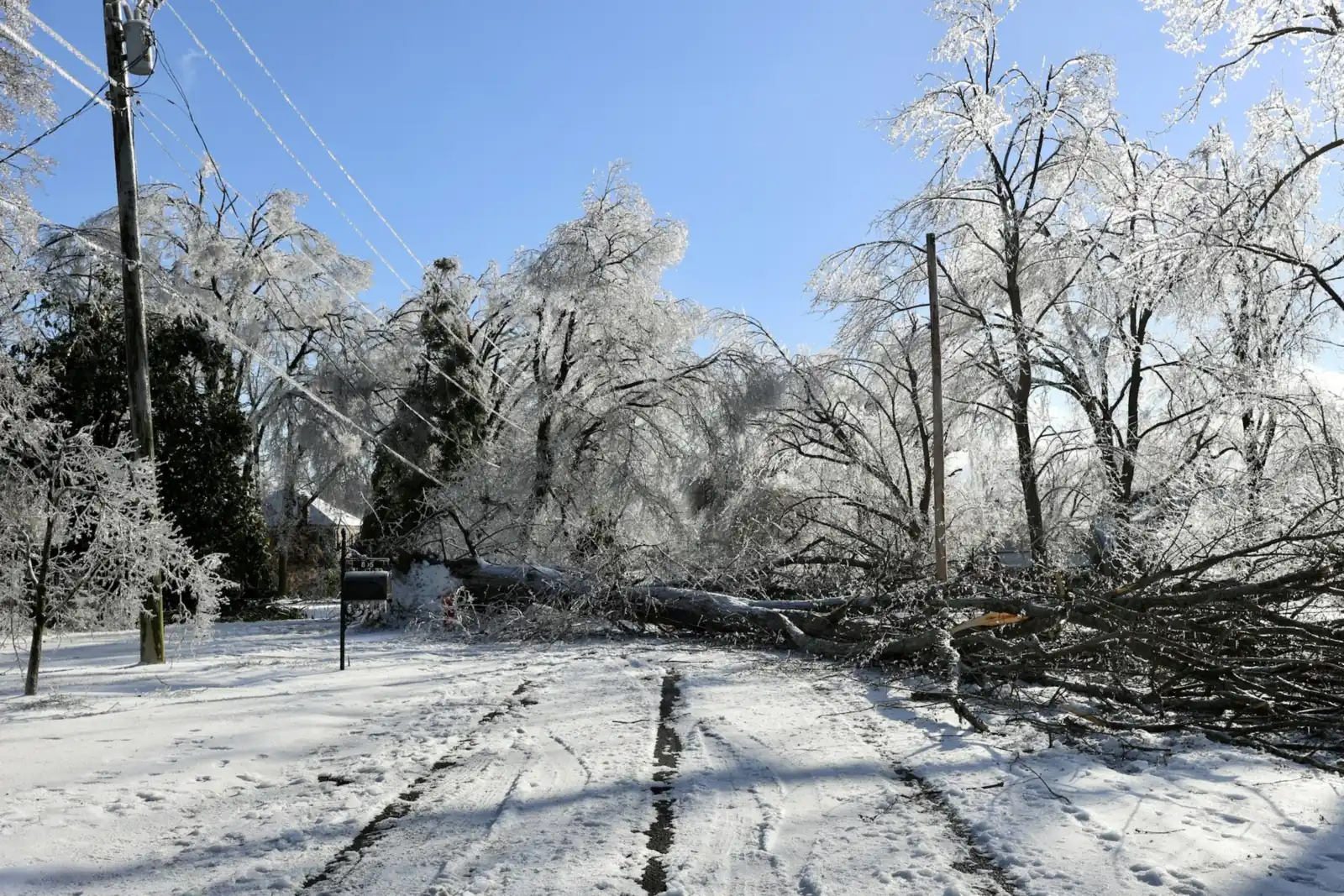
Photo: Scott Greer / Unsplash
By PowerLockdown EditorialUpdated October 27, 20264 min readHow we research
In this guide
- 01Carbon monoxide first: the non-negotiables
- 02What makes a heater "indoor-safe"
- 03Ventilation and placement
- 04Heat less space for longer
- 05Research-based picks: manufacturer-rated indoor-safe heaters
- 06Heat-loss checklist before you light anything
- 07Electric heat needs a lot of backup power
- QFrequently asked questions
DisclosureAs an Amazon Associate we earn from qualifying purchases. We may earn a commission when you buy through links on this site, at no extra cost to you. Learn more.
Winter storms are among the outages that matter most, because losing heat is a health risk, not just an inconvenience. NERC's 2025–2026 Winter Reliability Assessment found all areas had adequate resources for normal winter peaks but warned that more extreme winter conditions over a wide area could cause electricity supply shortfalls.
This guide covers heaters that their manufacturer rates for indoor use, and the safety rules that must come with them. It is research-based: picks come from manufacturer specs and official safety guidance; we do not test products. Read the safety section before buying anything that burns fuel.
Carbon monoxide first: the non-negotiables
Carbon monoxide is odorless and colorless. During outages, CO poisoning is driven by people bringing outdoor equipment inside to stay warm or keep the lights on. CPSC's January 2026 winter release reports about 750 deaths from generator-related CO poisoning between 2012 and 2022. If you run a generator, CDC and CPSC say to keep it outside, at least 20 feet from the home, with exhaust pointed away from windows, doors and vents.
A CO alarm with battery power or battery backup is mandatory if you use any fuel-burning heater indoors. Check alarm batteries twice a year; CDC suggests doing it when clocks change in spring and fall.
What makes a heater "indoor-safe"
Only use a fuel-burning heater indoors if its manufacturer explicitly rates it for indoor use. The heaters below are all listed as "Indoor-safe: Yes" on Mr. Heater's spec tables and include an Oxygen Depletion Sensor (ODS), which shuts the heater off if oxygen in the room falls, and a tip-over switch that shuts it off if it is knocked over.
Two important limits from the same spec tables: the ODS is rated up to 7,000 ft of elevation, and Mr. Heater lists state restrictions for Massachusetts and country restrictions for Canada, where these models are not sold for that use.
Patio heaters, construction "torpedo" heaters, camp stoves and grills are outdoor equipment. Never bring them inside.
Ventilation and placement
Indoor-rated is not the same as sealed-room safe. CPSC notes that unvented heaters "require a constant supply of fresh air to operate safely and to avert the buildup of poisonous gases." Follow the ventilation instructions in your heater's owner's manual exactly; they specify how much fresh-air opening is required for the size of room.
- Keep heaters at least three feet from drapes, furniture, bedding and other combustible materials (CPSC).
- Never refuel a fuel-burning heater while it is running; turn it off and let it cool first (CPSC).
- Place the heater on a flat, hard surface where kids and pets cannot knock it over.
- Follow your owner's manual on unattended operation and bedroom use; when in doubt, turn the heater off before sleeping and use blankets and sleeping bags.
- Store spare propane cylinders outdoors, never in a living space.
Heat less space for longer
A small heater cannot keep a whole house warm, and every cylinder has a limited runtime. Pick one room, ideally an interior room with few windows, close the doors to unused rooms, cover windows with blankets or curtains at night, and dress in layers. Sizing matters: compare the heated-area rating to the room you will actually use, and plan fuel from the manufacturer's runtime per cylinder.
Fuel math example using Mr. Heater's spec table: the Portable Buddy runs about 3 hours on high or 6 hours on low per 1 lb cylinder. Heating one room for 6 hours a day on low for 3 days is about 3 cylinders; on high, about 6. Longer outages are where the 20 lb tank option (with the correct hose and filter) makes sense.
Research-based picks: manufacturer-rated indoor-safe heaters
All four are propane radiant heaters that Mr. Heater rates as indoor-safe with ODS and tip-over shutoff. Specs are from mrheater.com product pages, checked October 27, 2026.

No. 1Indoor-safe heater
Mr. Heater Portable Buddy MH9BX
Best for: Keeping one room warm during a winter outage
- 4,000–9,000 BTU, heats up to 225 sq ft
- Oxygen depletion sensor (ODS) and tip-over auto shutoff
- Runs on a 1 lb propane cylinder
- Marketed by the maker as indoor-safe heat
Tradeoffs
- Still burns propane: crack a window for ventilation, keep a CO alarm in the same room, and expect 1 lb cylinders to empty quickly.
- Only about 3 hours per 1 lb cylinder on high, so long outages need many cylinders or the 20 lb setup
- 20 lb hose and filter are extra purchases
No. 2Indoor-safe heater
Mr. Heater Big Buddy (MH18B)
Best for: Larger rooms up to 450 sq ft
- 4,000 / 9,000 / 18,000 BTU/hr; heats up to 450 sq ft
- Takes two 1 lb cylinders, or a 20 lb tank with optional hose (sold separately)
- Manufacturer: up to 11 hours with dual 1 lb tanks
- ODS, tip-over shut-off; 17.1 lb
- Manufacturer spec table: "Indoor-safe: Yes", Oxygen Depletion Sensor (ODS), tip-over switch, max elevation 7,000 ft
Tradeoffs
- Heaviest and largest of these picks
- Mr. Heater notes the fan has been removed on some MH18B units due to tariff changes; check the listing
No. 3Indoor-safe heater
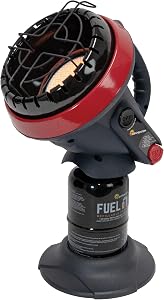
Mr. Heater Little Buddy (MH4B)
Best for: A small room or bathroom up to 95 sq ft
- 3,800 BTU/hr, single setting; heats up to 95 sq ft
- Connects directly to one 1 lb disposable cylinder
- Runtime: 5.6 hrs per cylinder
- ODS, tip-over shut-off; 5.85 lb
- Manufacturer spec table: "Indoor-safe: Yes", Oxygen Depletion Sensor (ODS), tip-over switch, max elevation 7,000 ft
Tradeoffs
- Single heat level and small coverage
- No 20 lb tank option listed by the manufacturer

No. 4Indoor-safe heater
Mr. Heater Buddy FLEX Heater (MH11BFLEX)
Best for: Mid-size rooms up to 275 sq ft
- Up to 11,000 BTU/hr; heats up to 275 sq ft
- 1 lb cylinder; runtime 2 hrs on max, 3.5 hrs on min
- Low-oxygen safety system, 50° tip-switch and thermal shut-down
- Electronic ignition (battery compartment)
- Manufacturer: indoor-safe "YES (Excluding Canada and Massachusetts)"
Tradeoffs
- Shortest runtime per cylinder of these picks
- Ignition depends on batteries
Heat-loss checklist before you light anything
- Battery or battery-backup CO alarm on every level and near sleeping areas, tested
- Owner's manual read, with its ventilation and room-size rules followed
- One room chosen; doors to unused rooms closed
- Three-foot clear zone around the heater
- Spare cylinders stored outside
- Warm layers, hats, sleeping bags and blankets for everyone
Electric heat needs a lot of backup power
Electric space heaters draw far more power than lights, phones or a fridge, so running one from a battery drains it quickly. CPSC also says to plug electric space heaters directly into a wall outlet, never an extension cord or power strip. If you want electric heat during outages, size the backup power first with the backup power calculator.
Frequently asked questions
- Is it safe to use a propane heater indoors during a power outage?
- Only if the manufacturer rates that specific model for indoor use, you follow its ventilation instructions, and you have working battery-powered or battery-backup CO alarms. Never use outdoor propane equipment, grills or camp stoves inside.
- What does an oxygen depletion sensor do?
- An ODS shuts the heater off if oxygen in the room drops. It is a backup, not a replacement for ventilation and a CO alarm. Mr. Heater rates the ODS on these models up to 7,000 ft elevation.
- Can I use my gas oven or stove to heat the house?
- No. Ready.gov says: "Do not use a gas stove or oven to heat your home." It increases the risk of carbon monoxide poisoning.
- How far from the house should a generator be?
- CDC and CPSC say outdoors only, at least 20 feet from the home, with the exhaust pointed away from windows, doors and vents. Never in a garage, even with the door open.
Sources
Related guides
Light
Best Emergency Lanterns and Flashlights for Power Outages
Room lanterns, a headlamp per person and one strong flashlight, plus how to plan batteries for a multi-day outage.
Updated October 27, 2026 · 3 min read
Energy bills
How to Cut Your Energy Bills Before Winter
What EIA expects this winter, the DOE and ENERGY STAR moves that save the most, and how to find waste in your own bill.
Updated October 27, 2026 · 3 min read
Medical
Emergency First Aid and Medical Prep for Power Outages
A real first aid kit, a week of prescriptions, FDA insulin guidance, and a plan for medical devices that need power.
Updated October 27, 2026 · 3 min read