Guides · Seasonal prep
Hurricane power outage prep
Hurricanes are the biggest single driver of long US power outages. This plan covers a week or more without electricity.
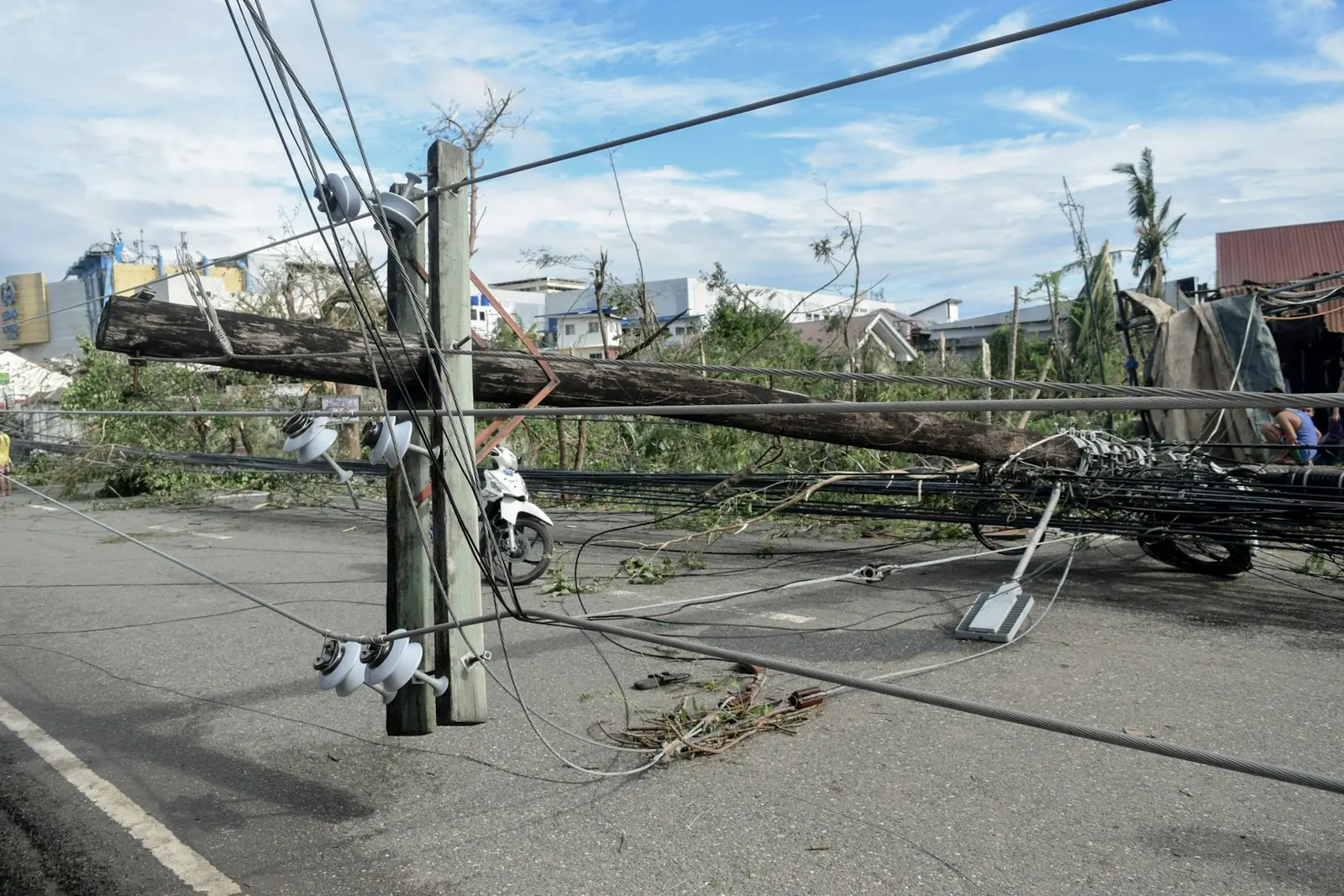
Photo: Carl Kho / Unsplash
By PowerLockdown EditorialUpdated October 27, 20268 min readHow we research
In this guide
- 01Why hurricanes cause the longest outages
- 02Early in the season (do this now)
- 03When a storm is forecast (72–48 hours out)
- 04During and after the storm
- 05Generator safety after hurricanes
- 06Staying cool without power
- 07Sizing backup power for a hurricane outage
- 08After power returns
- QFrequently asked questions
DisclosureAs an Amazon Associate we earn from qualifying purchases. We may earn a commission when you buy through links on this site, at no extra cost to you. Learn more.
Why hurricanes cause the longest outages
The EIA reports that US electricity customers averaged about 11 hours without power in 2024, the most in a decade, and that major events, primarily hurricanes Beryl, Helene and Milton, accounted for 80% of those hours. South Carolina customers averaged nearly 53 hours. The Department of Energy reported that Helene's outages peaked at about 4.6 million customers across the region on September 27, 2024.
Hurricanes damage the distribution system at scale: poles snap, lines come down under trees, substations flood. Crews often have to rebuild lines rather than repair them, and they can only start once winds drop and roads are passable. Inland areas are not immune; Helene caused severe damage hundreds of miles from the coast.
Early in the season (do this now)
- Know your evacuation zone and route. If you are told to evacuate, go. No outage plan replaces that.
- Build your kit with the 72-hour and two-week checklists.
- Decide on backup power. A portable power station is quiet and safe indoors; a generator runs longer on fuel but must stay outdoors. The backup power calculator helps you size either.
- If you plan to connect a generator to home circuits, have a licensed electrician install a transfer switch or interlock now, not during the storm.
- Photograph your home and belongings for insurance.
- Get a battery or hand-crank NOAA weather radio. See our emergency radio picks.
- Install battery-powered CO alarms. Generator-related CO poisoning spikes after storms.
When a storm is forecast (72–48 hours out)
- 01Fill vehicles with fuel and get cash; card readers and pumps need power.
- 02Charge every power bank, laptop, phone and power station.
- 03Fill bathtubs and large containers with water for flushing and cleaning (not drinking unless the containers are food-safe).
- 04Turn the fridge and freezer to their coldest settings and fill empty freezer space with containers of water to make ice.
- 05Refill prescriptions and make a plan for medications that need refrigeration.
- 06Bring in or tie down outdoor furniture, grills and propane tanks.
- 07Store generator fuel safely outside the living space and away from ignition sources.
During and after the storm
- Stay inside, away from windows, until officials say it is safe.
- Stay away from downed lines, and treat every line as live. Report them to your utility.
- Do not walk or drive through floodwater.
- Keep the fridge and freezer closed. Ready.gov and the FDA say about 4 hours for the fridge, about 48 hours for a full freezer and about 24 hours for a half-full one.
- Listen to local officials for boil-water notices.
Generator safety after hurricanes
Carbon monoxide is one of the most serious risks after a hurricane, when many people run generators for the first time. The CDC says more than 400 Americans die from unintentional CO poisoning every year; CPSC links more than 100 deaths per year to portable generators.
Staying cool without power
Post-hurricane heat is a serious health risk, especially for older adults, infants and people with chronic conditions. Air conditioning usually needs far more power than a portable power station can supply for long, so focus on the basics:
- Run battery or USB fans; a power station can run a small fan for many hours.
- Close blinds on sun-facing windows during the day and open windows at night if it is safe.
- Drink water regularly and avoid strenuous cleanup in the hottest part of the day.
- Know where your local cooling centers are, and use them.
Sizing backup power for a hurricane outage
Make a list of what you must run and estimate daily energy in watt-hours (Wh): watts multiplied by hours used. Check each device's label or manual for its real wattage. A worked example:
| Device | Example watts | Hours/day | Wh/day |
|---|---|---|---|
| Phone charging (x3) | 10 each | 3 | 90 |
| LED lights | 10 | 6 | 60 |
| Box fan | 50 | 8 | 400 |
| Wi-Fi router | 10 | 8 | 80 |
| Total | 630 |
In that example, a roughly 1,000 Wh power station covers about a day and a half, longer if you recharge it with solar panels. A full-size refrigerator adds a large, variable load (check the label or measure with a plug-in meter), which is why many households pair a power station with a generator or solar. The backup power calculator walks through this math for your home.

No. 1Power station
Anker SOLIX C1000 Portable Power Station
Best for: Running a fridge, lights, phones and a CPAP through a one- or two-day outage
- 1,056 Wh capacity (up to 2,112 Wh with the matching expansion battery)
- 1,800 W continuous / 2,400 W surge AC output
- LiFePO4 battery chemistry
- 6 AC outlets
- 28.44 lb
Tradeoff
- At about 28 lb it is a carry-to-the-car unit, not a grab-and-go bag item.

No. 2Emergency radio
Midland ER310 Emergency Crank Weather Radio
Best for: A household weather radio with several ways to stay powered
- Power: solar, hand crank, 3,500 mAh rechargeable Li-ion, or 6 AA batteries
- NOAA weather band; alerts sound when issued on your local channel
- LED flashlight with SOS beacon
- USB output to top up a phone
Tradeoffs
- Midland notes the design dates to the early 2000s and may not charge newer phones (iPhone X and later) reliably. Weather alerts are not SAME county-coded.
- Midland's FAQ notes solar tops up a charged battery rather than reviving a dead one
- Micro-USB charging rather than USB-C
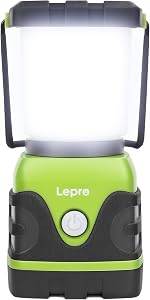
No. 3Lantern
Lepro 1500lm Battery Powered LED Camping Lantern
Best for: Bright, flame-free room light that runs on stored batteries
- 1,500 lumens, dimmable (manufacturer rating)
- Runs on 3 D alkaline batteries (not included); not rechargeable
- Up to 12 hrs at 1,500 lm (manufacturer figure)
- IPX4 water resistance; daylight, warm, full and flashing red modes
Tradeoff
- Not rechargeable, so stock spare D cells; lumen and runtime figures are self-reported.

No. 4Water filter
MSR AutoFlow XL Gravity Filter 10 L
Best for: Filtering water for a whole household if tap water is unsafe
- 10 L reservoir; hang it and gravity does the filtering
- 1.75 liters per minute; cartridge rated for 1,500 liters
- 0.2-micron hollow fiber: removes bacteria (99.9999%) and protozoa (99.9%) per MSR
- Meets EPA standards and NSF Protocol P231 for bacteria and protozoa (manufacturer claim)
- 12 oz; not effective against viruses or chemicals (maker)
Tradeoffs
- Not rated for viruses or chemicals. CDC advises disinfecting filtered water when viruses are a concern, and no filter makes fuel-contaminated water safe.
- Flow slows as the bag empties
After power returns
- Check food: discard perishables that were above 40°F for more than 2 hours, and when in doubt, throw it out (FDA, CDC).
- Have an electrician inspect any wiring or appliances that were flooded before using them.
- Restock your kit and recharge every battery for the next storm.
For the full non-electric side of preparedness (heat, light, water, food, comms and first aid), see the Blackout Kit.
Frequently asked questions
- How long does power stay out after a hurricane?
- It varies enormously with storm strength and damage. Some areas are restored within a day; widespread damage can leave customers without power for a week or longer. EIA data shows major events, mostly hurricanes, accounted for 80% of US outage hours in 2024.
- Can I run a generator in my garage with the door open?
- No. Ready.gov and CPSC say generators must run outdoors, at least 20 feet from windows, doors and attached garages, with exhaust pointed away. An open garage door does not prevent dangerous carbon monoxide buildup.
- Should I fill my bathtub before a hurricane?
- Many households fill tubs and containers for flushing and cleaning water. For drinking water, store water in clean, food-safe containers; Ready.gov recommends at least one gallon per person per day for several days.
Sources
- U.S. Energy Information Administration (Today in Energy), Hurricanes in 2024 led to the most hours without power in the United States in 10 years, December 1, 2025.
- U.S. Department of Energy, Hurricane Helene Situation Report #5, October 1, 2024.
- Ready.gov (FEMA), Power Outages, updated June 4, 2026.
- Ready.gov (FEMA), Build a Kit, updated July 1, 2026.
- CDC, About Carbon Monoxide Poisoning, reviewed October 2026.
- U.S. Consumer Product Safety Commission, Carbon Monoxide Information Center, accessed October 27, 2026.
- U.S. Food and Drug Administration, Food and Water Safety During Power Outages and Floods, current as of March 5, 2024.
- CDC, Keep Food Safe After a Disaster or Emergency, November 24, 2025.
Related guides
Outage basics
How long power outages last: what federal data shows
What federal data says about outage length in the US, why a few big storms dominate the numbers, and how to decide how many days to prepare for.
Updated October 27, 2026 · 7 min read
Gear picks
Best emergency radios for power outages
Five research-based picks for hand-crank, solar and battery NOAA weather radios, chosen from manufacturer specs and published data.
Updated October 27, 2026 · 8 min read
Gear picks
Best carbon monoxide alarms for power outages
Generators, fuel-burning heaters and improvised cooking make outages a high-risk time for carbon monoxide. These alarms keep working without grid power.
Updated October 27, 2026 · 8 min read