Research-based review · Heat, CO and fire safety
Mr. Heater Little Buddy review: heat for one small room when a winter outage stops the furnace
A 3,800 BTU propane heater on a single 1 lb cylinder, rated by its maker for indoor use with an oxygen depletion sensor and tip-over shutoff. Sized for a bathroom or a small bedroom.
By PowerLockdown EditorialUpdated November 1, 20265 min readBased on manufacturer specs and published dataHow we research
DisclosureAs an Amazon Associate we earn from qualifying purchases. We may earn a commission when you buy through links on this site, at no extra cost to you. Learn more.
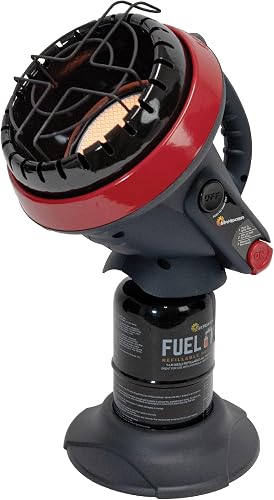
At a glance · Mr. Heater Little Buddy (MH4B)
Best for: Keeping a small, closed room such as a bathroom or nursery-sized bedroom above freezing for a few hours at a time
- Heat output
- 3,800 BTU per hour, single setting
- Coverage
- Up to 95 sq ft (manufacturer)
- Fuel
- One 1 lb disposable propane cylinder, connected directly
- Runtime per cylinder
- 5.6 hours
- Safety
- Oxygen depletion sensor (ODS), accidental tip-over shutoff, Piezo ignition
- Indoor-safe (maker)
- Yes; not sold in Massachusetts or Canada
- Weight / limits / warranty
- 5.85 lb; max elevation 7,000 ft; 3-year limited
Verdict: The simplest indoor-rated propane heater Mr. Heater sells, and the right size for one small room. Its single setting and 1 lb-only fuel make it a short-session heater, not a whole-outage plan.
In this review
This is a research-based review, based on manufacturer specs and published data. We do not test products. Specs come from Mr. Heater's product page for the Little Buddy (model MH4B), checked November 1, 2026. Safety guidance comes from the CDC, the Consumer Product Safety Commission (CPSC) and Ready.gov.
When the grid goes down in winter, most central heating stops with it. Even gas furnaces need electricity for the blower and controls. A small propane heater is one of the few ways to put heat into a room with no power at all, and the Little Buddy is the smallest one Mr. Heater lists as indoor-safe.
Small is the point. At 3,800 BTU and 95 square feet, it is built for a tent or an ice-fishing shanty, and in a house that translates to one small room with the door shut. This review covers what those numbers mean, how far a cylinder goes and the ventilation and carbon monoxide rules that come with burning fuel indoors.
Who should buy it
- Households that need to keep a bathroom from freezing or warm a small bedroom for a few hours during an outage.
- Apartment dwellers with limited storage, since it is 5.85 lb and runs on the small green cylinders.
- People who already store 1 lb cylinders for a camp stove and want heat on the same fuel.
- Anyone prepared to run a battery-powered CO alarm in the same room.
Who should skip it
- Anyone heating a living room or a room bigger than about 95 sq ft. The Mr. Heater Portable Buddy covers 225 sq ft and the Big Buddy 450 sq ft.
- Households planning a multi-week outage on propane. Mr. Heater lists no 20 lb tank option for this model, so every 5.6 hours means a new cylinder.
- Residents of Massachusetts and Canada, where Mr. Heater restricts the sale.
- Homes above 7,000 feet, the maximum elevation Mr. Heater lists.
Strengths
- Indoor rating from the maker. Mr. Heater's spec table lists it as indoor-safe, with an oxygen depletion sensor (ODS) and an accidental tip-over shutoff.
- No electricity at all. Push-button Piezo ignition. No batteries, nothing to charge.
- Small footprint. An 8-inch round stand and 5.85 lb weight, easy to move from room to room.
- Predictable fuel use. One setting and a stated 5.6 hours per cylinder make planning simple.
- Common fuel. Standard 1 lb disposable propane cylinders, sold wherever camping gear is sold.
Drawbacks
- One heat level. You cannot turn it down to stretch fuel or up to warm a room faster.
- 1 lb cylinders only. Mr. Heater lists no hose option for a larger tank, so a long outage means a stack of small cylinders.
- Small coverage. 95 sq ft is a bathroom or a small bedroom. Drafty rooms will feel colder.
- It still burns fuel indoors. The ODS is not a carbon monoxide alarm. You need one in the room.
- Restricted sale areas. Not for Massachusetts or Canada, per Mr. Heater.
How it compares
Mr. Heater's four Buddy heaters, all listed by the maker as indoor-safe. Pick by room size and how long each cylinder needs to last. Figures are from Mr. Heater's product pages.
| Spec | Mr. Heater Little Buddy (MH4B) | Mr. Heater Portable Buddy (MH9BX) | Mr. Heater Buddy FLEX (MH11BFLEX) | Mr. Heater Big Buddy (MH18B) |
|---|---|---|---|---|
| Heat output | 3,800 BTU | 4,000 / 9,000 BTU | Up to 11,000 BTU | 4,000 / 9,000 / 18,000 BTU |
| Coverage | 95 sq ft | 225 sq ft | 275 sq ft | 450 sq ft |
| Fuel | One 1 lb cylinder | 1 lb cylinder or 20 lb tank | 1 lb cylinder | Two 1 lb cylinders or 20 lb tank |
| Runtime per 1 lb | 5.6 h | 3 h high / 6 h low | 2 h max / 3.5 h min | Up to 11 h on two cylinders |
| Ignition | Piezo | Piezo | Electronic (batteries) | Piezo |
Using it in a long outage
Pick the room and close it off
Choose the smallest room that everyone can use, close the door and hang a blanket over it if it is drafty. Set the heater on a hard, level floor. CPSC advises keeping space heaters at least 3 feet from anything that can burn, which in a bedroom means bedding, curtains and furniture. Do not leave it running in an empty room.
Plan the cylinders
Mr. Heater's figures make the math easy: 3,800 BTU per hour for 5.6 hours is about 21,300 BTU per 1 lb cylinder (our arithmetic). Run it 6 hours a day, morning and evening, and you need about one cylinder a day. Run it 12 hours a day and you need two or more. For a week-long outage that is 7 to 15 cylinders, stored outdoors or in a detached shed.
- 01Change cylinders outdoors, with the heater off and cool.
- 02Bring in only the cylinder attached to the heater. Keep spares outside.
- 03Run it in sessions to take the chill off, then rely on layers and sleeping bags.
- 04Turn it off before anyone sleeps unless an adult is awake and the CO alarm is running.
When a small heater is not enough
Ready.gov advises going to a community location with power if heat or cold is extreme. If a 95 sq ft room will not stay warm, or someone in the house is elderly, an infant or medically fragile, a warming center is the safer move. Pair any heater with a sealed-battery alarm such as the Kidde COBD10 or First Alert CO710.
Frequently asked questions
- Is the Mr. Heater Little Buddy safe to use indoors?
- Mr. Heater lists it as indoor-safe, with an oxygen depletion sensor and tip-over shutoff. It still burns propane, so follow the manual's ventilation rule and keep a battery-powered CO alarm in the same room.
- How long does a 1 lb cylinder last in the Little Buddy?
- Mr. Heater lists 5.6 hours per 1 lb cylinder at its single 3,800 BTU setting.
- Can the Little Buddy connect to a 20 lb propane tank?
- Mr. Heater lists it as connecting directly to one 1 lb disposable cylinder, with no hose or regulator included and no 20 lb option described. For a 20 lb tank, look at the Portable Buddy or Big Buddy.
- How big a room can the Little Buddy heat?
- Up to 95 sq ft, per Mr. Heater. That is a bathroom or small bedroom with the door closed.
- Did you test the Little Buddy?
- No. This is a research-based review, based on manufacturer specs and published data from Mr. Heater, the CDC, CPSC and Ready.gov. We do not test products.
Sources
- Mr. Heater, Little Buddy Heater (MH4B): description and specifications, checked November 1, 2026.
- U.S. Consumer Product Safety Commission, Keep Warm and Safe This Winter: Tips for Using Generators, Furnaces and Space Heaters, January 23, 2026.
- CDC, About Carbon Monoxide Poisoning, reviewed October 2026.
- Ready.gov (FEMA), Power Outages, updated June 4, 2026.
This is a research-based review. PowerLockdown does not test products; specs come from the manufacturer and safety guidance from the public agencies cited. See our editorial policy.
Related guides
More heat, co and fire safety reviews
Eton Blackout Buddy CO review: a CO alarm with a flashlight built in for the night the power fails
A hallway outlet near bedrooms: CO protection plus a flashlight that is always where you left it
First Alert CO615 review: a plug-in CO alarm that keeps watching on AA batteries when the grid fails
A bedside or hallway CO alarm that runs on wall power day to day and on two AA cells through an outage
First Alert CO710 review: a carbon monoxide alarm that works with the grid down
A no-install CO alarm you can set beside a propane heater or carry to the room nearest a running generator
First Alert HOME1 review: a rechargeable extinguisher for the fire risks an outage brings
A kitchen, hallway or garage extinguisher for small fires from cooking, heaters, candles or fuel during an outage
Kidde COBD10 review: a sealed-battery CO alarm that does not care whether the grid is up
Bedrooms, hallways and the room with the propane heater: a CO alarm that runs on its own sealed battery for years
Kidde COPD review: a plug-in CO alarm whose alkaline backup carries it through a blackout
Covering a hallway outside bedrooms or a room near the garage, where an outlet is already in the right spot
Mr. Heater Big Buddy review: heating a 450 sq ft living area through a multi-day winter outage
Keeping a living room or open-plan area livable for days in a winter outage, run from a 20 lb tank with a CO alarm in the room
Mr. Heater Buddy FLEX review: fast radiant heat for a mid-size room when the furnace is down
Warming a 200 to 275 sq ft room quickly in short sessions during a winter outage
Mr. Heater Portable Buddy review: one warm room when a winter outage kills the furnace
Keeping one closed-off room above freezing during a multi-day winter outage, with a CO alarm in the same room