Guides · Quick answers
The best food for a power outage
Shelf-stable food you can eat straight from the can or packet, a manual can opener and enough water. Here is what to buy, how much, and what changes for babies and special diets.
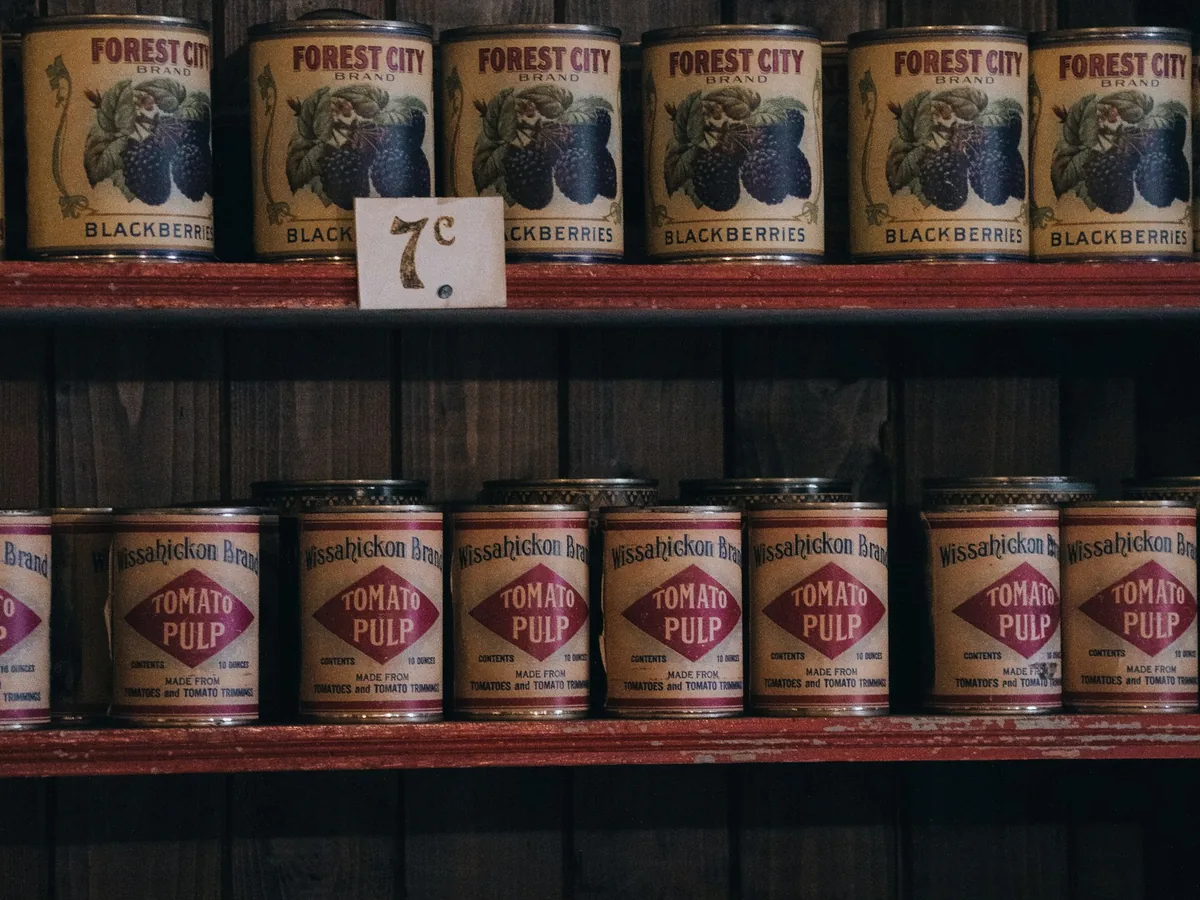
Photo: Fabian Kleiser / Unsplash
By PowerLockdown EditorialUpdated November 1, 20268 min readHow we research
In this guide
DisclosureAs an Amazon Associate we earn from qualifying purchases. We may earn a commission when you buy through links on this site, at no extra cost to you. Learn more.
The short answer
The best food for a power outage is shelf-stable food that needs no refrigeration, cooking or water: canned meat and fish, canned fruit and vegetables, peanut butter, protein bars, dry cereal, crackers and dried fruit. Ready.gov recommends several days' supply. Add a manual can opener, one gallon of water per person per day, and ready-to-feed formula for babies.
Ready.gov's food guidance asks for canned foods, dry mixes and staples that do not require refrigeration, cooking, water or special preparation. That rules out a lot of pantry food: dry beans, rice and pasta all need a working stove and water. Start with what you can eat cold.
What food to buy for a power outage
| Food | Why it works | Buy tip |
|---|---|---|
| Canned tuna, chicken, salmon, beans | Protein, ready to eat | Pull-tab lids save the can opener |
| Canned fruit and vegetables | No prep; the liquid adds fluid | Pick ones packed in juice or water |
| Peanut butter or other nut butter | Dense calories, long shelf life | Single-serve packs avoid waste |
| Protein bars and fruit bars | No prep, portable | Check calories on the label |
| Dry cereal, granola, crackers | Carbohydrate base for meals | Smaller boxes stay crisp once opened |
| Dried fruit, nuts, trail mix | Calories in little space | Watch for nut allergies |
| Shelf-stable milk (aseptic cartons or powdered) | Calcium and protein | Powdered milk needs safe water |
| Canned juice | Fluids and sugar for kids | Counts toward water, not instead of it |
| Ready-to-feed infant formula | No water or mixing needed | Check dates; rotate |
| Emergency ration bars | No water, no cooking | Bars, not meals; good for go-bags |
Eat in this order
- 01Fridge food first. USDA FSIS says a closed fridge keeps food safe for up to 4 hours. Eat or move perishables to a cooler with ice before then.
- 02Freezer food next. A full freezer holds its temperature for about 48 hours, 24 if half full (FSIS). Cook thawing food while it is still at 40°F or below, on an outdoor stove or match-lit cooktop.
- 03Shelf-stable food last. Your no-cook stock is the reserve that carries you through day three and beyond.
The full fridge and freezer rules, and the list of what to throw out, are on our food safety during a power outage page.
How much food for a power outage
The FDA says 2,000 calories a day is used as a general guide for nutrition advice; children, older adults and very active people need different amounts. Read the Nutrition Facts label and add it up: a box of crackers or a jar of peanut butter lists servings per container and calories per serving.
- 3 days is the minimum most households should hold. Ready.gov asks for several days' supply.
- 2 weeks suits areas with hurricanes, ice storms or wildfire shutoffs. See how long power outages last.
- Longer belongs in a rotating pantry or freeze-dried stock: see our long-term food storage guide.
Babies and infant formula
The CDC says to provide ready-to-use infant formula if it is available. It comes as a liquid and needs no added water. The FDA says the same for outages: use prepared, canned baby formula that requires no added water. Breastfeeding needs no power at all, and the CDC advises breastfeeding more often in an emergency if you combine feeding methods.
- If you must use powdered or concentrated formula and tap water may be unsafe, the CDC says bottled water is best. If none is available, boil water for 1 minute, let it cool, then mix.
- Babies under 2 months, preterm babies and those with weakened immune systems need extra steps to prevent Cronobacter infection (CDC). Ready-to-feed formula is the simplest way to cover them.
- Wash hands before preparing formula and before each feeding, and clean bottles with safe water and soap (CDC).
- Stock bottles, nipples and single-use cups; washing up is hard without hot water.
Toddlers, older adults and special diets
Ready.gov says to plan for dietary needs and to choose foods your household will eat. An outage is a bad time to discover a child refuses canned salmon.
- Food allergies: read every label, and keep a separate, clearly marked box for the allergic person.
- Diabetes: keep fast sugar (juice boxes, glucose tablets) and steady carbohydrate (crackers, cereal). Insulin storage during an outage is covered on our medical prep page.
- Low-sodium diets: canned food is often salty; buy no-salt-added versions and rinse beans with stored water if you can spare it.
- Gluten-free: rice cakes, nut butter, canned fish and fruit cover most meals.
- Soft-food diets: applesauce cups, canned fruit, nut butter and shelf-stable nutrition drinks.
- Pets: add their food, a can opener if it is canned, and water.
Store it so you will actually use it
- Keep outage food in one labelled bin, in a cool, dry closet rather than a hot garage.
- Write the purchase month on each can and box, and move older items into the regular pantry so nothing expires unseen.
- Buy what your household already eats. Familiar food is easier on children during a stressful night in the dark.
- Keep a headlamp or lantern with the bin; cooking and eating by phone light gets old fast.
Water: the other half of the plan
Ready.gov recommends at least one gallon of water per person per day for drinking and sanitation, for several days. Young children, nursing mothers and sick people may need more, and in very hot weather needs can double. A family of four needs at least 12 gallons for three days. Our water storage page covers containers and treatment; water when the taps stop covers longer events.
Gear that makes no-cook food work
Ready.gov's basic kit lists a manual can opener. Add paper plates, plastic utensils, zip bags and hand sanitizer, because washing dishes uses water you may want to drink. These are research-based picks from manufacturer specs, checked November 1, 2026; we do not test products, and prices change, so check the current price on Amazon.
No. 1Manual can opener
OXO Good Grips Soft-Handled Can Opener
Best for: Opening canned food with no power
- Manual; no batteries or outlet
- Stainless steel cutting wheel
- Large cushioned handles and oversized turning knob
- Built-in bottle opener
Tradeoffs
- Clean the cutting wheel after each can
- Bulkier than a pocket can opener

No. 2Emergency food
Datrex 3600 Emergency Food Ration (DX3600F)
Best for: No water, no cooking; fits a car or go-bag
- 3,600 kcal per package (18 bars × 200 kcal)
- 24.8 oz (720 g)
- 5-year shelf life from manufacture
- Ready to eat, non-thirst-provoking (manufacturer)
- Manufacturer states it meets U.S. Coast Guard requirements (ISO 18813:2006)
- Contains wheat and barley; vegan; package 3.5 × 2.5 × 4.5 in
Tradeoffs
- Bars, not meals, so best for part of a plan
- 5-year shelf life; contains wheat
No. 3Emergency food
Mountain House Just In Case… 3-Day Emergency Food Supply
Best for: A 72-hour kit for one person
- 18 servings; about 1,706 calories per day (manufacturer)
- 9 pouches
- Needs 12 cups (0.75 gallon) of water total
- 3.6 lb
- 30-year taste guarantee
- 12.75 × 9.25 × 6.94 in; chicken fried rice certified gluten-free (GFCO)
Tradeoffs
- About 1,706 calories a day is below the FDA 2,000-calorie reference
- Covers one person only

No. 4Water storage
Reliance Jumbo-Tainer 2.0, 7 Gallon (08630-03)
Best for: Rigid, refillable storage you can rotate
- 7 gal / 26 L
- 15.3 × 8.5 × 18.0 in; 2.9 lb empty
- Food safe: LFGB certified and FDA compliant
- PFAS- and BPA-free
- Leak-proof hideaway spigot; dual handles
Tradeoffs
- Reliance does not list it as stackable
- About 58 lb when full (7 gal × ~8.3 lb plus container)
Freeze-dried meals like Mountain House need hot water, so pair them with a camping stove used outdoors. Datrex ration bars need no water or cooking.
Frequently asked questions
- What is the best food to buy for a power outage?
- Food that needs no refrigeration, cooking or water: canned meat, fish, fruit and vegetables, peanut butter, protein bars, dry cereal, crackers, dried fruit and canned juice, per Ready.gov. Add a manual can opener.
- What food should I eat first when the power goes out?
- Refrigerated perishables first, because USDA FSIS says a closed fridge keeps food safe for only about 4 hours. Then freezer food, which lasts about 48 hours in a full freezer. Save shelf-stable food for last.
- What should I feed a baby during a power outage?
- The CDC recommends ready-to-use infant formula, which needs no added water. If you must mix powdered formula and tap water may be unsafe, use bottled water, or boil water for 1 minute and let it cool.
- How much water do I need with my outage food?
- Ready.gov recommends at least one gallon per person per day for drinking and sanitation, for several days, and more for children, nursing mothers, sick people and hot weather.
- Is no-cook food enough for a long outage?
- It works for several days. For longer outages, add a safe way to heat water outdoors so you can use freeze-dried meals, and build a rotating pantry using our long-term food storage guide.
Sources
- Ready.gov (FEMA), Food, updated March 12, 2026.
- Ready.gov (FEMA), Build a Kit, updated July 1, 2026.
- Ready.gov (FEMA), Water, updated February 22, 2021.
- U.S. Food and Drug Administration, How to Understand and Use the Nutrition Facts Label, current as of March 5, 2024.
- U.S. Food and Drug Administration, Food and Water Safety During Power Outages and Floods, current as of March 5, 2024.
- CDC, Feeding Your Child Safely During a Disaster, February 20, 2025.
- USDA Food Safety and Inspection Service, Keep Your Food Safe During Emergencies: Power Outages, Floods & Fires, accessed November 1, 2026.
Related guides
Grid-down
Long-term food storage for weeks without the grid
Calorie math, real shelf-life figures from extension services, and a rotation system that keeps a month or more of food edible.
Updated November 1, 2026 · 9 min read
Gear picks
Best cooler for a power outage
A good cooler buys time once the fridge passes its four-hour limit. These five, plus a thermometer, cover a household, with every ice claim labelled as the maker's own.
Updated November 1, 2026 · 9 min read
Quick answers
How to cook without power
A gas cooktop, an outdoor camp stove and a no-cook pantry cover most outages. The one rule that never bends: fuel-burning cookers that are not built into your kitchen stay outside.
Updated November 1, 2026 · 8 min read
Grid-down
Water when the taps stop
City water runs on electricity; this is how much to store, where to find more, and how to make it safe to drink when the treatment plant goes dark.
Updated November 1, 2026 · 8 min read
Quick answers
What to buy before a power outage
One shopping list for the whole house, sorted by what to buy first. Each line links to the page that covers that category in depth.
Updated November 1, 2026 · 10 min read