Guides · Quick answers
What to do when the power comes back on
The outage is over, but the decisions are not: food that warmed up, medicine that sat out, appliances that all want to start at once and a generator that must come off the circuit.
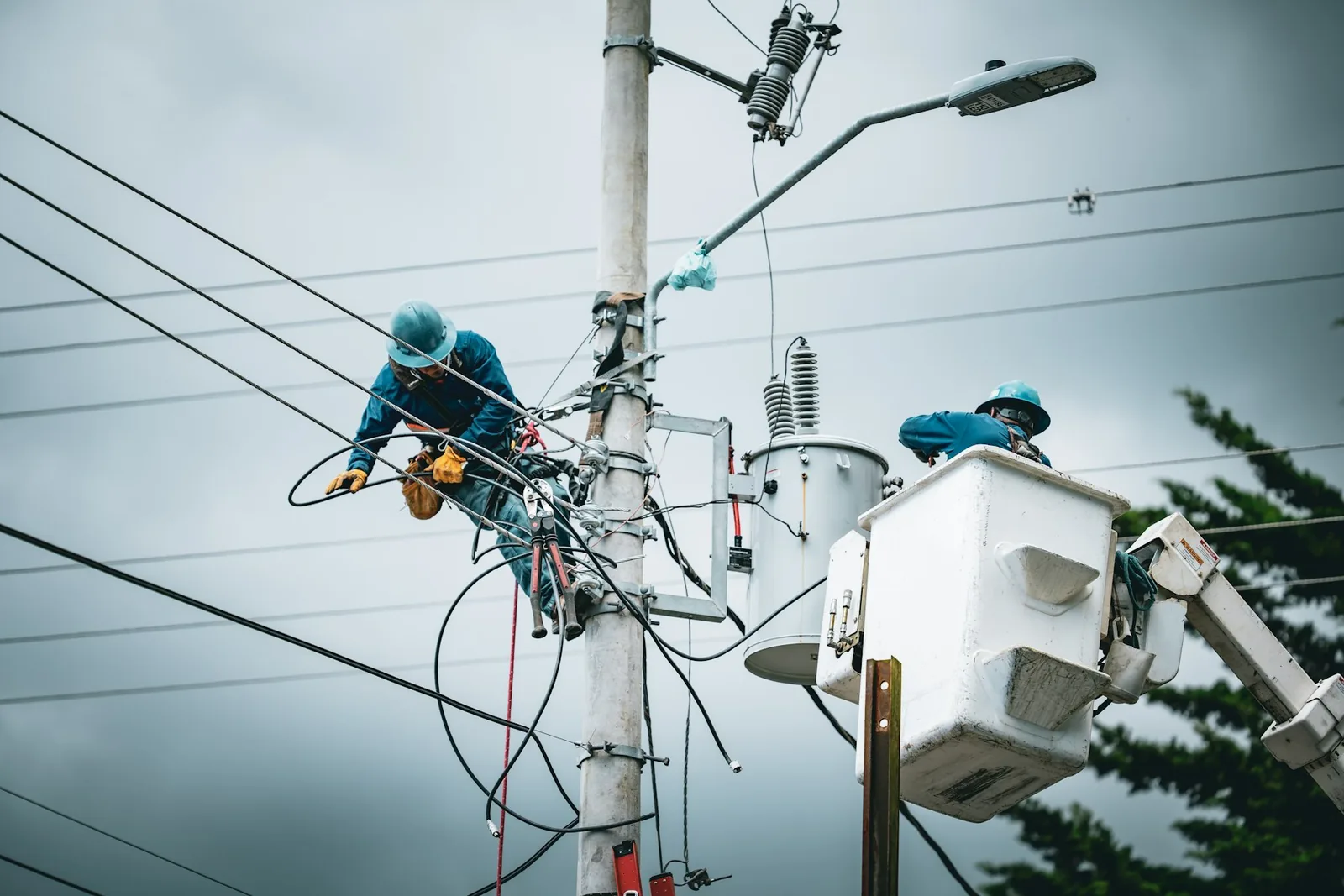
Photo: Mario Spencer / Unsplash
By PowerLockdown EditorialUpdated November 1, 20267 min readHow we research
In this guide
- 01The short answer
- 02Power on after a power outage: the order of operations
- 03Power outage: what food to throw out
- 04Refrigerated medicine and medical devices
- 05Generators: shut down and disconnect
- 06Turn appliances on gradually
- 07Reset clocks, thermostats, wells and sump pumps
- 08Check the house for water and damage
- 09Tools that make the next one easier
- QFrequently asked questions
DisclosureAs an Amazon Associate we earn from qualifying purchases. We may earn a commission when you buy through links on this site, at no extra cost to you. Learn more.
The short answer
When the power comes back on, shut down and disconnect any generator first, then check fridge and freezer temperatures before eating anything. Toss refrigerated perishables held above 40°F for 4 hours or more (FDA). Wait a few minutes, then plug electronics back in one at a time, reset clocks and thermostats, and check medicine and medical devices.
Power often flickers on and off during restoration, so do not rush. Work through the list below in order. If you are still in the dark, go back to what to do when the power goes out.
Power on after a power outage: the order of operations
- 01Disconnect the generator. Turn it off and unplug cords before relying on grid power. See the generator section below.
- 02Check the food. Read the fridge and freezer thermometers before opening anything else. Decide keep or toss using the table below.
- 03Check medicine and medical devices. Refrigerated drugs and device settings come next.
- 04Restart big loads one at a time. HVAC, well pump, water heater, then smaller appliances, a few minutes apart.
- 05Plug electronics back in. Use surge protectors and add devices gradually.
- 06Reset what the outage scrambled. Clocks, thermostats, timers, garage door openers and sump pump alarms.
- 07Inspect for damage. Water in the basement, tripped breakers, wet outlets and spoiled-food smells.
- 08Restock. Recharge power banks and lanterns, replace used batteries and refill water containers before the next one.
Power outage: what food to throw out
FDA says a closed refrigerator keeps food cold for about 4 hours, and a full freezer holds its temperature for about 48 hours (24 hours if half full). Once power returns, use a thermometer, not your nose. FDA: you cannot rely on appearance or odor to judge whether food is safe.
| Situation | Decision |
|---|---|
| Freezer thermometer reads 40°F or below | Safe; may be refrozen (FDA) |
| No thermometer, package still has ice crystals or is 40°F or below | Safe to refreeze or cook (FDA) |
| Refrigerated perishables above 40°F for 4 hours or more | Throw out (FDA) |
| Any food at 40°F or higher for 2 hours or more | Throw out (Ready.gov) |
| Unusual odor, color or texture | Throw out (Ready.gov) |
| Not sure how long it was warm | When in doubt, throw it out (Ready.gov) |
Perishables means meat, poultry, fish, eggs, soft cheeses, milk and leftovers. Hard cheeses, butter, condiments and whole fruit are more forgiving, but the item-by-item rules are long. Our keep food safe during a power outage page has the full table and the thermometers that make this a 30-second job.
Refrigerated medicine and medical devices
- Refrigerated drugs. Ready.gov and CDC: if the power was out for more than a day, throw away medication that should be refrigerated unless the label says otherwise, and contact your doctor or pharmacist for a new supply.
- Insulin. FDA says insulin vials or cartridges from the manufacturer may be left unrefrigerated between 59°F and 86°F for up to 28 days. Do not use insulin that has frozen, and FDA says pump insulin exposed to temperatures above 98.6°F should be discarded. Ask your clinician if yours was outside those limits.
- Device settings. FDA: when power is restored, check that the settings on your medical device have not changed. Some devices return to a default mode after an interruption.
- Batteries. Put backup batteries for CPAPs, concentrators and wheelchairs back on charge first, before the next outage catches them half empty.
Generators: shut down and disconnect
Let the engine cool before you refuel or store it; Ready.gov notes spilled fuel on hot parts can ignite. Store fuel outside living spaces. Keep CO alarms in place: the generator is off, but the next outage starts the cycle again. For a permanent connection, BackupPowerAI explains transfer switch and interlock basics.
Turn appliances on gradually
Ready.gov advises unplugging or switching off appliances and electronics during an outage to avoid damage from surges or spikes when power returns. The same logic applies on the way back: start large motors one at a time, a few minutes apart, so they are not all drawing starting current at once on circuits that may still be unstable.
| Item | When to restart | Note |
|---|---|---|
| Refrigerator and freezer | Immediately (they restart on their own) | Keep doors shut until they are cold again |
| Central AC, heat pump or furnace | After lights have stayed on several minutes | Set the thermostat back to its normal mode |
| Well pump | After power is steady | See the well section below |
| Electric water heater | After the well pump has repressurized the system | Make sure the tank is full before the elements heat |
| Computers, TVs, routers | Last, on surge protectors | Router and modem first, then devices |
A plug-in surge protector protects electronics from short spikes, not from a lightning strike or a whole-house fault. If your area sees frequent restoration surges, ask an electrician about a whole-home surge protective device at the panel.
Reset clocks, thermostats, wells and sump pumps
Thermostats and timers
Smart thermostats usually reconnect on their own; older programmable ones may lose their schedule. Check the mode (heat, cool, off) before walking away. Reset clocks on ovens, microwaves, irrigation controllers and any timer that controls lights or pumps.
Private wells
The National Environmental Health Association's private well guidance says to turn off power to the well pump before inspecting the area around the well, and to look for damaged wiring, well caps, vents and pressure tanks. If the pump will not start, turn off the electricity and call a licensed well contractor. NEHA also advises having a certified lab test the well water after a power outage, and using bottled or stored water until you know it is safe.
Sump pumps
Confirm the sump pump restarted: pour a bucket of water into the pit and watch it cycle. If you have a battery backup, check that it is recharging and silence or reset its alarm. Options are in best battery backup for a sump pump.
Garage doors and gates
If you released an opener by hand, re-engage the trolley before you try the remote. The steps are in how to open a garage door without power.
Check the house for water and damage
- Basement water. A long outage with rain can mean a flooded pit. If water reached outlets, appliances or the panel, CDC says do not turn the power back on until a qualified electrician has inspected the equipment.
- Wet electrical gear. FDA: do not plug in a power cord or device if the cord or device is wet.
- Tripped breakers. One dead room after the rest of the house returns often means a tripped breaker. If it trips again when reset, leave it off and call an electrician.
- Smells. A gas smell means leave the house and call the gas utility from outside. A burning smell near an outlet means switch off that circuit.
Tools that make the next one easier
A fridge thermometer and a freezer thermometer turn the keep-or-toss decision into a reading. These are existing research-based picks from manufacturer specs; we do not test products.
No. 1Food safety
Rubbermaid Commercial Refrigerator/Freezer Thermometer (FGR80DC)
Best for: Checking both the 40°F and 0°F thresholds
- Range −20°F to 80°F; reads °F and °C
- Easy-to-read dial; hangs or stands
- NSF listed
- 3-year limited warranty
Tradeoffs
- Analog dial without safe-zone markings
- No alarm or temperature log
No. 2Food safety
Taylor Fridge/Freezer Thermometer (5924)
Best for: Quick safe/unsafe check at a glance
- 3" color dial
- Safe temperature zone indicators
- Hangs or stands
- NSF certified
Tradeoffs
- Manufacturer page does not list the temperature range
- Analog; no alarm

No. 3CO alarm
First Alert CO710 Carbon Monoxide Alarm with 10-Year Battery
Best for: A no-install alarm you can set on a nightstand or carry room to room
- Sealed 10-year lithium battery (no battery changes)
- Listed to UL 2034
- Backlit display: CO level, peak level and temperature
- 85 dB alarm; tabletop design
Tradeoff
- Tabletop only, and when the sealed battery ends the whole unit is replaced.
Then close the gaps the outage exposed. Take the readiness score, restock from the blackout checklist, and if the outage ran long, read how long a house can go without power.
Frequently asked questions
- What to do after a power outage with food in the fridge?
- Check the thermometer before anything else. FDA says to throw out refrigerated perishables such as meat, poultry, eggs and leftovers that were above 40°F for 4 hours or more. Freezer food that still has ice crystals or reads 40°F or below can be refrozen. When in doubt, throw it out (Ready.gov).
- Can I refreeze food after the power comes back on?
- Yes, if it is still safe. FDA says freezer food that reads 40°F or below on a thermometer, or still contains ice crystals, can be refrozen or cooked. Quality may suffer, but safety is the deciding factor.
- Should I unplug things when the power comes back on?
- Ideally you unplugged electronics during the outage, as Ready.gov advises, to protect them from surges when power returns. When it does, wait a few minutes for the supply to settle, then plug devices back in one at a time, starting with the most important.
- What do I do with my generator when the power comes back on?
- Turn it off, let it cool and disconnect it before relying on grid power. CDC warns that a generator left on line when power is restored can become a fire hazard and endanger line workers. Homes with a transfer switch or interlock should switch back to utility power following its instructions.
- Is refrigerated medicine still good after a power outage?
- Ready.gov and CDC say to discard medication that should be refrigerated if the power was out for more than a day, unless the label says otherwise. Insulin has specific FDA limits: up to 28 days unrefrigerated between 59°F and 86°F. Call your pharmacist about anything you are unsure of.
Sources
- U.S. Food and Drug Administration, Food and Water Safety During Power Outages and Floods, current as of March 5, 2024.
- Ready.gov (FEMA), Power Outages, updated June 4, 2026.
- CDC, What to Do to Protect Yourself During a Power Outage, August 26, 2026.
- CDC, What to Do to Protect Yourself From Electrical Hazards, reviewed August 26, 2026.
- U.S. Food and Drug Administration, FDA Offers Tips about Medical Devices and Natural Disasters, content current as of April 16, 2024.
- U.S. Food and Drug Administration, Information Regarding Insulin Storage and Switching Between Products in an Emergency, content current as of September 28, 2026.
- National Environmental Health Association, Private Water Network (CDC cooperative agreement), Power Outages: Private Wells and Natural Disasters, accessed November 1, 2026.
Related guides
Quick answers
What to do when the power goes out
A timed checklist for the first 15 minutes, the first hour and the first day of an outage, with the safety rules that prevent the injuries outages actually cause.
Updated November 1, 2026 · 7 min read
Quick answers
How long can a house go without power
A house does not fail all at once. The fridge goes first, then water and medicine, then temperature. This timeline shows which system runs out when, and what extends each one.
Updated November 1, 2026 · 8 min read
Gear picks
Best battery backup for a sump pump
Storms that flood basements are the same storms that knock out power. A battery backup sump pump keeps water moving when the primary pump goes quiet.
Updated November 1, 2026 · 9 min read
Gear picks
Best generator for power outage backup at home
A portable generator is the most common way households run a fridge, sump pump and furnace fan through a multi-day outage. Pick the size from your loads, then plan the fuel and the safety.
Updated November 1, 2026 · 9 min read
Outage basics
How long power outages last: what federal data shows
What federal data says about outage length in the US, why a few big storms dominate the numbers, and how to decide how many days to prepare for.
Updated October 27, 2026 · 7 min read