Guides · Seasonal prep
Wildfire power shutoff (PSPS) prep
Utilities in wildfire-prone areas may turn off power on purpose during dangerous weather. This guide covers how those shutoffs work and how to get ready.
By PowerLockdown EditorialUpdated October 27, 20267 min readHow we research
In this guide
DisclosureAs an Amazon Associate we earn from qualifying purchases. We may earn a commission when you buy through links on this site, at no extra cost to you. Learn more.
What a PSPS is
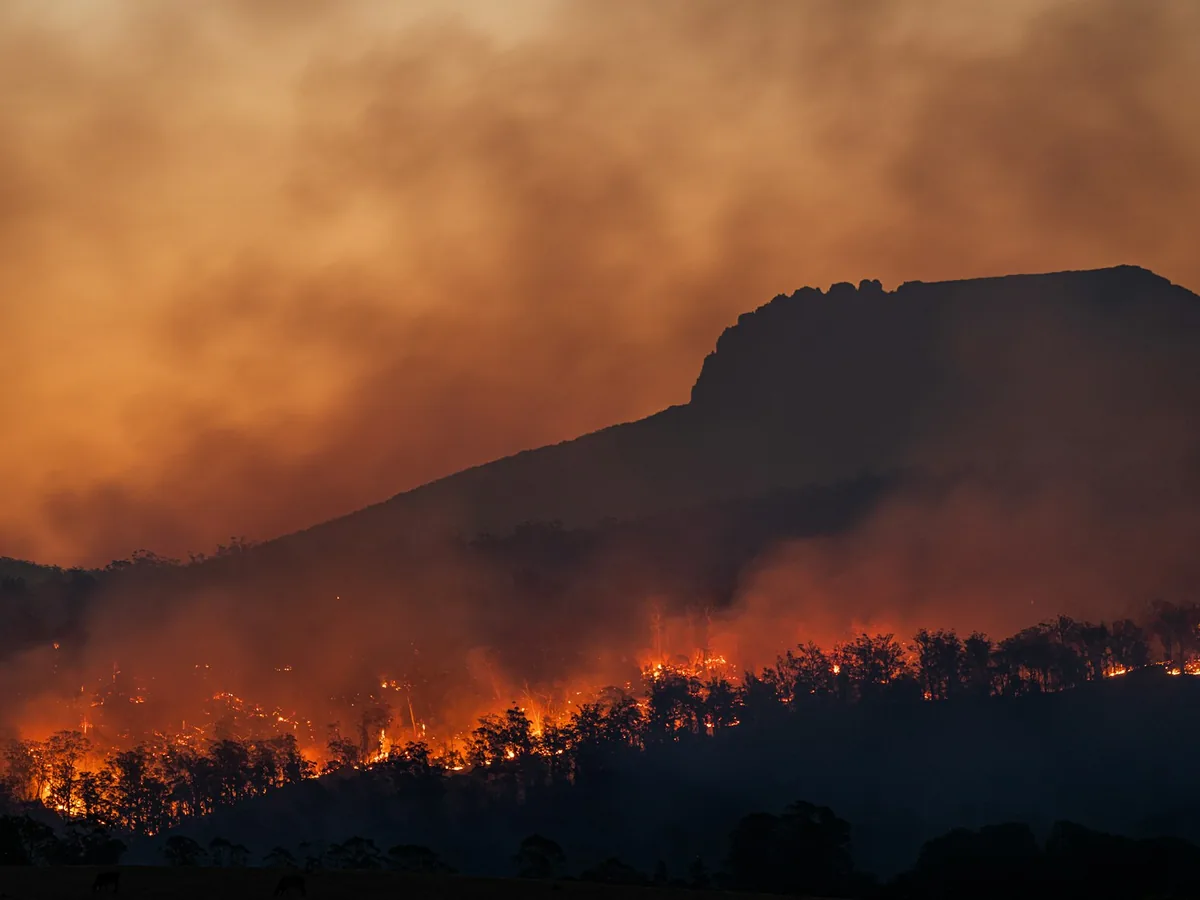
A Public Safety Power Shutoff (PSPS) is a planned power outage that a utility carries out when weather conditions, such as strong winds and very dry vegetation, make it likely that its equipment could start a wildfire. The California Public Utilities Commission (CPUC), which regulates PSPS in California, describes it as a tool utilities may use to reduce wildfire risk. Utilities in other western states have adopted similar programs.
A PSPS is deliberate and usually announced in advance, which sets it apart from a storm outage. It also differs from a rolling blackout: the goal is to stop power lines from igniting fires, and supply shortages play no part. The outage lasts until the dangerous weather passes and crews have inspected the de-energized lines, which can take time across large areas.
How much warning you get
In California, CPUC guidance compiled by commission staff (July 12, 2022) sets notification targets, whenever possible:
- 48–72 hours ahead to public safety partners (such as local governments and first responders).
- 24–48 hours ahead to all other affected customers.
- 1–4 hours ahead of de-energization, if possible.
Who should prepare
If you live in or near a high fire-threat area served by a utility with a PSPS program, prepare as if a multi-day shutoff will happen during fire season. Utilities typically publish maps of areas that may be affected; check your utility's website. Households that depend on electricity for medical devices should ask their utility about medical baseline or similar programs and any extra notification options they offer.
Your PSPS plan
Before fire season
- Register for utility PSPS alerts by text, call and email.
- Build a 72-hour kit, then extend it toward two weeks.
- Plan backup power for essentials: refrigerator, medical devices, phones, Wi-Fi. A portable power station is quiet and safe to use indoors. The backup power calculator can help size one.
- If you have an electric garage door, learn how to open it manually.
- If your water comes from a well, store water: the pump stops without power.
- Keep a battery or crank NOAA radio. See emergency radio picks.
When you get a PSPS notice
- 01Charge everything: phones, power banks, laptops, power stations.
- 02Fuel vehicles; gas pumps in the shutoff area may not work.
- 03Turn the fridge and freezer to colder settings; freeze containers of water.
- 04Gather medications and plan for any that need refrigeration.
- 05Check on neighbors who may need help, especially older adults.
- 06Review your evacuation plan. Red-flag weather that triggers a PSPS is also fire weather.
During the shutoff
- Keep the fridge and freezer closed: about 4 hours for the fridge, about 48 hours for a full freezer (Ready.gov, FDA).
- Use LED lanterns and flashlights, not candles. Fire risk is already high.
- Unplug sensitive electronics to protect them when power returns.
- Run any generator outdoors only, at least 20 feet from windows, doors and vents, with CO alarms inside. Be mindful of sparks and hot exhaust near dry grass.
- Monitor official sources for fire activity and evacuation orders.
Power stations vs. generators for PSPS
Shutoffs often happen in hot, dry, windy conditions, which makes fuel handling and hot exhaust a fire concern. Battery power stations have no exhaust and can run indoors, and they can be recharged by solar panels during a long shutoff. Their limit is capacity: a roughly 1,000 Wh unit can keep a fridge, lights and phones going for part of a day or more, depending on the fridge. Generators deliver more energy for longer but need fuel, outdoor placement and careful use. Some households combine both.
If you plan to power home circuits directly, a licensed electrician must install a transfer switch or interlock. Never backfeed through an outlet.

No. 1Power station
Anker SOLIX C1000 Portable Power Station
Best for: Running a fridge, lights, phones and a CPAP through a one- or two-day outage
- 1,056 Wh capacity (up to 2,112 Wh with the matching expansion battery)
- 1,800 W continuous / 2,400 W surge AC output
- LiFePO4 battery chemistry
- 6 AC outlets
- 28.44 lb
Tradeoff
- At about 28 lb it is a carry-to-the-car unit, not a grab-and-go bag item.
No. 2Lantern
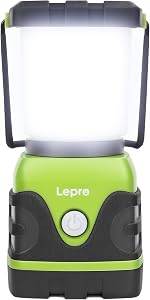
Lepro 1500lm Battery Powered LED Camping Lantern
Best for: Bright, flame-free room light that runs on stored batteries
- 1,500 lumens, dimmable (manufacturer rating)
- Runs on 3 D alkaline batteries (not included); not rechargeable
- Up to 12 hrs at 1,500 lm (manufacturer figure)
- IPX4 water resistance; daylight, warm, full and flashing red modes
Tradeoff
- Not rechargeable, so stock spare D cells; lumen and runtime figures are self-reported.

No. 3Emergency radio
Midland ER310PRO Emergency Crank Radio with Power Bank
Best for: Keeping phones charged as well as hearing weather alerts
- Power: USB-C, solar or hand crank; 10,000 mAh lithium-ion battery
- 200+ hours of radio play (manufacturer figure); USB-C full charge in 6 to 8 hours
- NOAA weather alerts (not SAME), AM/FM, Bluetooth streaming, clock and temperature display
- USB-A phone output (5 V, 2.1 A): a full charge powers most smartphones 2 to 3 times (Midland FAQ)
- Cree LED flashlight with SOS strobe; ultrasonic dog whistle
Tradeoffs
- No AA battery backup, unlike the ER310; no water-resistance rating stated.
- Midland's FAQ says solar extends a charge but will not revive a flat battery

No. 4CO alarm
First Alert CO710 Carbon Monoxide Alarm with 10-Year Battery
Best for: A no-install alarm you can set on a nightstand or carry room to room
- Sealed 10-year lithium battery (no battery changes)
- Listed to UL 2034
- Backlit display: CO level, peak level and temperature
- 85 dB alarm; tabletop design
Tradeoff
- Tabletop only, and when the sealed battery ends the whole unit is replaced.
When the power comes back
- Wait a few minutes before plugging electronics back in, then reconnect them one at a time.
- Check refrigerated food: the FDA says to discard perishables that have been above 40°F for 2 hours or more. When in doubt, throw it out.
- Recharge power stations, power banks and radios right away. Fire season can bring repeat shutoffs within days.
- Restock anything you used, and note what you wished you had for next time.
- If you see damaged lines or equipment after the event, stay away and report it to your utility.
Food, water and medical needs
Ready.gov recommends at least one gallon of water per person per day for several days. Keep a few days of food that needs no cooking. For insulin and other refrigerated medications, follow the manufacturer's or your pharmacist's guidance and have a cooler and ice packs ready. If someone relies on an oxygen concentrator or CPAP, calculate how many hours your backup power will run it, and have a plan to relocate if the shutoff runs long.
For heat, light, water, food, comms and first-aid kits, see the Blackout Kit.
Frequently asked questions
- How long do Public Safety Power Shutoffs last?
- They last until the dangerous weather passes and the utility has inspected the de-energized lines, which can range from hours to several days depending on the weather and the size of the area.
- How much notice do utilities give before a PSPS?
- In California, CPUC guidance targets 24–48 hours of notice to affected customers and 1–4 hours before de-energization, whenever possible. Weather can change quickly, so notice can be shorter.
- Is a PSPS the same as a rolling blackout?
- No. A rolling blackout happens when there is not enough electricity supply. A PSPS is a targeted shutoff to prevent utility equipment from starting a wildfire during dangerous weather.
Sources
- California Public Utilities Commission, Public Safety Power Shutoffs (PSPS), accessed October 27, 2026.
- CPUC staff, Unofficial Compendium of PSPS Guidelines and Rules, July 12, 2022.
- Ready.gov (FEMA), Power Outages, updated June 4, 2026.
- Ready.gov (FEMA), Build a Kit, updated July 1, 2026.
- U.S. Food and Drug Administration, Food and Water Safety During Power Outages and Floods, current as of March 5, 2024.
- U.S. Consumer Product Safety Commission, Carbon Monoxide Information Center, accessed October 27, 2026.
Related guides
Outage basics
Rolling blackouts explained
Why grid operators sometimes cut power on purpose, what the official reports say about past events, and how to get your home ready.
Updated October 27, 2026 · 7 min read
Outage basics
How long power outages last: what federal data shows
What federal data says about outage length in the US, why a few big storms dominate the numbers, and how to decide how many days to prepare for.
Updated October 27, 2026 · 7 min read
Gear picks
Best emergency radios for power outages
Five research-based picks for hand-crank, solar and battery NOAA weather radios, chosen from manufacturer specs and published data.
Updated October 27, 2026 · 8 min read